Why do I cling to physical media? A piece that will probably make it clear
Part 1|Part 2
The Problem with Normalisation
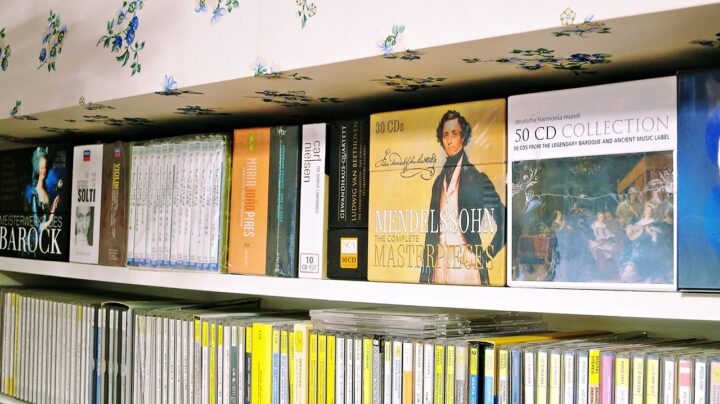
This is something I find rather puzzling, and it seems to be particularly prevalent in box sets organised by composer or instrument: the practice of normalising (volume normalisation, averaging) recordings of varying sound quality and vintage in order to package them together as a single release, while adding a certain character to homogenise the tonal colour and sound quality across the board. When a disc-collecting classical enthusiast buys one of these box sets, they will almost inevitably find that several discs overlap with recordings they already own — whether on original single releases or from other compilations — and when you compare those identical sources side by side, the sound quality of the normalised box set is more often than not noticeably less fresh than the individually released original disc.
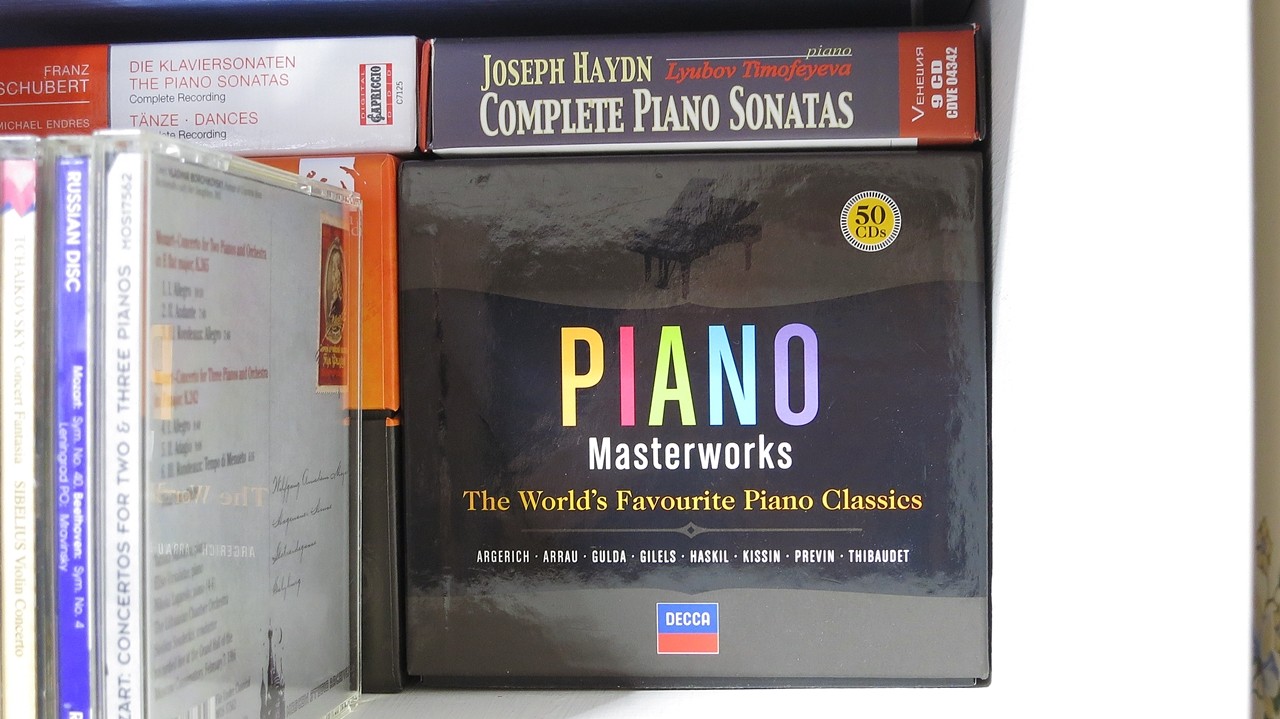
Or sometimes a strange colouration runs through the entire box, or the dynamic contrast of the original albums seems to have been flattened out — presumably in the name of levelling the volume. When that happens, it really is a case of penny wise and pound foolish: the collection becomes little more than a second-rate sample of the recordings, and for any disc you actually take a liking to, you end up having to go out and track down a separate original release on the second-hand market.
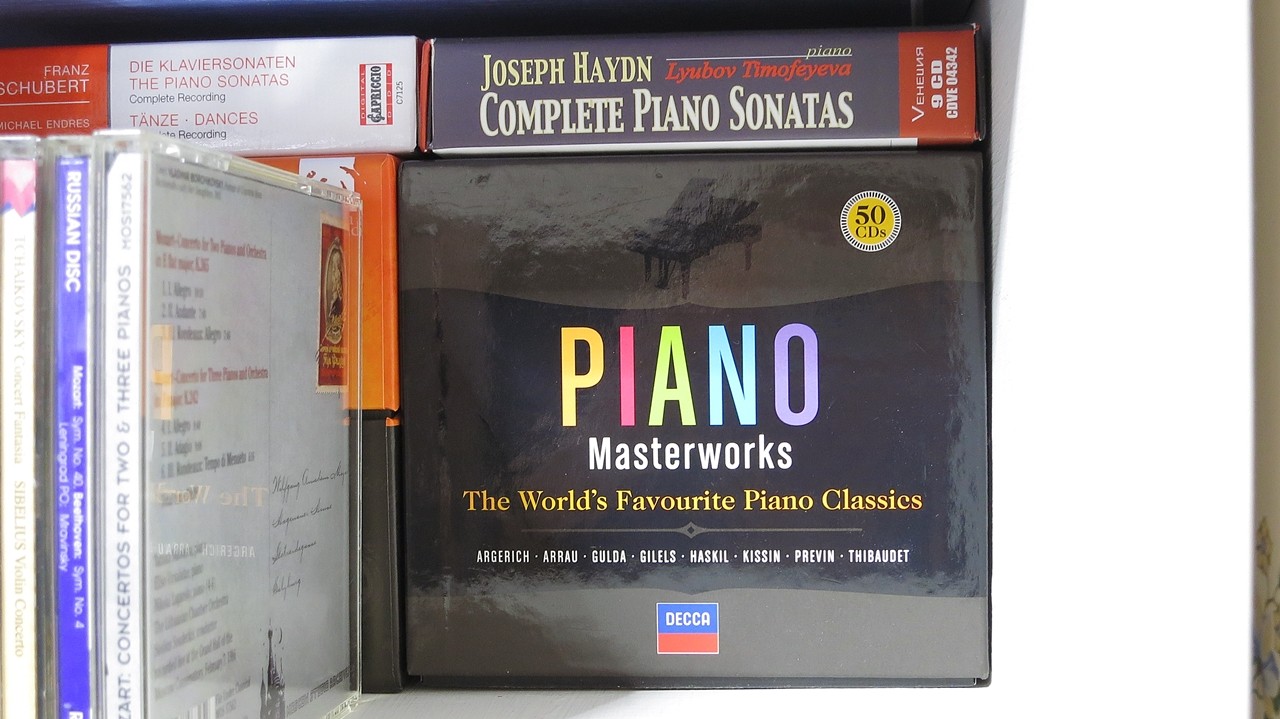
There are exceptions to this kind of box set approach, though, and one I have a genuine soft spot for is the DECCA Piano Masterworks. It is a rather mixed bag of 50 discs drawing not only from DECCA but also DG and PHILIPS, yet the DG and PHILIPS sources have been refined and homogenised into DECCA’s characteristically hard-edged, cool sound — and while taste is of course personal, recordings from the analogue era in particular, which could feel a little blurry and unimpressive on their DG or PHILIPS originals, actually come across as cleaner and, in a certain sense, improved through the uniform remastering. This one turned out to be something of a find. The Argerich Chopin Preludes, for instance, recorded on DG, has been remastered to sound almost as if it were a DECCA digital recording — which makes you want to own both versions on purpose (though as for the DG remaster box, what on earth is going on there?). That said, this DECCA set still carries what feels like the influence of OIBP remastering, and anyone who finds DECCA’s hard, cold, blue-tinged sound signature disagreeable may well feel the urge to fling it out of the window in dismay.


 ポチップ
ポチップ
So yes, there are cases where the normalisation that comes with a box set actually makes things better — but on the other hand, a strange character can be added in the process of homogenisation, and when that happens the result really is one of those “did we really need this?” situations. My sincere wish is that when boxing things up for reissue, labels would simply resist the urge to do too much — leave the original album’s digital data entirely untouched, add no processing whatsoever, and just lazily stuff it into a box and put it back out there.
The Effect on Hi-Fi Playback
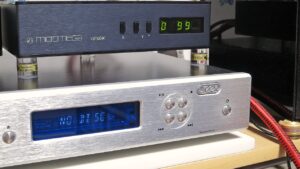
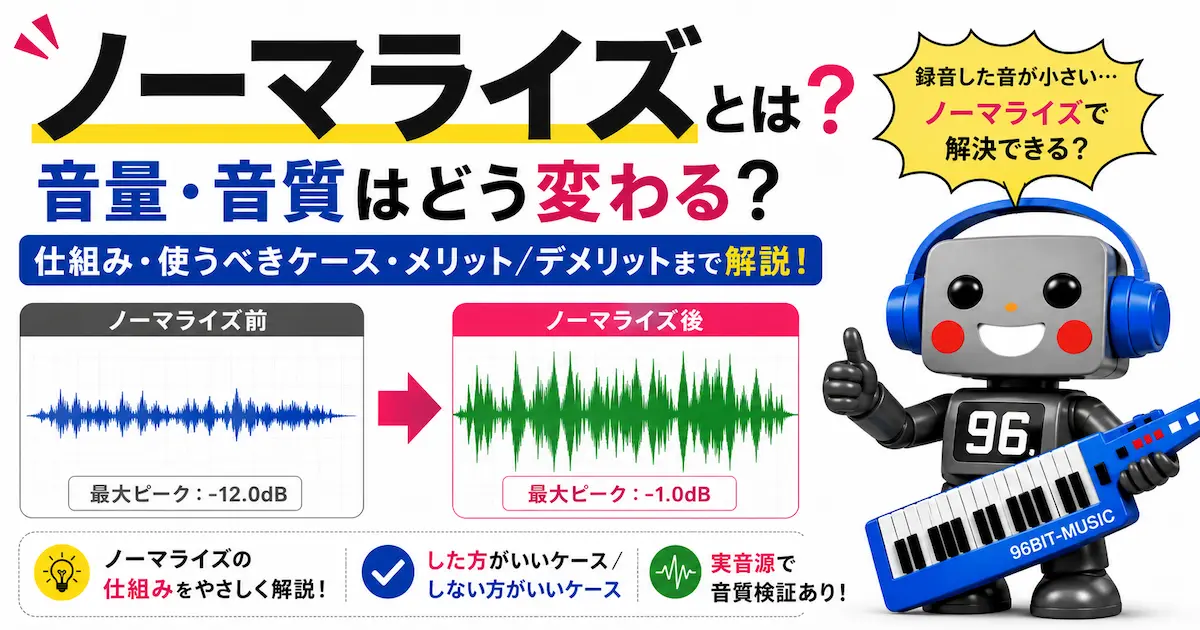
As for the sound quality achieved by taking low-bit digital data as a base and then virtually upscaling it through oversampling and resampling — while there are people like me who find it difficult to get on with, there are arguably even more listeners who find it genuinely appealing, which is precisely why it exists as a viable commercial technology. From the 1990s onwards, many consumer Hi-Fi components — CD players, D/A converters and the like — began to appear on the market boasting sophisticated resampling and high-order oversampling applied in real time during playback, and in the 2000s and 2010s the high-end audio world in particular entered an era of competitive one-upmanship over the sophistication and precision of such virtual computation. That said, this is ultimately a matter of consumer playback equipment — something the user applies retrospectively as an optional choice when selecting a particular piece of kit — so it is not a fundamental problem in itself. If you listen and do not like it, you simply do not choose that equipment. Even so, twenty years ago there was a certain awareness on the part of users — an attitude of “all this so-called Processing and Legato Link Conversion is a kind of retouching, but isn’t it interesting to hear what the virtual computation does to the sound?” — whereas now that simple points of comparison have largely disappeared, high-order processing seems to have become synonymous with genuine high fidelity, and it has turned into something of a topic one can no longer casually question without risking an argument.
For what it is worth, my own personal position is that listening through a DAC that is close to the equipment used at the time of recording — one employing the A/D and D/A conversion approach of that era — is, honestly, what sounds most right to my ears. Old recordings heard through an old DAC, new recordings through a new DAC, and DSD recordings played back natively in DSD — something like that.

Even so, there are music lovers and Hi-Fi enthusiasts who, even now, feel a certain unease with the kind of sound produced by high-order digital computation — a sound that carries, in a sense, a virtual or artificial quality, something perhaps a little overloaded with processed colouration — and some of them go out of their way, even today and deliberately against the current trend, to seek out old CD players and D/A converters fitted with vintage DAC chips: those designed in the 1980s with their slower multi-bit architecture, with NOS (non-oversampling), with digital filter-less designs. Some go further still and end up with niche products that deliberately use new-old-stock chips from the older generation, faithfully faithful to the 16–24-bit formats of the day. There are, in fact, quite a few people — eccentric… well, no, rather: people of sharp sensibility and good ears — who find their way to such things, and for music lovers this is, in a way, something of a consolation. The current digital trends are, in one sense, still transitional technologies in a state of ongoing development, and it may be that as digital conversion methods continue to change and precision continues to improve, a day will come when that instinctive sense of unease with the sound produced by today’s digital computation is lifted — or perhaps it will not — and that, really, is known only to the gods.
The Problem with Subscription and Digital Streaming Music Services
And now, subscription (flat-rate music delivery, unlimited streaming services) music services — where a monthly fee grants you access to whatever you want to hear, whenever you want — have seen their market share grow sharply, and worldwide they have already surpassed the combined sales of physical media such as CDs and LPs. In Japan the uptake of subscription services has been slower, and physical media remains surprisingly strong, but even so, the likelihood of streaming catching up and overtaking is high in the not-too-distant future. Though of course, this is all a matter of total revenue figures, and I can’t help feeling it diverges from the reality of how much music people are actually listening to, in terms of albums heard from beginning to end.
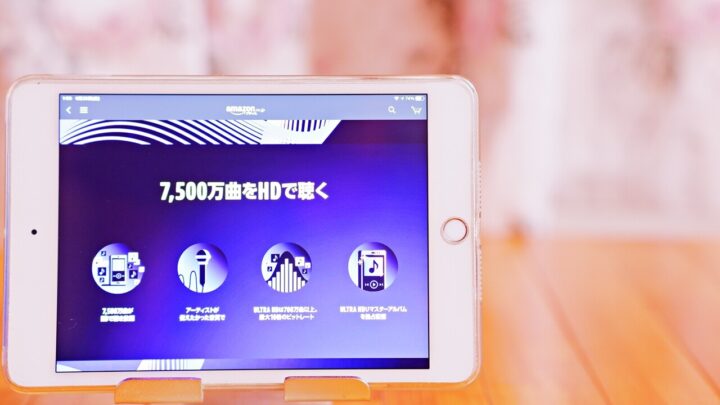
For someone like the author, who agonises over differences between masterings and pressings of the same recording, streaming services present a particular problem: when multiple versions of the same album exist at the digital data level, this kind of service offers no way to choose which version you actually hear. With a subscription, you are paying for the right to listen to music, but you cannot control the fine details of the source data quality on the delivery end. Because if the distributor changes the mastering or overwrites it with the latest remaster, listeners currently have no choice but to accept whatever they are given.

For instance, I now try to buy manga and books in digital form wherever possible — partly because I chose not to go down the bibliomaniac path, and partly because the limited space at home has been taken over by my collection of CDs and other music media, leaving no room to line up physical books; music has simply won out over paper. As a person with enthusiastic hobbies, I am honestly not convinced this is the right choice, but the physical constraints of the space leave me little option. That said, since I started reading manga digitally, one thing that has been bothering me is that the image quality of the digital versions is actually not that much better than print — and to make things worse, the image quality can vary between different digital distributors of the same book. Despite paying the same price across the board.
In some respects the situation with digital streaming music is exactly the same: in most cases the music is delivered using the latest remaster, and it is apparently quite common to find that an older original pressing’s sound, or the sound of a particular generation of remaster, is simply unavailable — even if that is precisely what you want to hear. And it seems quite plausible that every time a new remaster appears, the album’s source is automatically updated to it (I don’t actually subscribe, so I can’t say for certain). Are current subscription services really considerate enough to go on distributing different generational versions of the same album’s digital data as separate, distinct offerings?
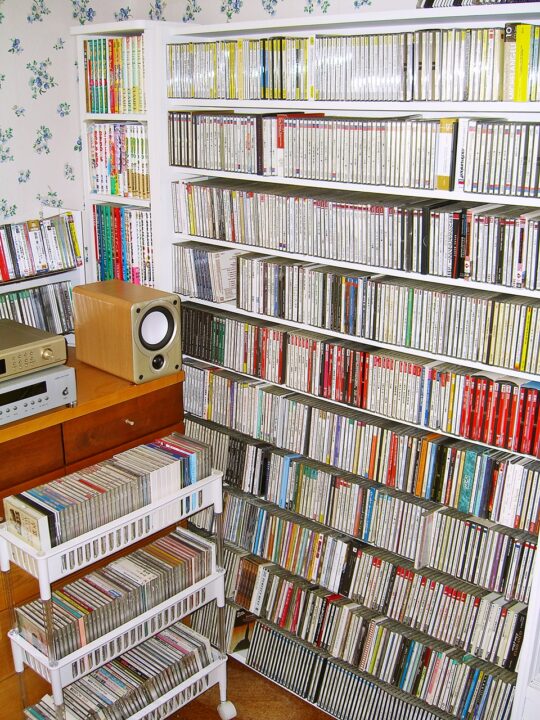
When the finer points of remastering can so easily obscure the essential nature and soul of a performance — and that is an everyday occurrence — the idea that you fundamentally cannot control the quality of the source data on your end is something I simply cannot accept. And yet, in spite of all this, the question of whether to follow the trend and go all-in on flat-rate streaming while getting rid of your physical media, or to hold firm to the old ways of spinning discs — I think this actually comes down to how deeply one understands music, and how deeply one is attached to it. It strikes me as, in a way, the same thing as a true bibliomaniac who would never, under any circumstances, switch to e-books.
Added 15 March 2019: On a particularly timely note — following the recent arrest of Pierre Taki of Denki Groove, a certain streaming service suspended domestic distribution of the group’s music. This is a reminder that a social incident involving an artist can mean losing access to recordings that matter deeply to you, suddenly and without warning. And tracks quietly disappearing from a streaming catalogue due to contractual disputes between the distributor and the artist — that, too, is something that happens with subscription services rather more often than one might think. Whether you regard listening to music at home as a private right, or as a borrowed entitlement granted by a third party — just thinking about it in those terms is enough to make me feel fairly optimistic, personally, that physical media — the 12 cm optically-read rotating disc format known as the CD, vinyl records, and all the rest — along with the equipment to play them, will never truly disappear.
~ Summary ~
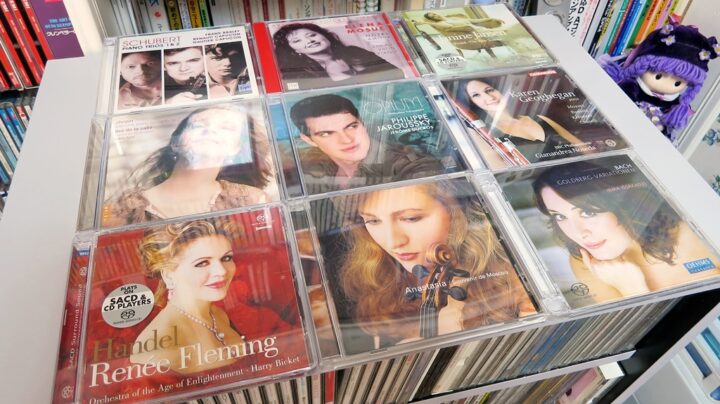
In short, my modest wish is this: when an album is reissued, if the original recording was made within the constraints of older technology at a lower bit depth, please just leave it alone — no extra processing, no alterations — and reissue it exactly as the original was, without touching a thing. In practice, among budget reissue box sets there are actually a fair number of cases where the label seems, in the best possible sense, to have simply not bothered: the original album’s data or press master appears to have been carried over and used as-is without any modification. Strictly speaking, because the pressing plant is different from the original, there may be subtle audible differences when played back on a CD player, but at that price point, I feel I ought to be willing to accept that much. And if the data itself appears to have been left unaltered, the need to go hunting for an early pressing to avoid duplication largely disappears. In reality, though, budget box sets — for all that they let you acquire a large number of CDs cheaply at once — contain a fair share of landmines: discs whose sound has been mangled into something worse. For a proper classical record collector, they are quite a gamble. And frankly, even at a low price, when you get a lot of discs in one go and it goes wrong, the psychological damage is considerable.
That said, it is not as if every single remaster is a lost cause. There are cases — not many, but they exist — where a skilled engineer is involved and the result is actually better than the original — or so it seems. The odds are unfortunately a little on the low side, though. Even so, if I am allowed to state the ideal as a disc-spinning collector of physical media who dreams of being surrounded by a study full of historic recordings and modest but characterful Hi-Fi gear — my ideal would be to own every recording either on a European or US original pressing, or a reissue that is unaltered at the digital data level and equivalent to one. I suspect that has not changed, and never will.
And all of this, it should be said, concerns CDs specifically. Unlike LPs, CDs — provided no digital remastering has been applied and no normalisation or localisation processing has been done to the data to suit a particular release — will carry the same digital data from disc to disc, so long as there is no damage or degradation to the disc itself. For the most part, early CD pressings are not nearly as difficult to come by as original first pressings of vinyl records, nor are they subject to the same extremes of condition variability — and that, at least, is one of the blessings of digital media.
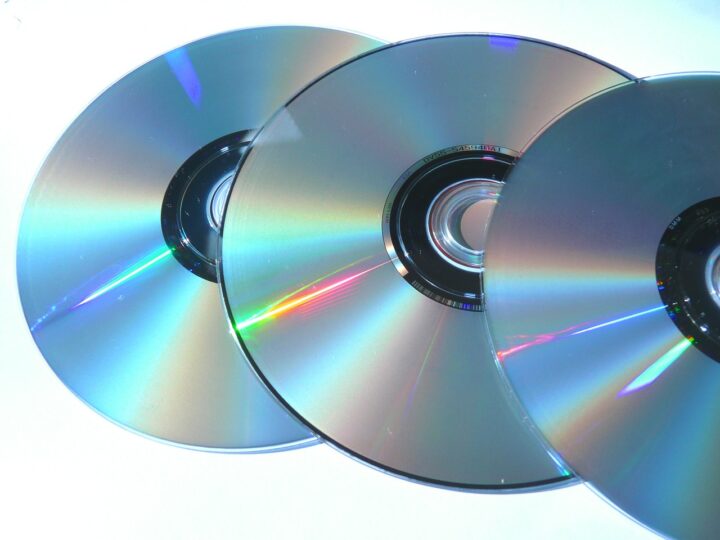
Well — all of this is, in the end, the idle ramblings of a paranoid obsessive such as myself. But those who are not particularly bothered by these fine distinctions will happily part with their ripped originals, rely on streaming, or offload duplicate originals from box set purchases for next to nothing — and in a world where streaming is increasingly the trend, second-hand CDs can often be picked up for practically nothing, which is really rather convenient. The disc collector who quietly and steadily gleans from this fallen harvest over the coming years may well be the one who comes out ahead — not that it is a competition, but somewhere inside, I do allow myself a quiet little smile about that, even as I go on happily building my CD collection in this day and age.
Why do I cling to physical media? A piece that will probably make it clear
Part 1|Part 2