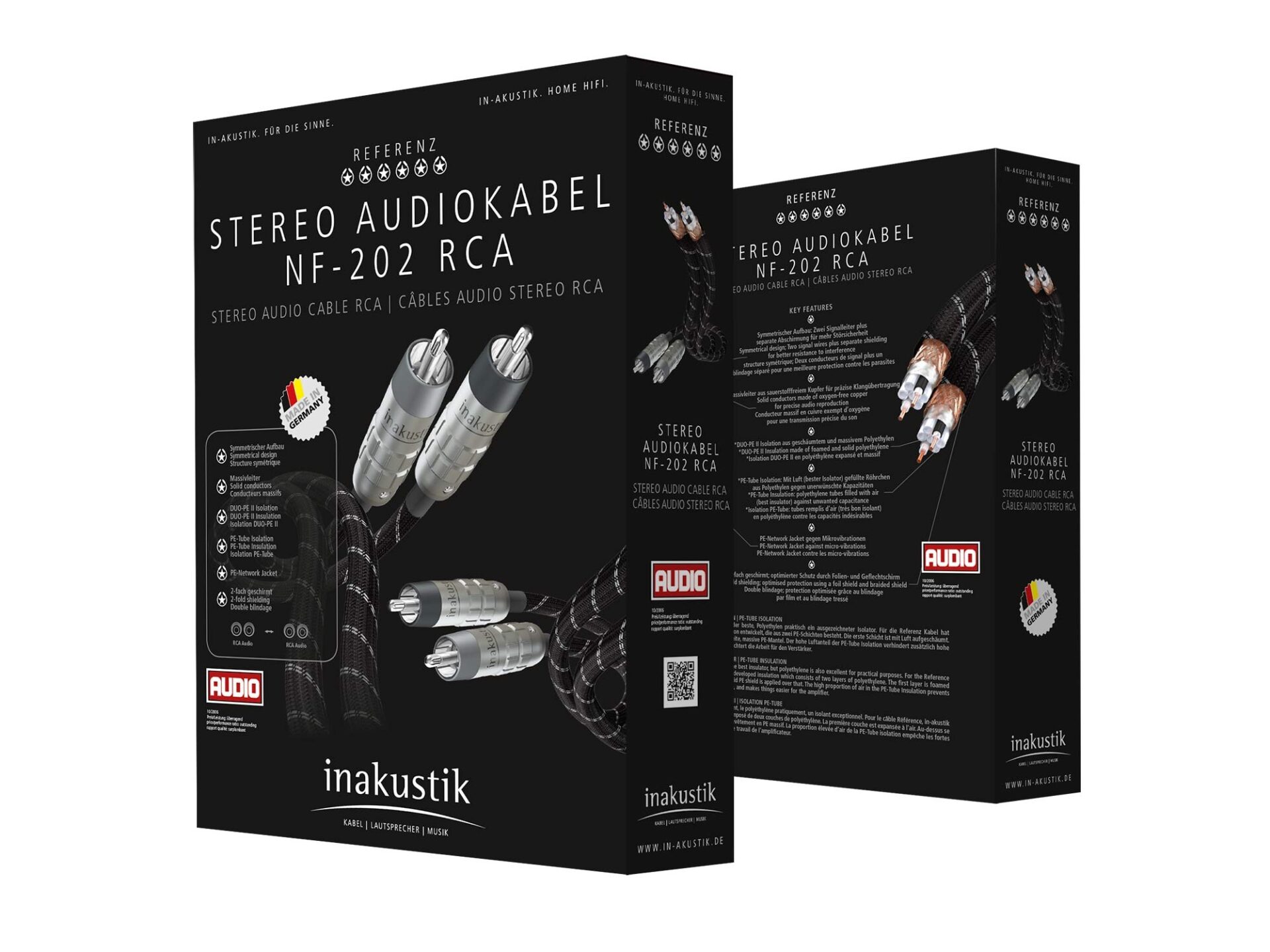
Germany’s long-established record label and Hi-Fi accessory maker Inakustik. For many years they went under the name “Monitor PC”, so some of you may remember them by that name, but in 2008 they apparently retired the “Monitor PC” brand and consolidated everything under the company name Inakustik. In today’s world, a brand name that confusing to search for would have been rather awkward, so I’d say it was a good change. Anyway, I currently use several Inakustik products, and today I’d like to review the RCA interconnect cable that sits at the core of my collection, the NF-202R.
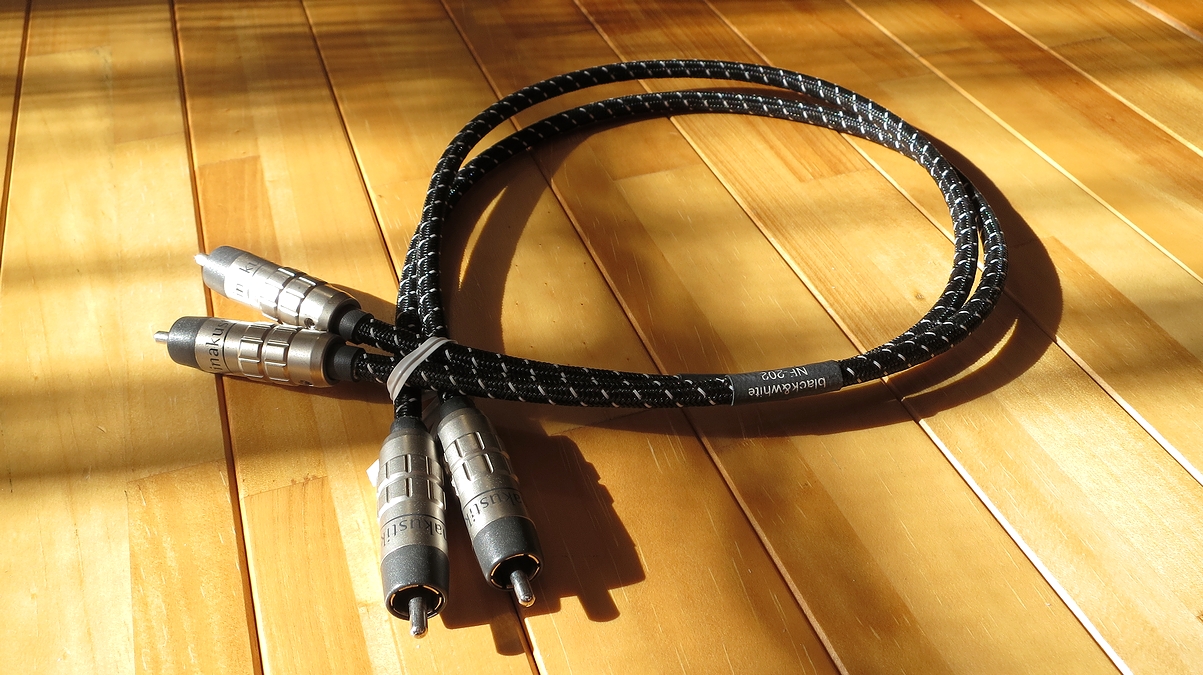
Currently, Inakustik’s RCA cables sold in Japan through their distributor Yukimu number five models in total. The flagship, priced at 330,000 yen per metre pair, is the Inakustik NF-2404 RCA. A newer model inheriting the NF-2404’s construction at a reduced cost is priced roughly the same as the NF-1204 Air, while the Inakustik NF-1603R was designed inheriting the construction of the model below it. The NF-202R I’m reviewing today, and its lower model the NF-102R, occupy the entry-level price bracket, but all of these models are, without exception, hand-made in Germany.
A special hollow structure
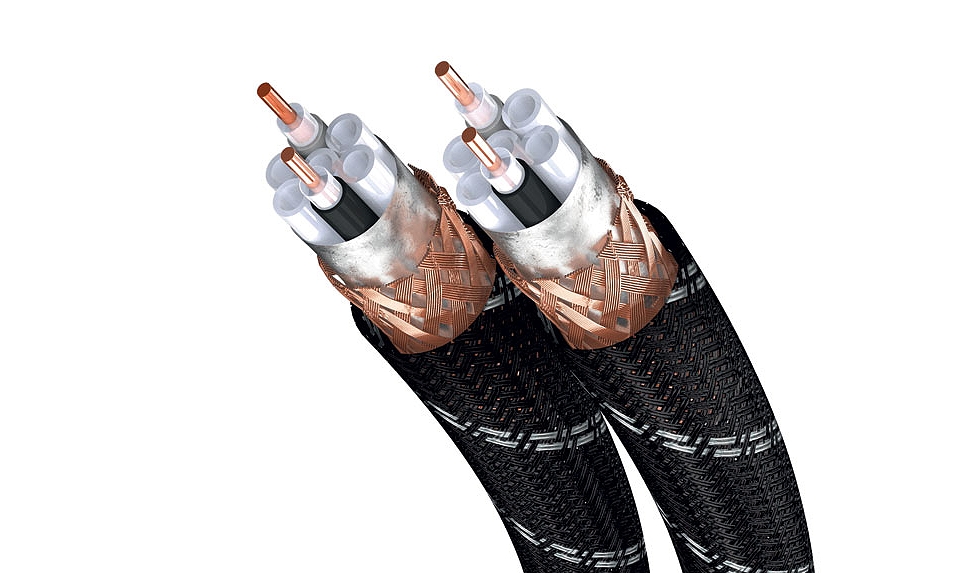
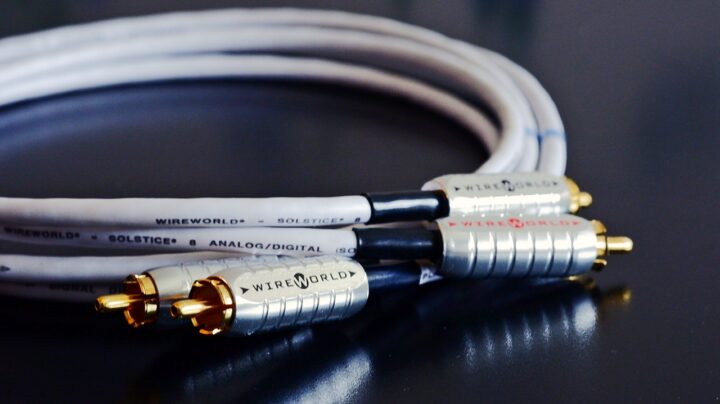
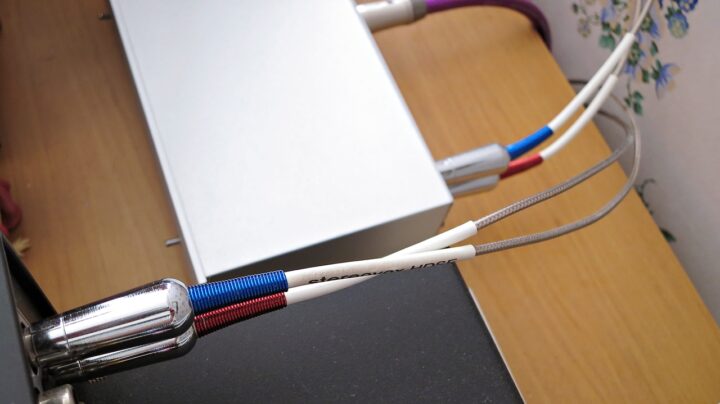
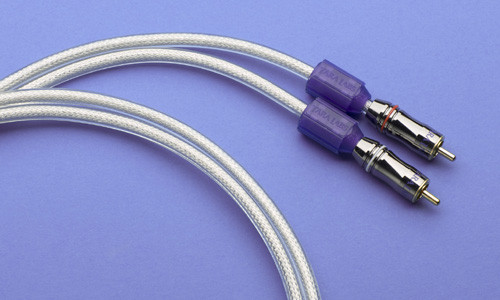
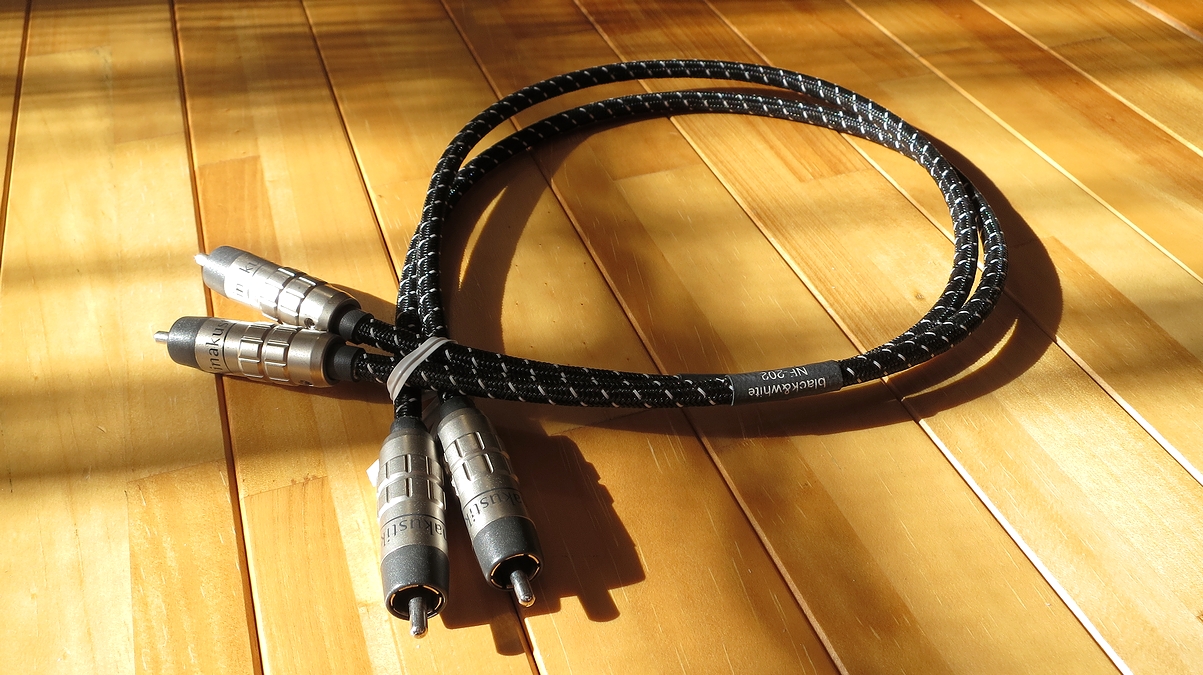
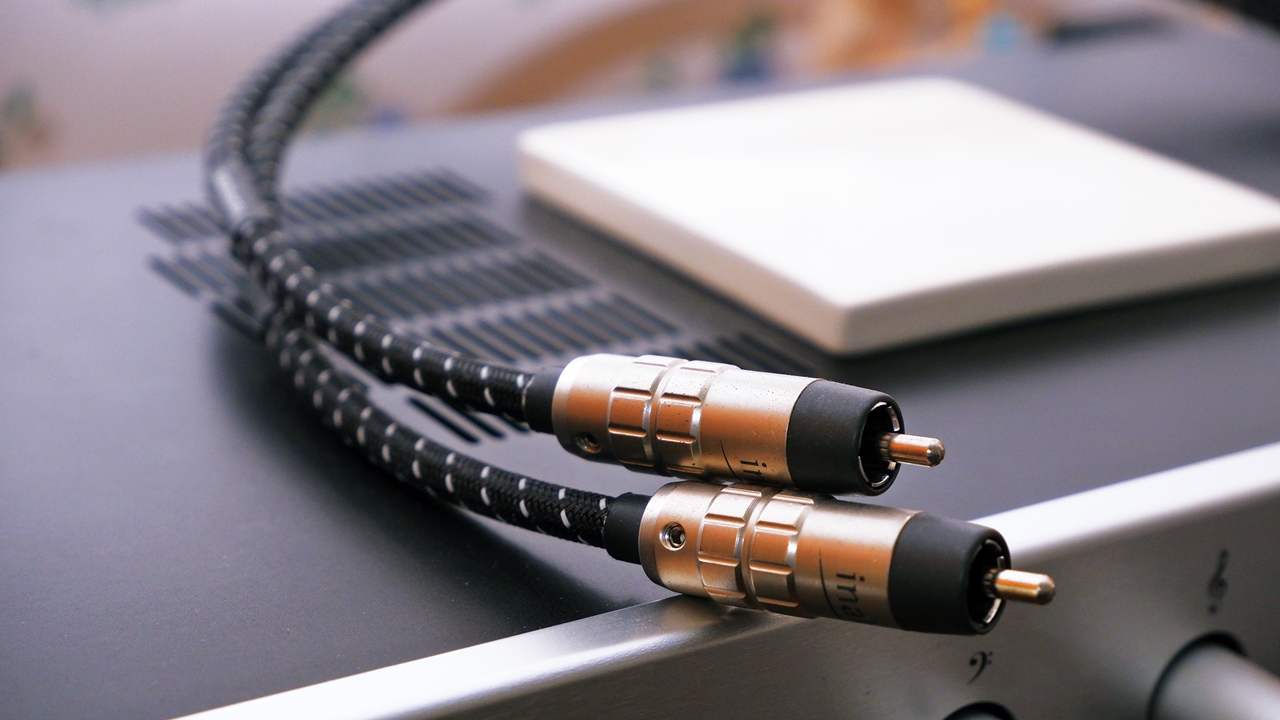
As for the difference between the Inakustik Reference Signalkabel NF-202R and NF-102R: the NF-202 above uses a two-core parallel construction with signal and cold conductors of equal diameter, wrapped in a double shield of aluminium foil and braided copper mesh. By contrast, the NF-102 below uses a coaxial construction with a single aluminium foil shield. Both use unplated OFC solid-core wire, with the NF-202 surrounded by five (the NF-102 by six) hollow polyethylene tubes. The RCA plugs are the same rhodium-plated Inakustik plugs. The contacts are on the looser side, making insertion and removal easy.
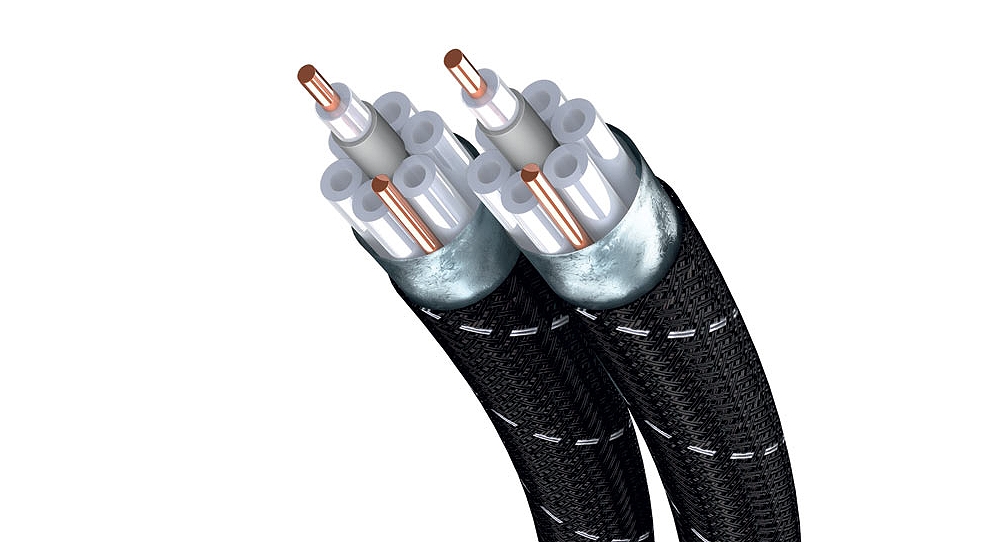
There is a modest price difference between the NF-202R and NF-102R, though it seems less a simple matter of grade and more that the differing construction gives each its own character. The NF-202’s sheath diameter is 7mm (the NF-102’s is 5.8mm) — on the thin side — but since the inside houses thick parallel solid-core wires, it’s quite stiff. Flexibility is not great. Even at this entry-level price point, the construction is, as you can see, unusually elaborate. *In the higher models this goes to even more extraordinary lengths.


 ポチップ
ポチップ
Inakustik NF-202R sound quality review
Now, the sound quality itself, which is really the whole point. When I first connected it new, I found the range oddly narrow and thought, what on earth is this? But after about three months of use, the resolution rose considerably and the sound became eye-opening. Fundamentally, while securing ample resolution, it’s lively and energetic, with strong dynamic contrast in its musical expression — a highly musical character is its defining feature.
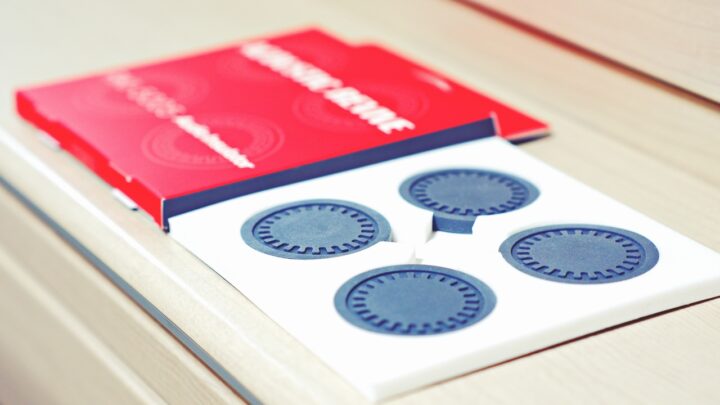
There’s a straightforward, expansive quality typical of solid-core wire, and a smooth, sleek rendering of the sound image. The soundstage is arch-shaped, with the midrange bulging forward, and the sound image is dense and muscular — a type with strong self-assertion in its expression. Its most distinctive trait is a bouncy, springy, rhythmic mid-bass. This resembles the Inakustik RF-ABSORBER, which I use alongside it, quite closely. Extension in the lower direction is a touch narrow, and there’s some lack of deep-bass depth, so the bass is somewhat concentrated in the mid-bass and a little boomy in quality — but the sense of musical drive and its excellent responsiveness are genuinely appealing.
 ポチップ
ポチップ
Given it’s unplated OFC copper wire, I worried it might have that “coppery” tonal colouration, but this RCA cable’s tonal colour is actually neutral — curiously, I don’t sense any coppery colouration at all. If anything, it has a faintly cool temperature with a slight bluish tinge to its neutral colouring. That said, the treble retains a moderate brightness and sense of extension, so it never falls into a grey monotone — there’s a reasonable gradation of tonal colour as well. Perhaps because of this, despite the soundstage being deformed toward a midrange bulge, the overall atmosphere feels rather refined, with a sophisticated, contemporary-German character to the sound. To be honest, it doesn’t suit classical repertoire in the traditional sense particularly well — its colouring feels more suited to modern and contemporary music — but if I had to name a classical label with a similar feel, it might lean a little towards the tonal colour of Germany’s own OEHMS Classics. Thanks to the thorough shielding, the signal-to-noise feel is good, though as a trade-off the soundstage does seem to darken slightly.
Compatibility with other equipment
Here’s how it fared when combined with a few different pieces of equipment.
・ONKYO C-S5VL ⇒ TAG McLaren 60i ☆
・ONKYO C-S5VL ⇒ ONKYO A-1VL ☆
・CI AUDIO VDA2 DAC ⇒ TAG McLaren 60i ◎
・CREEK Evolution-CD ⇒ ONKYO A-1VL ◯
・ARCAM CD72T ⇒ Miuaudio MKTP-2 △ range narrows
・CREEK CLASSIC CD ⇒ Musical Fidelity V90 ⇒ EMF Sequel2 ×
↑This becomes almost unpleasantly overbearing in tonal tendency — comically bad a match.
In my main system, the pairing between the CI AUDIO VDA2 DAC and the TAG McLaren 60i works reasonably well together — the range narrows a touch at both ends, but the DAC’s own character matches the NF-202R’s colouring nicely, and with the added dynamic musicality, it’s genuinely enjoyable to listen to. If I had to ask for anything more, it’d be a bit more delicacy and information density. Even better than this was the ONKYO C-S5VL. I hadn’t originally planned to use it with the C-S5VL at all, but it ended up settling in there, effectively pushing out the Red Rose Music 1934 that had been in place before it.
Compared with the more delicate-sounding Red Rose Music 1934, resolution falls slightly short, but it’s nowhere near a level that leaves anything to complain about even with hi-res DSD sources — remarkably fine resolving power for a solid-core cable. And while the C-S5VL has high resolution, its sound tends toward the thin and slender side, so the cable adds dynamic musicality, a sense of physical presence, and energy to it. Furthermore, pairing this with the Inakustik RF-ABSORBER insulator, which has a similar tonal tendency to the NF-202, this domestic Japanese SACD player was reborn with what you might call a “half-German” sort of atmosphere. I’m curious how it would compare against the slightly cheaper, coaxially-constructed NF-102R, but I’ll save that comparison for another opportunity, should one arise.
~ Summary ~
If you build the Inakustik NF-202R into a system that already leans powerful in its sound, or one with a narrow range to begin with, its shortcomings will likely be exaggerated into an overbearing sound. On the other hand, for a system whose parameters lean too far toward soundstage emphasis, resulting in a diffuse focus and somewhat underpowered feel, I think this RCA cable is the type that will nicely make up for that with concentration and a sense of energy.
 Category: Hi-Fi CablesCategory: Interconnect Cables


Auto Translated by CS5