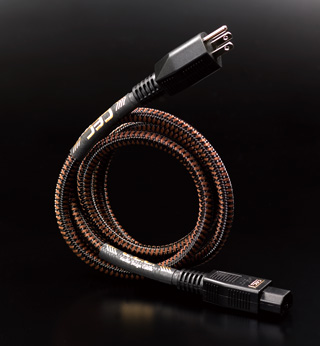
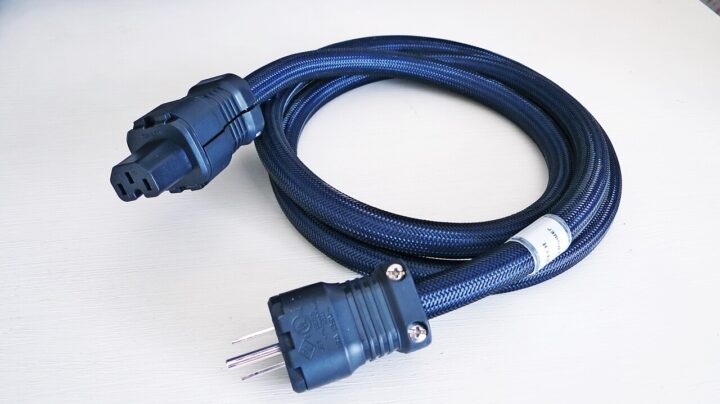
The KHD Densen Sir Tone Spice Cable VFF-2508, which I introduced in a recent review. As an extremely affordable audio power accessory, it was a genuinely clever product in the sense of opening the hobby up to newcomers. The power cable Sir Tone PWC-11008, which I am introducing this time, is by contrast a flagship-level product within Sir Tone’s current power cable lineup — an extraordinarily well-specified, very thick power cable indeed.
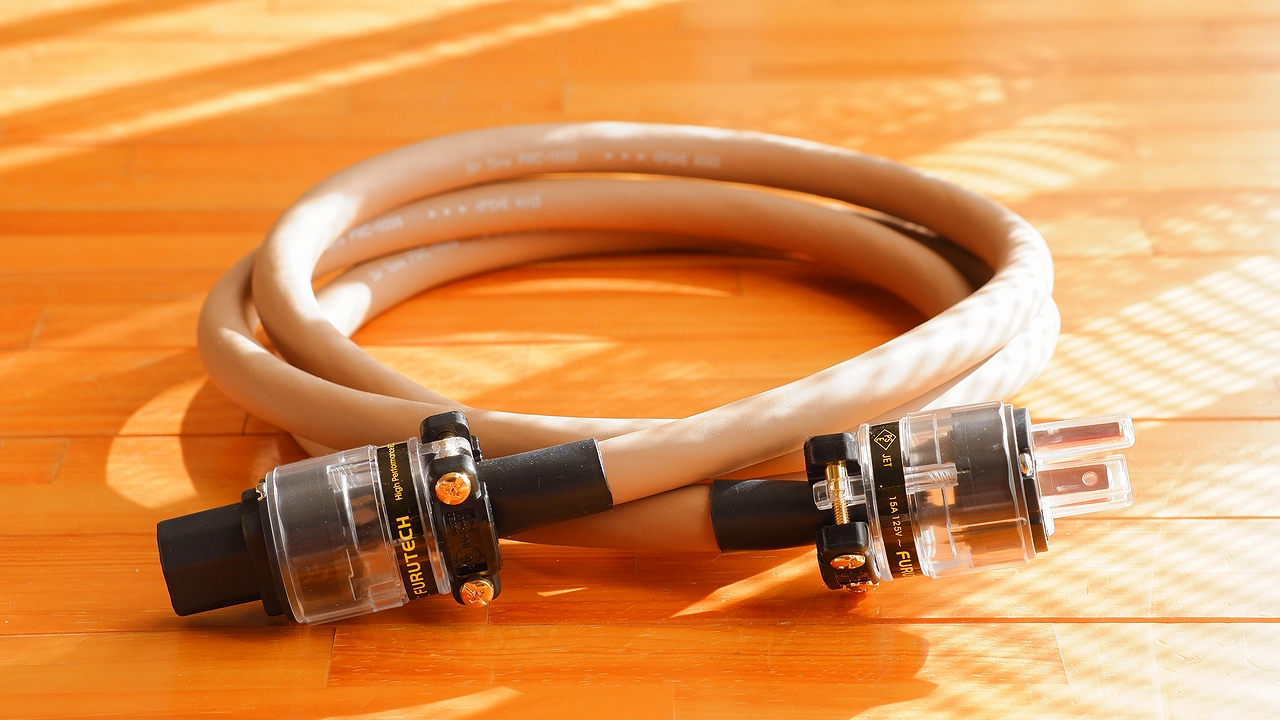
The Sir Tone PWC-11008 power cable was released in spring 2019. It gradually caught fire on social media, centred on Twitter, and together with its derivative models it has by now become something of the hottest best-buy power cable among the discerning audio crowd on Twitter. It is already nearly two years behind the release date, but better late than never — I decided to take the plunge and give it my usual no-holds-barred review. I was still thoroughly sceptical at heart, mind you…
Sir Tone PWC-11008: Price and Overview
The Sir Tone PWC-11008 has a manufacturer’s suggested retail price of ¥5,980 per metre when sold by the cut. The finished cable I purchased this time is priced at ¥25,920 for 2m (FURUTECH plugs), ¥17,250 for 2m (Viborg plugs), ¥14,260 for 1.5m (Viborg plugs), and ¥11,270 for 1m (Viborg plugs)… which is rather expensive. From the Spice Cable at one end of the scale, it has made a bold and head-on charge into the fiercely contested territory of conventional Hi-Fi power cables (which, from the general public’s perspective, are already quite pricey). Moreover, since this is the direct retail price from an electrical cable manufacturer that also handles ODM subcontract production of high-end power cables, the advantage is that they can design and develop products with superior materials and technology at better value than competing products. Sir Tone’s official Twitter account is here.


That said, it is ultimately the product of an emerging brand with little track record in Hi-Fi. Is the sound quality truly worth the asking price? There are probably still more than a few audio enthusiasts viewing it with scepticism. Up to now, Sir Tone was the kind of thing you chose precisely because it was affordable and sounded good — but at this price point, one does naturally hesitate. Even so, among my audio friends on Twitter, several followers whom I personally regard as highly experienced with audio accessories and whose ears I genuinely trust have been lavishing praise on the Sir Tone PWC-11008. And having witnessed them adding cable after cable in quick succession — not just one — it became impossible for me to simply ignore it…
Variations of the PWC-11008 Model Number
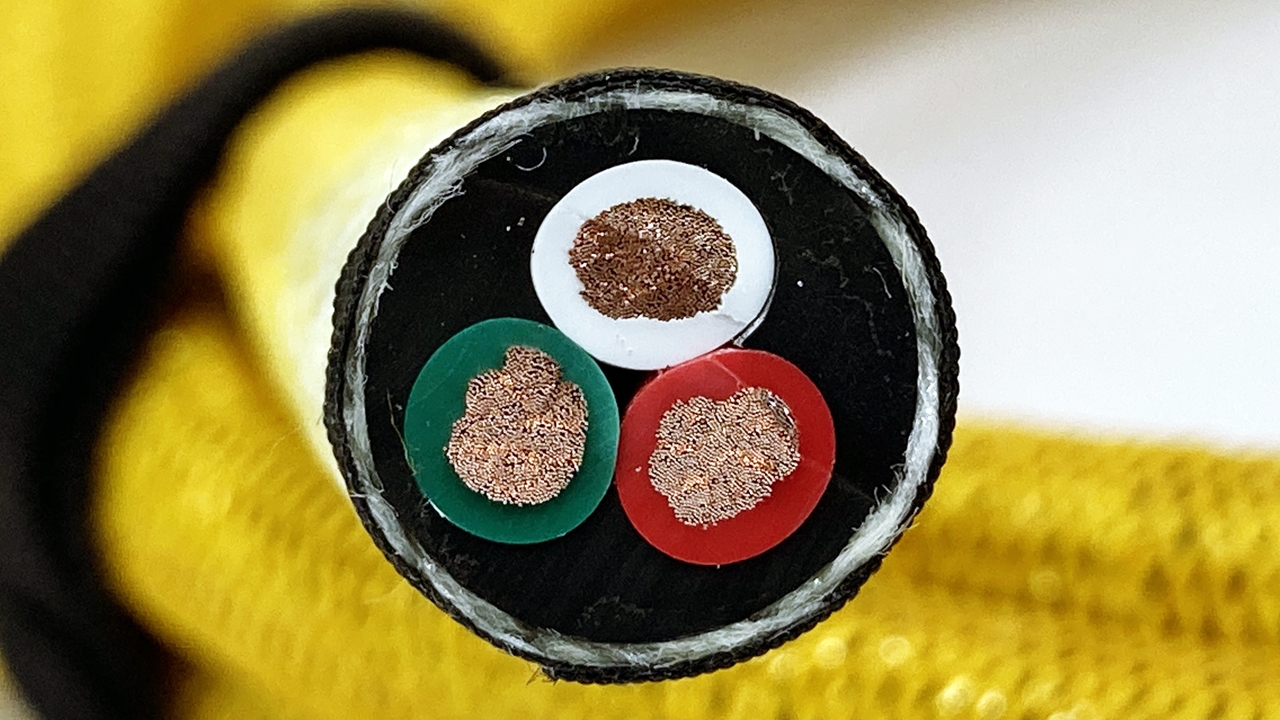
The Sir Tone PWC-11008 (and this is admittedly a little confusing…) comes in three structural variants under the same model number, all using D-on Cu5 conductor material with an ultra-fine multi-strand configuration of 0.08mm/1,100 strands at 5.5SQ. At first glance it may look like the simple cabtyre construction commonly found in mid-range and below audio power cables, but to my knowledge there is no other product that uses such fine multi-strand wire in this way. The recent trend has been toward reducing the number of conductors as much as possible by increasing the diameter of each individual strand, aiming for a near-solid-core character — and PWC-11008 points in exactly the opposite direction. Another point worth noting from a Hi-Fi perspective is that the purple/brown 15.2mm large-diameter type uses white “cotton yarn” for insulation. The insulating sheath wrapping each of the three D-on Cu5 conductors directly also has, on closer inspection, a triple-layer structure of “PVC / conductive resin shield / PVC.” And then the conductors are wrapped in cotton yarn before being covered with the brown/purple PVC outer sheath — a construction that shows a considerable degree of care and attention. ※ Note that the thinner black type omits the cotton yarn and instead uses a black PVC insulation layer. ※ PVC = Polyvinyl Chloride
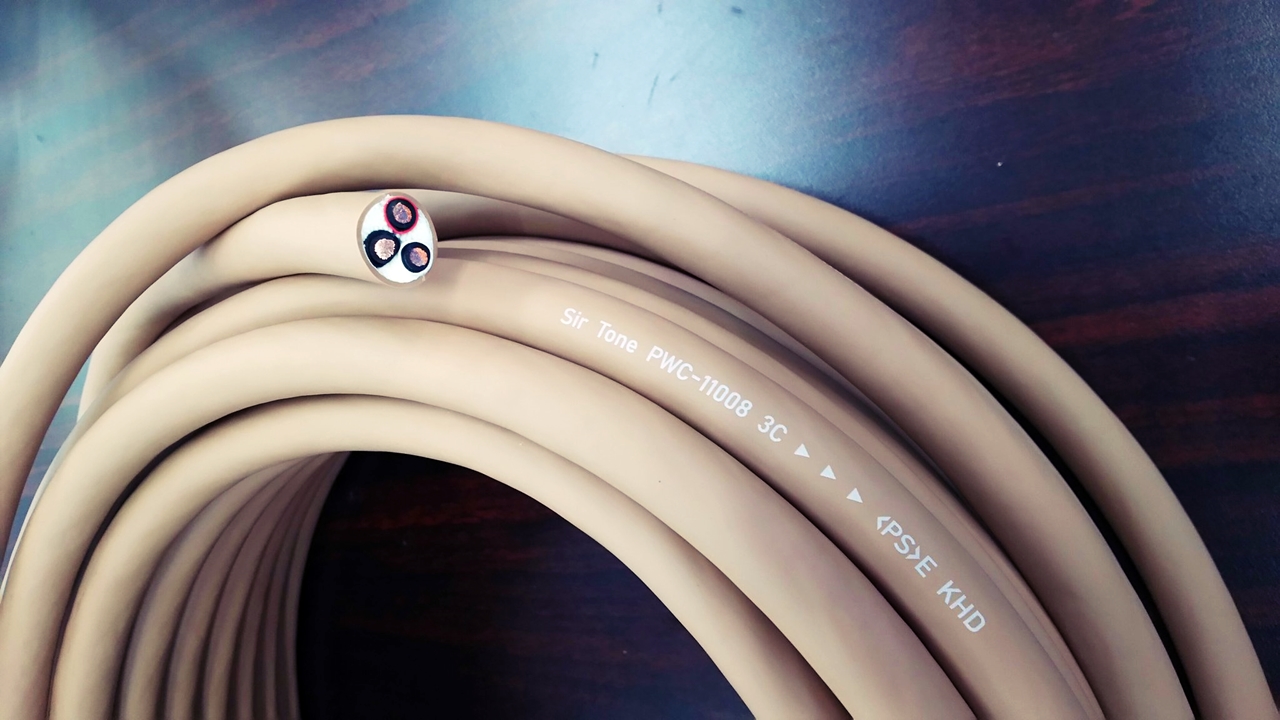
There is the reference model with cotton yarn filling for insulation and vibration damping, in 3-core Φ15.2mm in two colours — purple and brown. Then there is the 3C black type, which retains the 5.5SQ conductor cross-section but achieves a slimmer Φ12.1mm diameter by changing the insulation to PVC (polyvinyl chloride). And finally there is the 2C black type, a 2-core Φ11.4mm variant that omits the earth conductor. In total, there are three — or rather four — models in the range.
1 PWC-11008 3-core Cotton Yarn Φ15.2mm Purple
2 PWC-11008 3-core Cotton Yarn Φ15.2mm Brown※ Colour variants
3 PWC-11008 3C 3-core PVC Φ12.1mm Slim Type Black
4 PWC-11008 2C 2-core PVC Φ12.1mm Slim Type Black
【Other】
・ Limited-colour 3C slim type with colourful thread wrapping on the outer sheath
・ PWC-5008 D-on Cu5 0.08mm/500 strands 2.5SQ model, 2C and 3C types
・ PWC-4008 D-on Cu5 0.08mm/400 strands x3 10.5mm White 2SQ model
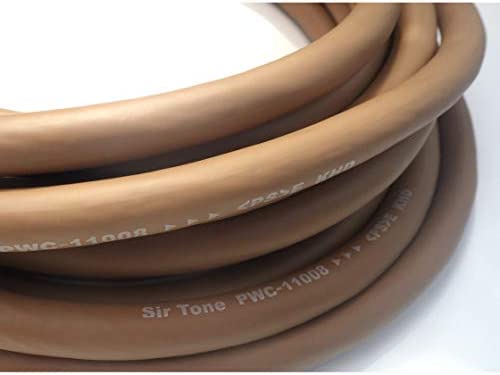
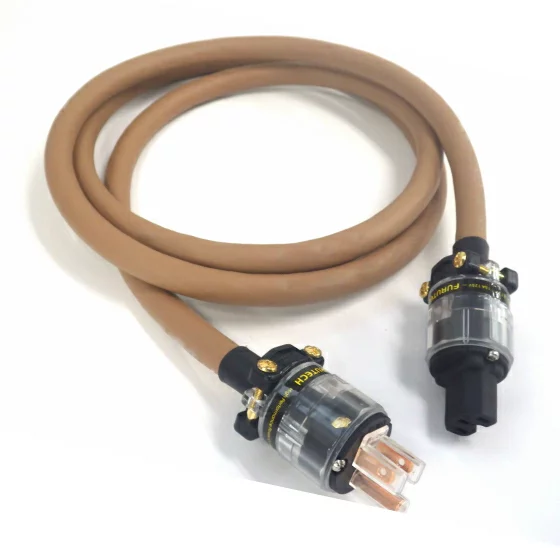
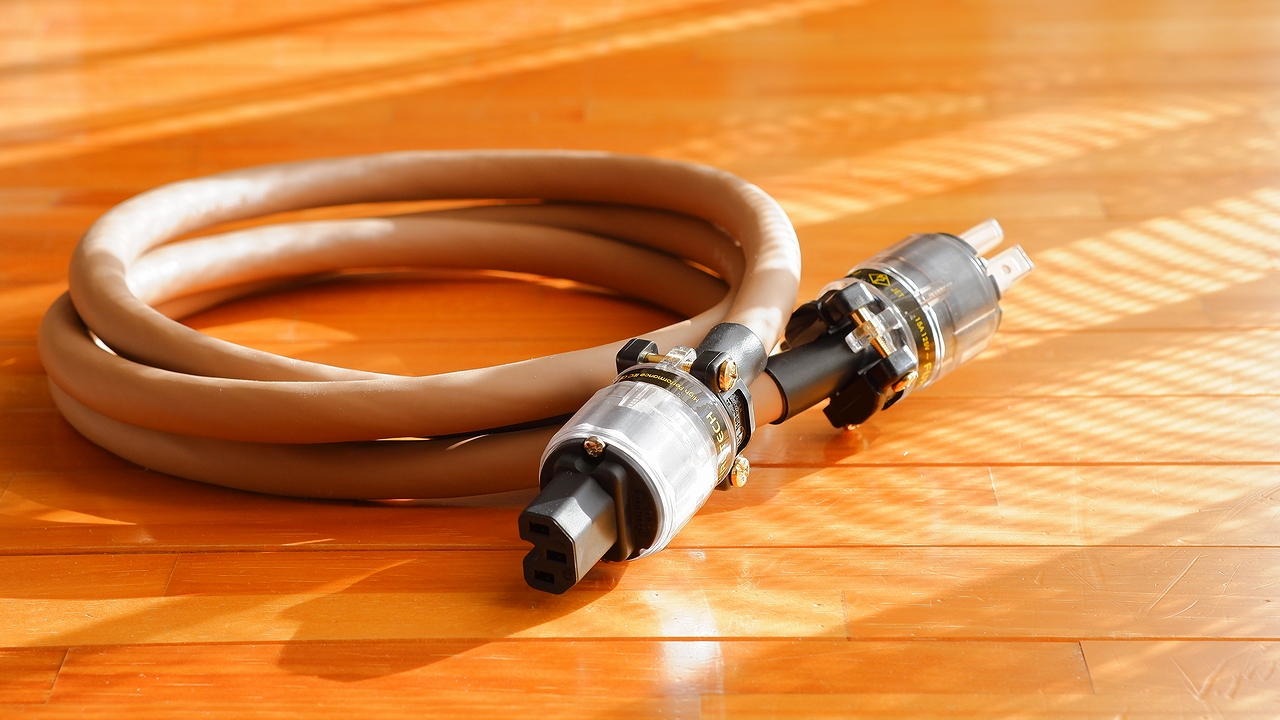
What I am reviewing this time is number 2: the PWC-11008 3-core Cotton Yarn Insulation Brown Type. “Brown” is perhaps not quite the right word — the actual appearance is an elegant matte beige. Purple power cables have been made by various manufacturers over the years, but a beige one is actually rather unusual when you think about it. When I first saw it, I was reminded of cables by the Dutch maker van den Hul. At Φ15.2mm and the same 5.5SQ, it is noticeably thicker even compared to my Nanotec Systems #308 (Φ13.5mm), so it would be worth paying attention to plug compatibility when making up your own cables. ※ As a rule of thumb based on experience, a 3-core cable with an earth conductor will tend to sound better than a 2-core of the same material. Likewise, the PVC-insulated slim type and the cotton-yarn-insulated purple/brown large-diameter type can be expected to differ in sonic character to a degree. ※ I have also received information via a follower suggesting that the 3C/2C slim types actually sound better than the purple/brown cotton yarn variants — something I plan to verify, including compatibility considerations, at a later date. Also, please bear in mind that even with identical parts, finished cables and cut-to-length stock can sound different depending on the assembler’s skill and technique. ※ Basic knowledge on crimp terminals
PWC-11008 Finished Cable: External Appearance
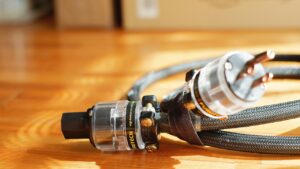
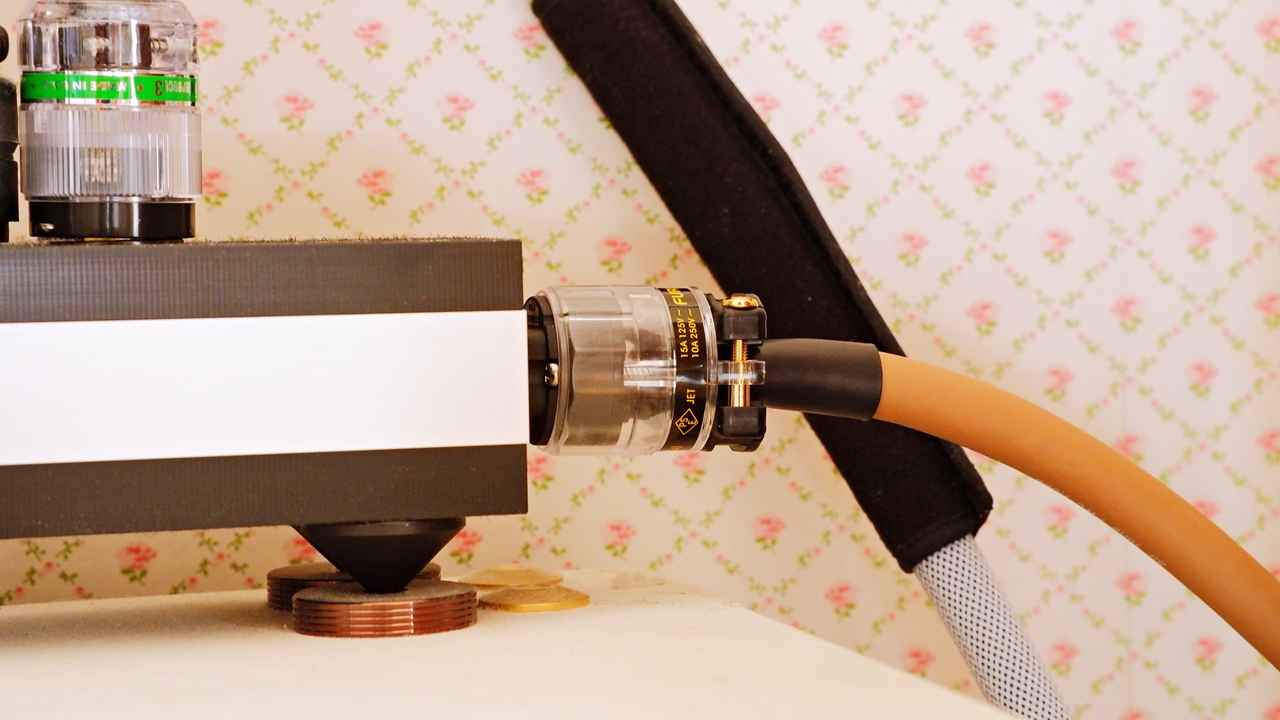
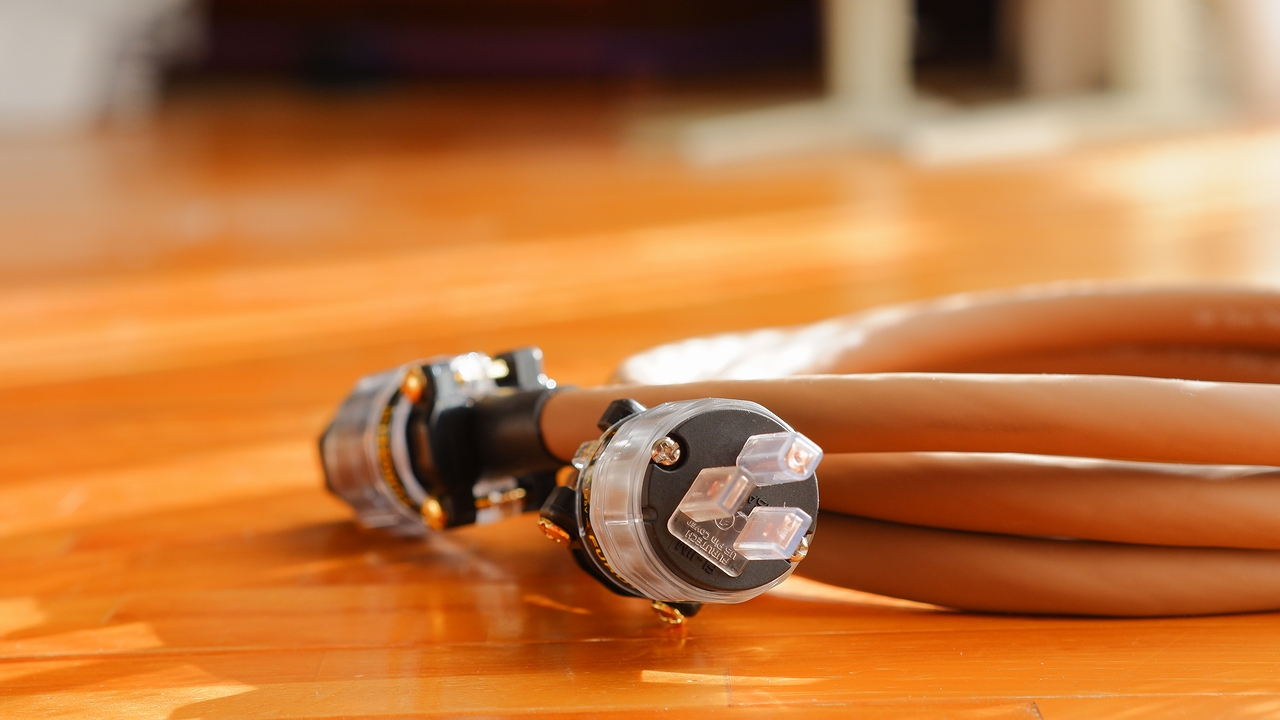
The beige outer sheath has a matte finish and a sense of quality. It is thick, but reasonably supple. With care around the weight, it has enough flexibility that routing should be reasonably manageable. The plugs on the finished cable are the gleaming FURUTECH FI-11(Cu)/FI-11M(Cu) pure copper plugs.
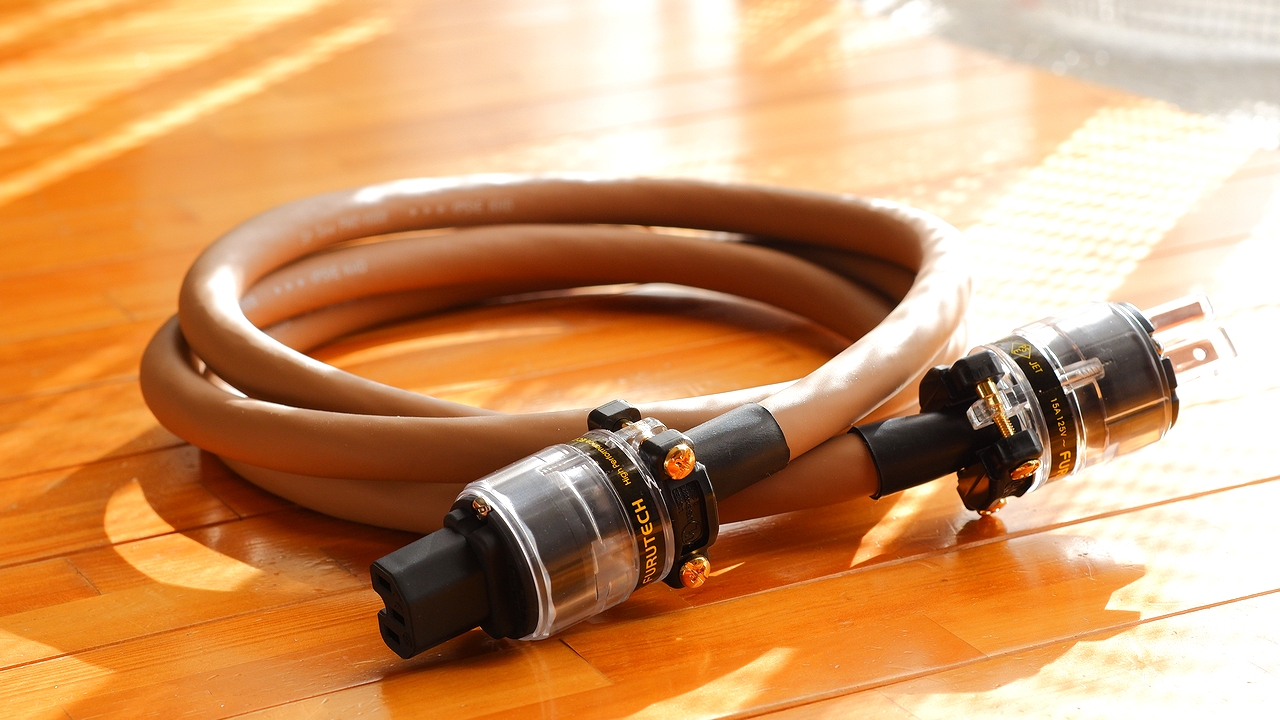
This is the same configuration as the FURUTECH The Astoria among my current finished power cables. My slight concern with the less expensive Viborg Audio power plugs is that plug quality could become the bottleneck, though if one is considering a plug upgrade further down the line, deliberately choosing the cheaper Viborg is certainly a valid option. I chose the FURUTECH FI-11(Cu)/FI-11M(Cu), whose sonic character I already know well and whose reliability I trust.
Sir Tone PWC-11008 Sound Quality Review
Now for the sound quality review of the PWC-11008 itself. I inserted it into the most critical position in my main system — between the wall outlet PAD CRYO-L2 and the power distribution box J1 Project PT-4. This replaced a power cable I had assembled myself using Nanotec Systems #308 POWER STRADA Wonderful — which also features a 5.5SQ conductor like the PWC-11008 — terminated with FURUTECH FI-28(g)/FI-28M(g) plugs. The Nanotec Systems PS308 uses a PC-Triple C conductor in a cabtyre structure. In terms of cut-length pricing it is one of the natural rivals to the PWC-11008. However, the power plugs at both ends, the gold-plated FURUTECH FI-28(g)/FI-28M(g), represent a step above the FI-11(Cu)/FI-11M(Cu).
I ended up live-tweeting my first impressions, because the sound that came out of the speakers immediately left me stunned.
The perceived S/N ratio is excellent; the noise floor is quiet, the presentation open and transparent, and the soundstage spreads broadly — upward, sideways, and deep into the background — with a strong sense of perspective. There is a great deal of fine detail, and the resolution is very high. It has a quality reminiscent of high resolution in the best sense — like a camera sensor with a very high pixel count. ※ There is absolutely none of that tendency, common in many high-end cables, of smearing over fine background detail in order to create an artificial sense of S/N.
Imaging is fine-lined, crisp, and precise in a dry sort of way. It is sharp, with excellent leading-edge clarity, and overlaid with a moderate lustre that brings a sense of moisture to the decay as well. Three-dimensional placement is also excellent, aided by the breadth of the soundstage. Images remain focused and concentrated without any loss of density, even while sounding supple and delicate. The frequency range extends generously in both directions; the mid-to-upper-mid and high frequencies are sharp and solid, yet — curiously — never harsh or fatiguing. The midrange is detailed without becoming thin, and feels full. The low frequencies do not quite match the Nanotec Systems PS308 × FURUTECH FI-28/FI-28M in weight and body, but they carry a distinctive and convincing sense of air, with ample resolution. The bowing of double basses, cellos, and viols is rendered with visible physicality, while the airy realism is simultaneously preserved. The sense of pace is moderate — it does not strike me as particularly fast — but because the articulation and projection of images are excellent, it never feels sluggishly slow. Overall the character is supple and neutral, and it is difficult to describe it as either hard or soft in any simple way.
The stage floor is deep, slightly warm, and carries a faint sense of shadow; the musical portrayal is delicate, refined, and elegant. There is a mildly static tendency, yet somehow that does not push the music in a less engaging direction — rather, it carries a kind of fundamental descriptive power that draws your attention to the music itself, almost unconsciously. It would be more accurate to say that it excels in transparency to musical expression than to say it has audiophile-constructed resolution. Many high-end cables add eroticism, rhythmic drive, and other musical qualities to the sound as an afterthought, but the Sir Tone PWC-11008 does none of that — and yet the heart of the performance comes through with complete clarity. In other words, this is a thoroughbred power cable that strips away superfluous ornamentation and, in its place, patiently illuminates the musicality inherent in the performance itself — with a richness that comes from within.
The Structural Merits and Drawbacks of Ultra-Fine Multi-Strand Wire, and the D-on Cu5 Conductor
A 5.5SQ large-diameter conductor naturally invites associations with a powerful, bass-heavy sound — but in the case of the PWC-11008, the hallmark is wide bandwidth, high resolution, and a broad soundstage, combined with sharp, clean, and well-defined imaging. It is the opposite of the kind of cable you might expect from a very thick conductor — the sort with a pyramidal tonal balance, thick lines like a crayon, and dead highs where fine sonic detail simply goes missing. The conductor’s capacity seems oriented more toward filling a wide soundstage with a wealth of detail. Whether it is strings, piano, acoustic guitar, or wind instruments, the timbral realism evocative of live performance is consistently remarkable.
The typical problems associated with a soft, thick multi-strand construction are smearing of images, muddiness, and a perceived reduction in pace. In Sir Tone’s case the sound is crisp, and that sense of vagueness (like the American Monster Cable or German old-style Monitor PC cables) is somehow entirely absent — though in the Spice Cable VFF-2508, a slight smearing quality was both a minor personality trait (a kind of “spice”) and, depending on the context, something one might find a touch bothersome. In the PWC-11008, however, this smearing has been brought neatly under control, channelled instead into high resolution and richness of detail — elevated, one might say, to a higher plane. It is, in other words, a sound that makes the most of the advantages of high-purity multi-strand wire.
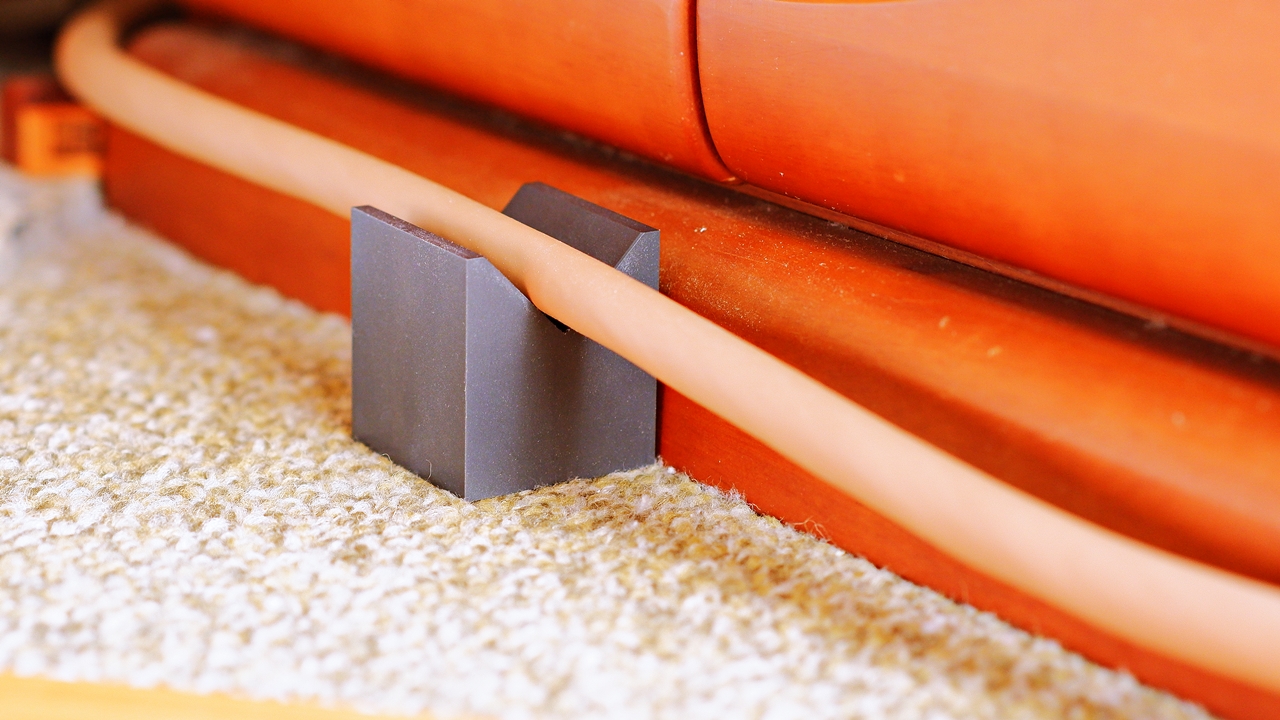
The proprietary D-on Cu5 conductor manufactured in-house at KHD Densen was originally developed as an industrial cable achieving high conductivity, and its technical details remain undisclosed. From a listening perspective, however — including the Spice Cable — my impression is that it belongs to the same sonic family as unplated, high-purity OFC wire. It does not produce the hard, driving power of PCOCC, but I had absolutely no sense that it was inferior to current rival materials such as PC-Triple C or 102SSC in terms of resolution or soundstage reproduction — that particular concern turned out to be entirely unfounded.
If I were to identify something in my current cable collection with a vaguely similar character, it might be the Mark Levinson by Red Rose Music 1934, which uses Litz wire. The Red Rose Music 1934 evokes a quality reminiscent of certain electrostatic loudspeakers, though in that cable’s case one pays for it with a somewhat edgy high frequency and a tendency for the contour of images to be emphasised at the expense of density. The Sir Tone PWC-11008, however, appears to have been carefully tuned by ear during development, and those negative tendencies are very effectively kept in check.
Sound Quality Changes After One Week of Initial Burn-In
One week has passed. Cables that sound good right out of the box can sometimes shift in balance during the initial burn-in period and end up sounding rather less compelling. With the PWC-11008, however, things seem to be holding up well so far. The sharpness in the upper frequencies has acquired a more natural quality, and volume headroom has improved. In addition, the low-frequency extension, which initially seemed slightly elevated and a touch thin, has been gradually deepening — retaining the airy realism while the sense of insufficiency recedes — or at least, the impression of wideband extension seems to be growing further. The soundstage has widened in step with this.
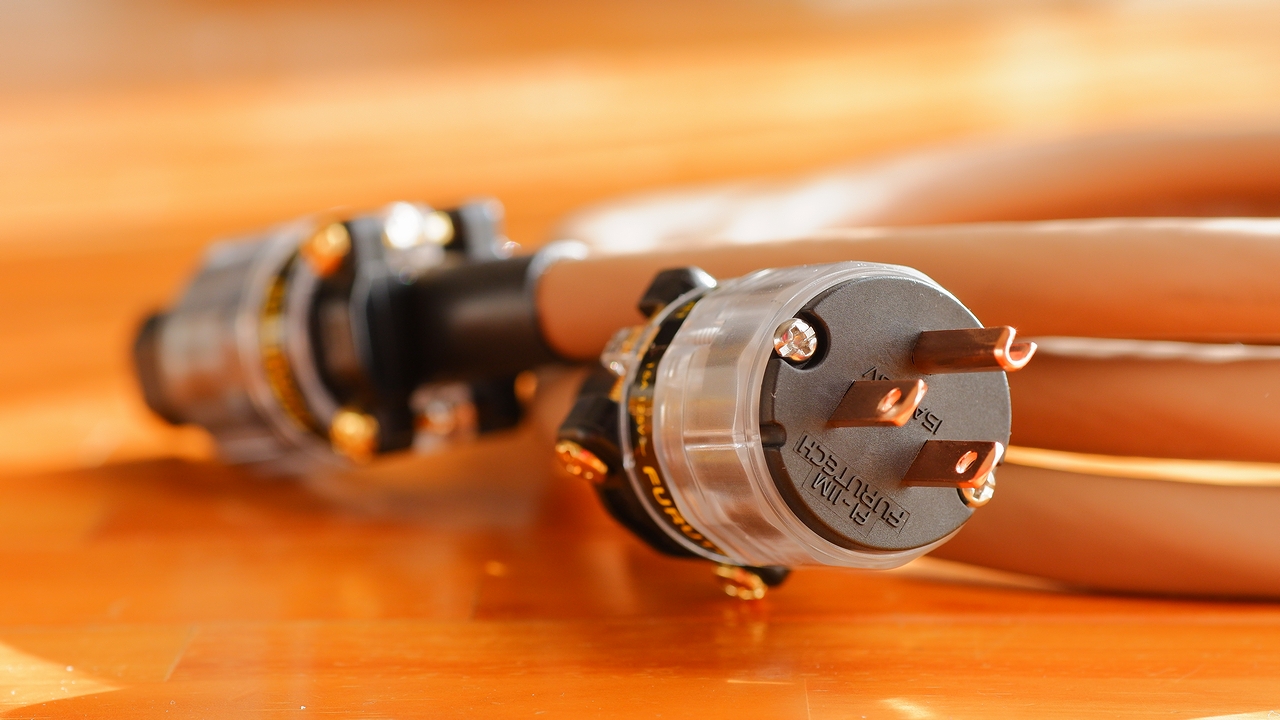
Personally, I find this transparent, airy low-frequency presentation convincingly real, but for those seeking the kind of audiophile-processed bass that is heavy, solid, and punchy, there may still be a slight sense that the extension and low-frequency drive are not quite enough. To some extent that could be addressed by swapping to a power plug with a stronger low-frequency or wider-range character. And I suspect things will improve further still in another month. Also, the warm-toned colouration and slight darkness that I noticed initially — which I believe to be due to the power plug — has largely receded, and in its place a silky texture, seemingly attributable to the white cotton yarn, now occasionally shimmers through in things like the bowing of string instruments. This too makes the presentation feel more acoustically natural overall.
FURUTECH FI-11 (Cu) / FI-11M (Cu) as Fitted
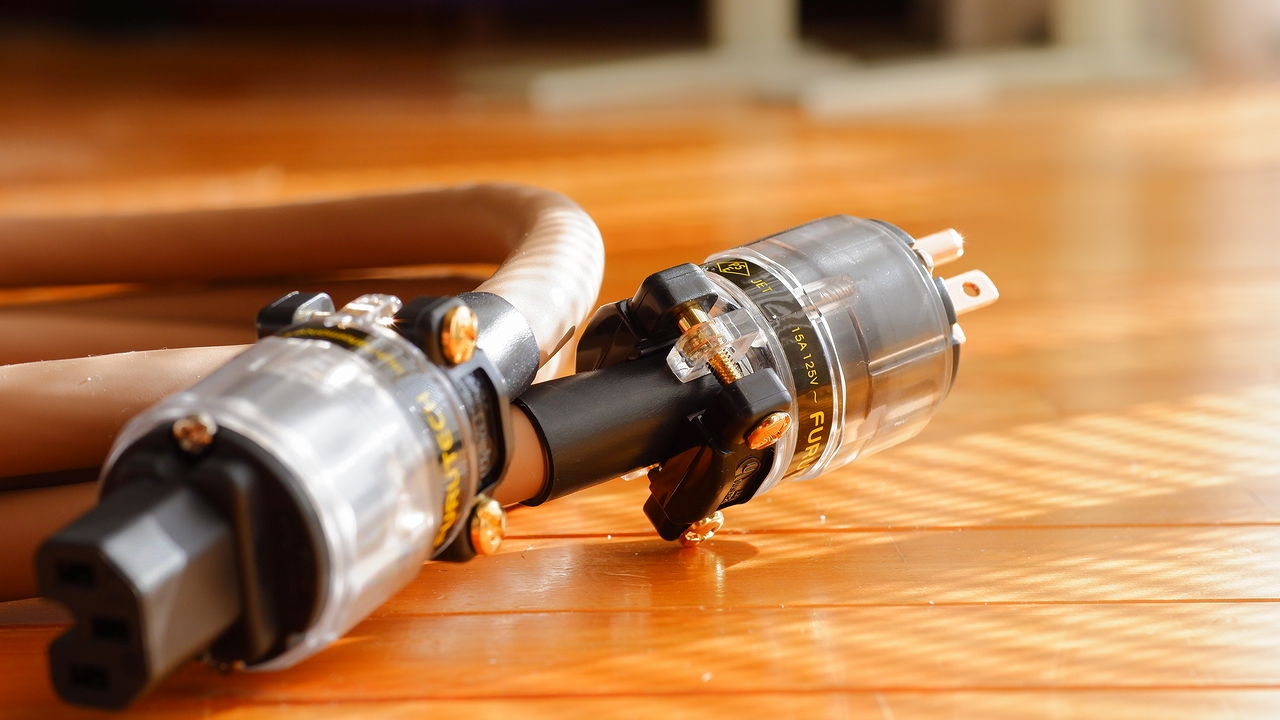
Since this review is of the finished cable fitted with FURUTECH FI-11(Cu)/FI-11M(Cu) at both ends, please bear in mind that the sound quality of the plugs themselves is to some extent folded into the result. ※ Incidentally, the connection between plug and cable on the finished product uses Nihon Pressure (JST) OFC oxygen-free copper tinned Y-terminals, and their sonic contribution is also part of the mix. The sound character of the FURUTECH FI-11(Cu)/FI-11M(Cu) on their own tends toward a warm, slightly dark tonality, with a robust, energetic, and somewhat broad image presentation centred on the midrange and upper bass; among high-end power plugs, however, they are not particularly outstanding in terms of detail retrieval or frequency extension, and the soundstage — both vertically and horizontally — is not especially wide in my view. So please interpret this review with the understanding that those qualities have been added to and subtracted from the result accordingly.

 ポチップ
ポチップ
The fact that the soundstage comes out this wide even with the FURUTECH FI-11(Cu)/FI-11M(Cu) fitted is a genuine surprise, and equally, the density in the midrange and the quality of musical portrayal — as well as the “warm, faintly shadowed” quality described earlier — are likely to carry a fair degree of the FI-11(Cu)/FI-11M(Cu)’s character. I can already foresee that before long I will not be satisfied with these plugs anymore, so I expect I will end up writing about a plug swap at some point. In the online community, the Oyaide P-004/C-004 beryllium copper unplated plugs are an extremely popular choice with the PWC-11008. I do happen to have the Oyaide P-004 platinum-palladium version to hand, but it leans toward a polished, coloured sound, and compared to unplated plugs the bass tends to be somewhat shallow…
What Kind of Hi-Fi System Is It Suited To?
In terms of compatibility with different music genres, from what I have seen on Twitter it has been praised by enthusiasts whose primary listening is classical, anime songs, jazz, and Western rock and pop alike. It is also popular among DIY builders, junk Hi-Fi enthusiasts, and DAW users. The ratio of positive to negative opinion is roughly 9 to 1 at a glance. From my own perspective, I find it an excellent match for classical music in particular. In short, it is a cable that is not particularly fussy about source material — it has no extreme character bias in any direction. At the system level, for those still in the entry-to-mid-range territory where fundamental resolution is lacking, it seems likely to bring a dramatic improvement in fine detail retrieval, freshness, and spatial transparency in most cases.
On the other hand, if you are after a thick, bold, heavy-hitting, high-powered sound with no particular interest in fine detail, there are other options better suited to that. And in the case of a high-end system that has already achieved an extreme level of resolution, the cable might find itself without a clear role — perhaps even sounding anonymous. If anything, it is suited to taking a system of any class that is still short on information and bringing it closer to a flat, wide-band character. In a system where the tonal balance is already well in order, it should translate directly into a broader soundstage and an increase in what one might call the transparency pixel count.
Compatibility with the AUDIO STYLE Main System
Ever since I replaced the main system’s integrated amplifier with the AUDIOLAB 8300A (under construction) last spring, there have been many areas of modern-day improvement — drive capability, information retrieval, pace — but the distinctive soundstage breadth and sense of wetness that I had with the previous TAG McLaren 60i was lost, and overall the system had still not quite returned to its former level. Now, having inserted the Sir Tone PWC-11008 at the very root of the main system, I feel that I have at last arrived at a three-dimensional space that rivals the old soundstage — and beyond that, a sound with a pixel density that simply was not there before. In terms of total sound quality, I feel as though the TAG McLaren 60i era has finally been surpassed. In particular, the lustre and tonal richness that had been lacking, along with the sense of frequency extension in both directions — the things about the AUDIOLAB 8300A that had been nagging at me — were essentially blown away entirely. With results this good from the main system, I naturally find myself wanting to try the PWC-11008 as the centrepiece of my sub-system next… the purple or the slim 3C type might also be interesting… and so I am already mentally counting my chickens, and like so many of my fellow followers it seems I am about to tumble headlong into the Sir Tone additional-purchase swamp…
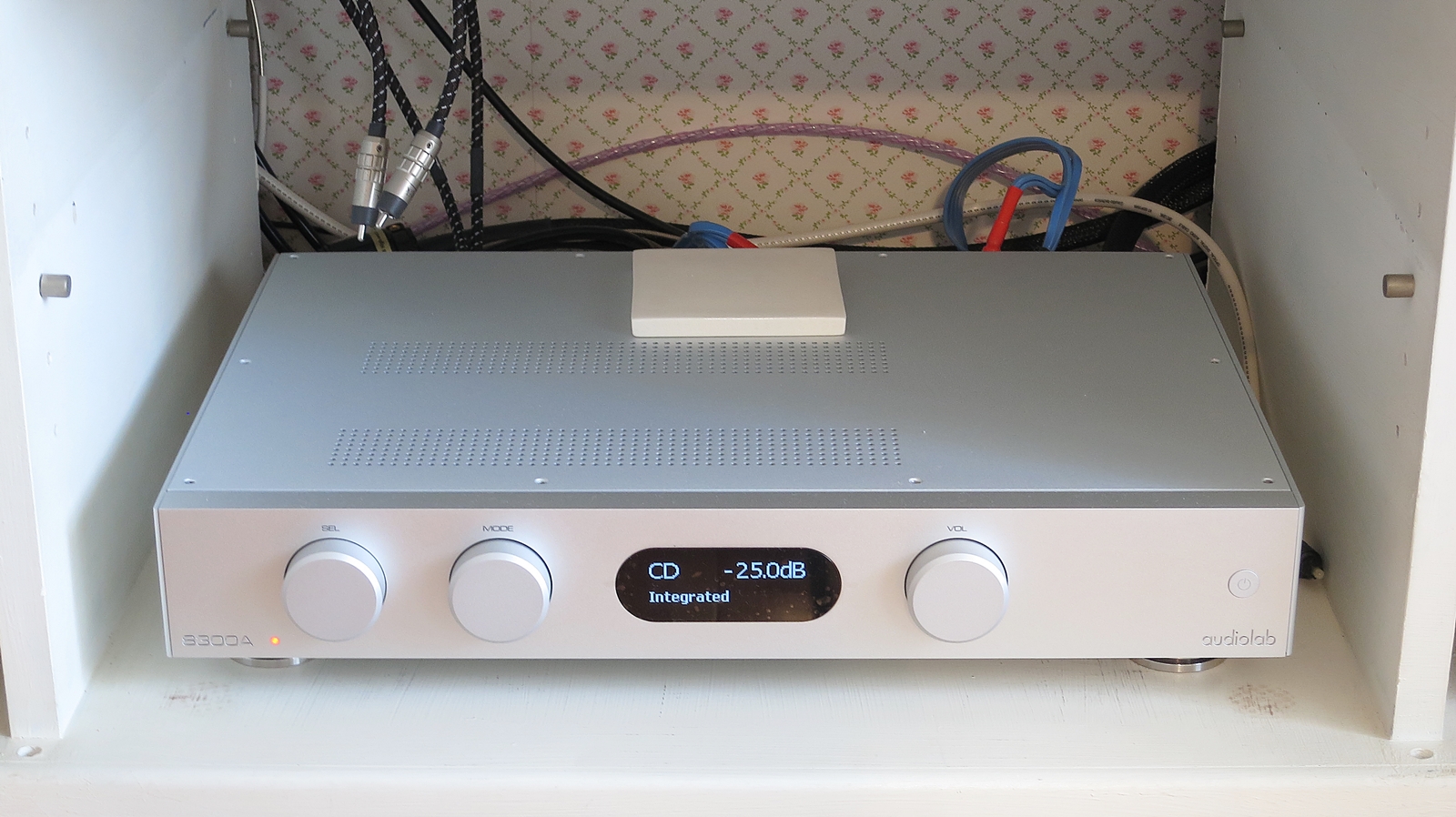
Also, within my system, the only component where I now notice a slight lack of low-frequency extension is the SACD player, the ONKYO C-S5VL (※ the root cause being that this player’s bass has always been rather thin to begin with), so I plan to address the balance there by reviewing the SACD player’s power cable. The solution is already clear to me, so I will write that up at a later date.
Sir Tone’s Brand Image
Sir Tone products are sold through a different channel from other audio manufacturers — at present they are not available through regular audio retailers, only through direct sales from the maker. The original product lineup was aimed more at guitar amplifier users and other musicians than at Hi-Fi enthusiasts as such, and the product packaging is simple, with no lavish presentation boxes of the kind associated with accessories in the traditional sense. As the rather charming, almost child-like logo suggests, the brand has a remarkable lack of the kind of luxury appeal aimed at the snobby species known as the Hi-Fi enthusiast.

All things considered — including the fact that it is a new Japanese brand with little prior presence — I think it is honestly an easy brand for high-end Hi-Fi enthusiasts to dismiss entirely. In fact, I myself had been somewhat dismissive of it; the sound quality achievable with the Spice Cable VFF-2508, while impressive value for money, did not exceed what I could have predicted from my own experience, so I had imagined the PWC-11008 would similarly fall within a predictable range that was roughly commensurate with its price.
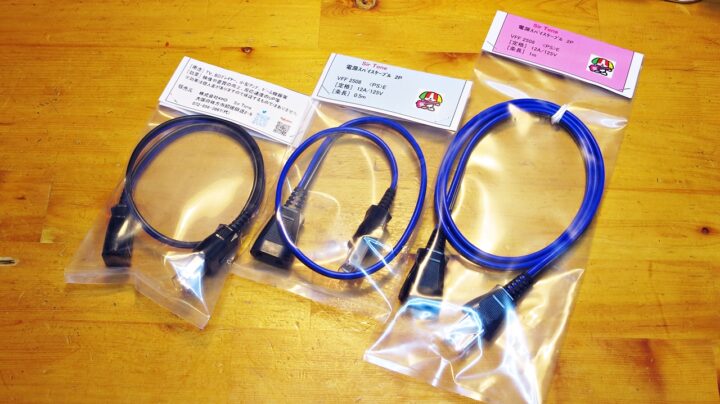
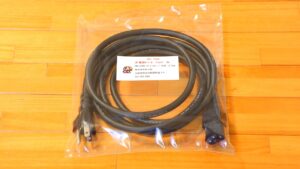
And yet, the sound that came out left me utterly speechless. On Twitter, I had occasionally come across individual reviews claiming that the Sir Tone PWC-11008 surpassed power cables from other well-known high-end manufacturers in resolution and sound quality — claims I had taken as little more than fantasy from people who had barely any real experience with high-end power cables. But having actually used it, I can say this is not remotely a matter of good value for money. It goes well beyond that. How to put it — if this cable were sold by some overseas high-end brand, dressed up with shiny silver plugs and a glossy black outer sheath and placed in a presentation box, then marketed with that peculiar brand of obsequious arrogance, I think any number of high-end enthusiasts would happily snap it up for upwards of ¥100,000… or rather, perhaps that would have been the smarter business move.
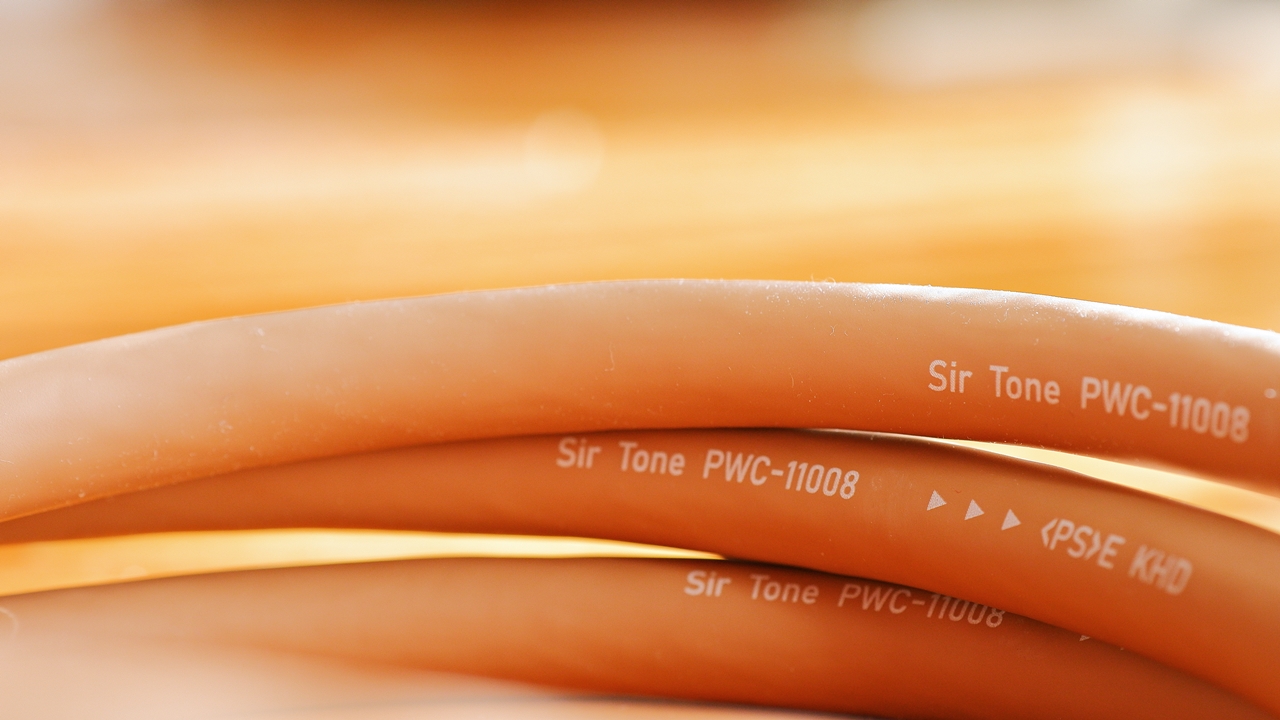
Through their Twitter account, Sir Tone regularly runs giveaway campaigns and limited special-price sales, and they always seem to be on genuinely warm, friendly terms with the budget Hi-Fi crowd and DIY audio enthusiasts — people who are about as far from the high-end world as you can get. If you contact them via Twitter DM or through the enquiry form on their Rakuten Ichiba page, they will, within reason, accommodate custom lengths, plugs, and various other modifications. They also apparently offer loan units for auditioning, including the PWC-11008. In every respect, Sir Tone is thoroughly decent. In today’s audio world, it is rare to encounter a brand entirely free of that peculiar greed-tinged pretension — and I want anyone unfamiliar with their following on social media to know that their likability rating is, as far as I am concerned, off the charts.
~Summary~
As an objective assessment of the Sir Tone PWC-11008: both in terms of sound quality — with its wide, three-dimensional soundstage and high pixel-count-like resolution — and in terms of character — delicate and understated, yet supple and even elegant — I feel it possesses more than enough quality to go head-to-head with expensive overseas power cables. I, the author of this low-end, miniature-garden Hi-Fi blog “AUDIO STYLE”, have swapped in and out roughly thirty or more power cables over the years, both ready-made and DIY. (Mostly in the under-¥100,000-per-cable range.) (※ The cables currently in use besides Sir Tone are: Nordost ×2, Kharma ×2, XLO ×3, PAD ×1, Real Cable ×1, AudioQuest ×2, ORB ×3, FURUTECH ×2, Chikuma ×1, Oyaide ×2, plus a number of others in reserve. Cables without review links are planned for future coverage — at some unspecified point.)
And yet the Sir Tone PWC-11008 sits securely at the very top of that list — setting aside synergy with specific components and the appeal of individual sonic character, I would say, putting it conservatively, that it is the best choice. Having spent so long wrestling with all manner of oddball power cables, the sound of the Sir Tone PWC-11008 — focused directly on the music itself — comes as a genuine wake-up call.
Across their range, Sir Tone products can truly be called a godsend for music lovers on a budget, for instrument players, and for budget Hi-Fi enthusiasts. What is genuinely good and worth having is not always expensive. Rather, the very core of the PWC-11008 is that it takes an entirely sound, straightforward approach to a mains power cable — one that can wake you from the assumption that high price equals high performance. This is a cable I would recommend above all to those who can trust their own ears and instincts without being misled by brand business or price bias — and it is a cable I would most want to be discovered by those who can tell the difference. That is the honest impression of this miniature-garden pure audio author, having welcomed the Sir Tone PWC-11008 into the system.


Auto Translated by CS4.6