【ONKYO A-1VL & C-1VL In-Depth Review】
A-1VL/C-1VL Launch|A-1VL (Part 1)|A-1VL (Part 2)|C-1VL
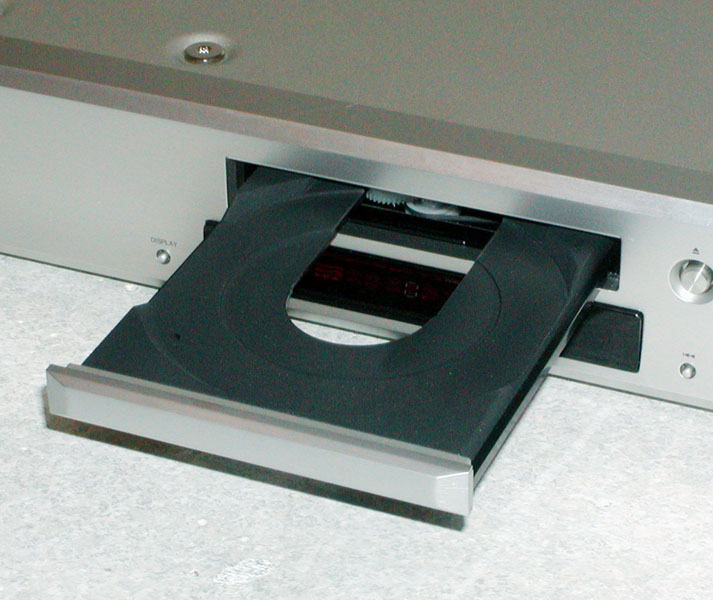
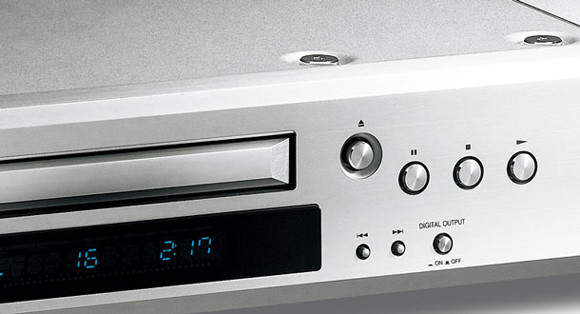
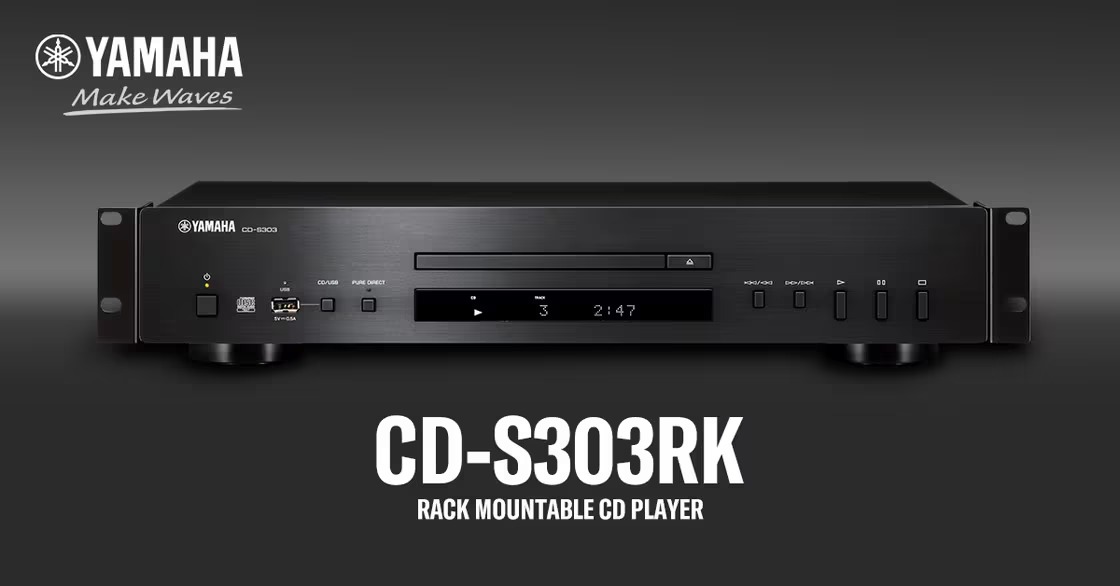
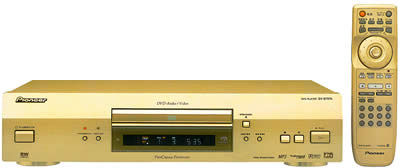
The C-1VL, the CD player that pairs with the A-1VL, has finally arrived. I immediately move the PIONEER DV-545 that had been connected until now out of the way, and place the C-1VL on top of the A-1VL. In terms of heat dissipation it would really be better underneath, but the A-1VL doesn’t run particularly hot, and I have a feeling I’ll be moving things around every day during setup, so for now this is just a temporary arrangement. I try playing some music straight away… hang on, the sound is surprisingly reserved? The character is completely different from the A-1VL! And there’s an extraordinary amount of low-level detail. The S/N ratio is excellent.
A full day passes. I try reversing the polarity of the power cable. Though I should say, since I wasn’t sure whether the direction I first connected it in was actually the correct polarity to begin with, this is simply a matter of flipping it around. Oh, this seems better. Worth trying without being lazy about it. Until just a moment ago the sound was somewhat nervous and I was wondering what to do, but swapping the polarity has eased that edginess and brought a real sense of vitality back into the music.


 ポチップ
ポチップ
The A-1VL and C-1VL Have Quite Different Sound Characters…
That said, I still have a strong impression that the A-1VL and C-1VL have quite different sonic characters. The manufacturer describes it as something like this:
And indeed, just as that description suggests, the A-1VL first impresses with its dynamic, animated musicality, whereas the C-1VL is a CD player that conveys a static, inward-looking spirituality through its handling of fine detail. In terms of tonal colouring, both share a certain clarity and a bright luminosity in the upper registers, but the way that character expresses itself is quite different — the A-1VL is dynamic and generous, with a slight weightiness to the sound images, while the C-1VL leans toward an earnest, slender character that seems to emerge from within a sense of purity and moisture. ……Did the same person design both of these?
It seems that, more than I had expected from the in-store audition, the two actually complement each other’s sound and mutually neutralise each other’s individual characters. It would be a mistake to assume that because they share a common design, they must share a common sonic character.
Something else I noticed when pairing the C-1VL with the A-1VL is that the A-1VL is surprisingly susceptible to the character of the source player — in other words, it amplifies faithfully to the input signal. Rather than imposing its own colour on everything, it is the type that draws out the player’s own nature honestly. Because the amplifier doesn’t mask the signal, fine expressions and details emerge with remarkable clarity. One could say that this amplifier’s response speed and overall potential are higher than I had imagined.
Pair it with a player that has dynamic expressive power, such as the PIONEER DV-545 or the C.E.C TL5100Z, and you get a sound that is vivid and brimming with life. With the MARANTZ CDR630 it settles into a well-balanced, middle-ground presentation. Connect the C-1VL, and now the sound becomes something deep and still — like peering into the surface of a lake without a single ripple, beneath a winter night sky. To put it bluntly, the C-1VL may well be heading in a high-end direction. Your ears naturally become attuned and drawn toward pianissimo passages, and it resolves everything — the ambient noise of the hall, the artifice of the recording, the reverb, the edits — laying it all bare. It may actually retrieve more low-level information than some SACD players at a similar price point. Of all the players I have owned, the impression it gives is perhaps closest, in some ways, to that of Nakamichi.
The tonal balance is slightly upper-leaning and on the light side… which is perhaps something the A-1VL is meant to compensate for. Considering the price as a standalone unit, a little more body in the low frequencies might not have gone amiss — though adding that would likely come at the cost of the delicacy and low-level resolution that define this player. Thinking of it as something designed to complement the A-1VL rather than stand alone, one should probably view it as a deliberate choice to prioritise tonal balance and compatibility with the matching amplifier over adaptability to other brands. That said, I find myself more surprised by the A-1VL’s own versatility and its chameleonic range of expression than by the C-1VL’s sonic character itself. It renders the hot as hot, the cool as cool, the delicate as delicate — it has the ability to differentiate them properly. The more you explore this amplifier, the more it seems capable of producing something even more extraordinary.
Getting the Best from the ONKYO C-1VL
Initially, the ONKYO C-1VL gave a rather nervous and reserved impression, with a slightly upper-leaning balance and a faintly hazy quality to the soundstage. Thinking back to my in-store audition, I had a nagging feeling that it really shouldn’t sound quite like this, so I casually inserted a wet-type CD lens cleaner — and the moment the cleaning track began to play, there was a skipping sound unlike anything I had heard before. I genuinely broke out in a cold sweat, convinced I had just damaged the unit. I played it again to be safe, and this time the cleaning track’s background music played through normally, which was a relief. It seems there must have been some dust or debris sitting on the pickup.
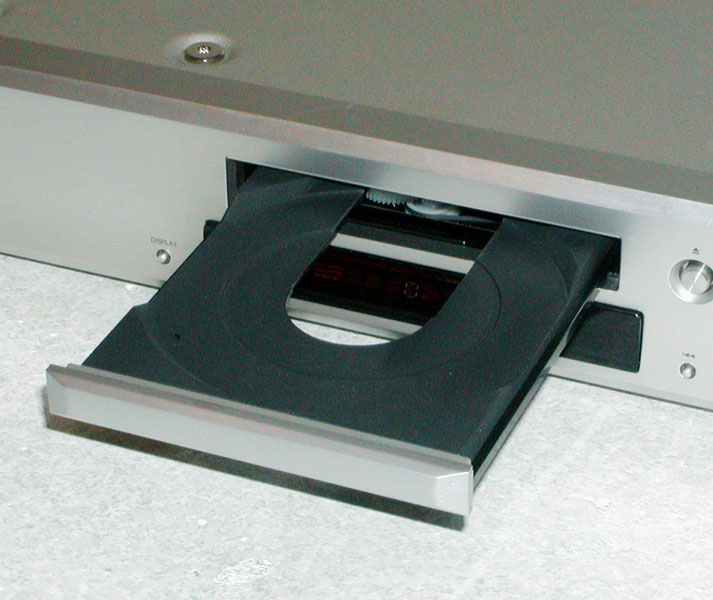
After the lens cleaning, I put on some music again, and the transparency had dramatically improved — a sense of movement and richness that had not been there before was now present in the sound, and at last it began to feel like the solid, characterful sound one expects from Onkyo. Never underestimate a pickup cleaning. Anyone who doesn’t own a wet-type lens cleaner should get hold of one immediately.
 ポチップ
ポチップ
Now, on to getting the best from the ONKYO C-1VL. The strengths of this CD player are its wealth of fine detail, its ability to convey delicate nuance, and the way the overall tonal character is governed by a composed and beautiful transparency with a moist, resonant quality. Its relative weaknesses are, perhaps, a lack of body in the bass and a certain lightness to the overall sound. I would like to find a setup that somehow addresses this slight imbalance.
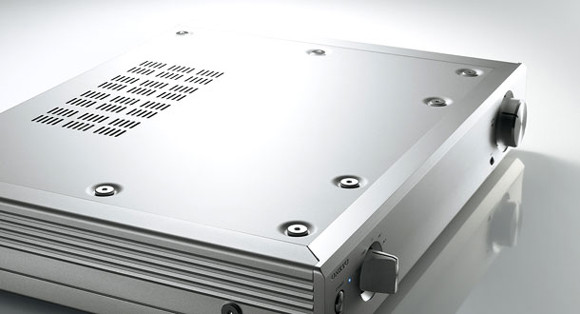
First, placement. Since the unit itself is light, the changes are less pronounced than with the matching integrated amplifier A-1VL, but at the very least, placing it directly on top of the A-1VL is not a good idea. The metallic resonance of the top panel bleeds into the sound and introduces a kind of distortion, which in turn amplifies the lightness of the sound and the top-heavy character. What if, as often seen in manufacturer images, the C-1VL goes on the bottom? — Even in this arrangement there is a faint sense of metallic colouration on transients, but the 11.3 kg weight of the A-1VL pressing down on the C-1VL does settle the lightness on the player’s end, and the overall top-heavy balance resolves itself into a stable, well-centred tonal character. The A-1VL is a digital amplifier, so it generates relatively little heat, but even so I think placing the amplifier on top is clearly the better approach for this combination.
Next, the power cable. Here too, swapping in a higher-quality product would ideally add some body to the sound and bring the balance down a little. If you are going to upgrade the power cable, the C-1VL should take priority over the A-1VL, which is already well-balanced with its stock cable. By way of experiment, I try plugging in the Kharma KPL Reference/1a power cable that I use with the CEC TL5100Z in my main system, and the musicality improves markedly at once — the presentation opens up and the harshness in the upper registers diminishes. This cable didn’t really suit the A-1VL, where it sounded rather limp, but it seems to work reasonably well on the C-1VL. Beyond Kharma, a power cable with a relaxed, full-bodied tonal character in the bass and minimal muddiness should suit it well.
 ポチップ
ポチップ
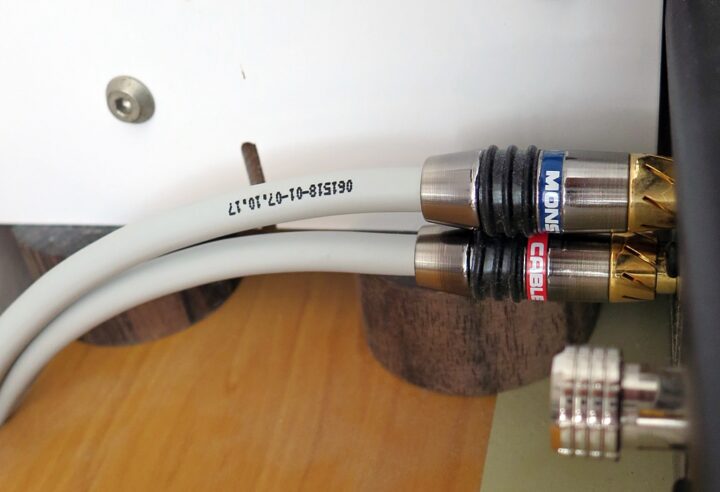
And then the RCA interconnect cable — this makes a remarkable difference. Unfortunately, with something like a standard red-and-white cable, you will not hear even half of what this CD player is capable of. What I can say clearly is that the C-1VL needs a high-resolution RCA cable with well-controlled phase — and one that has body in the bass and is not peaky in the treble. When you look for that, even cables in the ten-thousand-yen range are often not enough to draw out the C-1VL’s full potential. Of the cables I have on hand, I find Monster Cable works better overall than the SPACE&TIME Prism22 or the MIT T4, though with Monster Cable, entry-level models tend to bury the fine detail and sense of resonance that make this player special. If the signal cable muddies the phase, then all those high-precision clocks built into the player become meaningless. The one I would particularly recommend is the Monster Cable Z100i. With this, you are unlikely to go wrong. The compatibility is so close to perfect that I find myself wondering whether it was actually used as a reference cable during the development of the A-1VL/C-1VL. It is a little pricey, but given the improvement in musicality and how well it suits the pairing, I would genuinely urge C-1VL owners to use the Z100i. If you find the player’s slender, sensitive tonal character something of a concern, trying the Z100i is particularly worthwhile.
One more word. For those who own the ONKYO C-1VL CD player but not the matching A-1VL integrated amplifier, I would encourage you, if at all possible, to consider eventually using them as a set. In Hi-Fi, one plus one does not always equal two. Compatibility matters. I will go so far as to say that the sound produced by the A-1VL and C-1VL together elevates the value of each component further still — a level of sonic bliss that only those who own both can arrive at.
A-1VL + C-1VL — How Do They Fare in the Main System?
This time I tried connecting them to my main system, built around the Vienna Acoustics MODEL T-2. When the unit first arrived and I connected it before run-in had even begun, the sound was, naturally, not particularly good, and I quickly moved it to the secondary system.
 ポチップ
ポチップ
This time, after about three weeks of use, run-in is essentially complete. From the very first moment of reconnecting it, the sound is simply on a different level. First of all, it is controlling the T-2’s 13 cm dual woofers — which are not the easiest drivers to handle — with complete authority. The presentation has a composed, effortless grandeur to it, and the sound emerges so naturally that, unlike before, one is not prompted to think about the amplifier’s grip and control in any audiophile sense. Compared to the TAG McLaren 60i, the sense of depth in the lowest bass is moderate, but it seems that more bass extension does not necessarily mean greater control.
The A-1VL’s soundstage spreads naturally above and below the midrange without any exaggeration, and it is remarkably stable — there is not the slightest instability in the sense of space. I believe it is this absence of instability that allows one to become absorbed in the music while listening, and that produces a certain feeling of reassurance.
Now, this time the question is which CD player to use with the A-1VL. As someone who has long preferred C.E.C machines, I cannot have a newcomer like the C-1VL beating the TL5100Z, which I have continuously modified and refined over the years. It costs one and a half times as much, after all. Let the contest begin.
ポチップ
First, the C-1VL — above all else, the freshness is striking. The transparency is high, the transient response is fast, the tone has a hard-edged luminosity, the focus is razor-sharp yet the sense of resonance is rich. The bass is on the slender side, but paired with the A-1VL this actually works in its favour and produces a good overall balance. It is, in every sense, a thoroughly contemporary, state-of-the-art sonic character. Against the A-1VL — which, despite being a digital amplifier, carries a distinctly analogue quality — the C-1VL offers a photorealistic, ultra-high-resolution presentation that draws directly on the benefits of its Wolfson DAC and high-precision clock. That said, the dry, gritty texture that once characterised digital is entirely absent here — the surface of the sound is polished to a lustrous sheen, and the soundfield is full of moisture.
 ポチップ
ポチップ
Next, the TL5100Z. The balance is completely different straight away. Compared to the C-1VL, the treble is rolled off and the mid-bass and low frequencies are considerably richer. And the texture of the sound is deeply analogue in character — it genuinely evokes the sound of vinyl, and I had never noticed quite how extremely analogue-like it was until now, because I had always been hearing it through different amplifiers. That in itself says something about how faithfully the A-1VL reveals the source. Compared to the C-1VL, the TL5100Z is warmer and more ebullient in its expression, with a dense, analogue quality that has a certain shadowy depth to it — the transients are gentle, and the tonal character favours a soft, smooth, easy-on-the-ear quality over sharpness or palpability. In terms of tangibility and realism of the sound image, the C-1VL is clearly far fresher, and the TL5100Z has an overall analogue-blurred quality that never quite goes away. For those with a nostalgia for the sound of analogue, the CEC has an atmosphere that is utterly irresistible — but for the digital generation, the C-1VL’s crisp transients and resolving power will likely register as the more obviously high-quality presentation.
Note: For this comparison, both units were used with the Kharma KPL Reference/1a power cable and Red Rose Music 1934 RCA interconnect cable.
Since this is a comparison in the context of pairing with the A-1VL, the verdict in terms of compatibility clearly goes to the C-1VL. With the TL5100Z, the sound becomes sluggish, and the A-1VL’s hidden digital depth — its speed and realism — cannot be put to use. Listening, one feels a frustration, a longing for greater clarity and freshness in the presentation. Pair it with a different amplifier and the results would no doubt be different, but to summarise: if you want to know how much information is actually on the CD, go with the C-1VL — you will be surprised by the fine background details you have never heard before — and if you want to wind down and recover from fatigue, reach for the TL5100Z. Something like that, I think. Though, to be fair, the TL5100Z is intended to be paired with the TAG McLaren, and there is really very little reason to force it together with the A-1VL here.
One more thing. With the main system’s Vienna Acoustics MODEL T-2, the A-1VL is unfortunately not able to fully show what it can do. The T-2 was never really designed to be a monitor-like, accurate loudspeaker to begin with, so drive it with honest-to-goodness resolution and control and its sonic shortcomings begin to show. Frankly, the cabinet is boomy, and there is no shortage of questionable detail reproduction. The secondary system’s Audio Pro Image 11 is faster and more straightforward, which suits the A-1VL better. The right approach here would really be to bring in something like the ELAC CL310.2 or the B&W 704 — a contemporary speaker that is fast, precise, and capable of fine-grained rendering.
Honestly, the A-1VL is so impressive that it has made me want to add another pair of speakers to the collection. In that spirit: anyone considering purchasing speakers specifically for this system, please do choose a monitor-type model that can render soundscapes with real clarity and definition. Conversely, those who have fallen for the beautiful sound of Vienna Acoustics are naturally better served by C.E.C, and for amplification, something European — especially a valve amplifier, glowing away warmly — is really the most blissful match.
【ONKYO A-1VL & C-1VL In-Depth Review】
A-1VL/C-1VL Launch|A-1VL (Part 1)|A-1VL (Part 2)|C-1VL

Auto Translated by CS4.6

List of comments (2)
レビュー読んでて,気持ちはすっかりONKYOのデジアン購入に向いちゃってます(笑)
PC完成後,金ができ次第買いますわ.ジョーシンで買うとpastel_pianoさんにアフェリエイトでなにかプラスになります?それならジョーシンで買いますけど.
mattaさんこんにちはーd(^_-)。
そですね。ぶっちゃけプラスになります~(滝汗)
レビューを読んで何人かうちのリンク
(上新 or e-onkyo or ビッダーズ上新)経由でお買い上げいただければ
レポート原稿料くらいにはなるかも。。。
安さ優先で楽天のリンクも貼ってますが、楽天はね~、
料率極度に低いし更に後で○×△◇される事があるのー(涙)
でも、今のところベスト電器が一番お買い得ですね~。
微妙な安さにまではこだわらないのであれば、
e-onkyoか、ポイントでの還元率も含めてジョーシンがオススメです。
両方とも5年保証選べますし、e-onkyoはお気に召さなければ返品可!
返品可って凄い自信ですよねー。確かにこの音質なら返品する人いないかもですが。