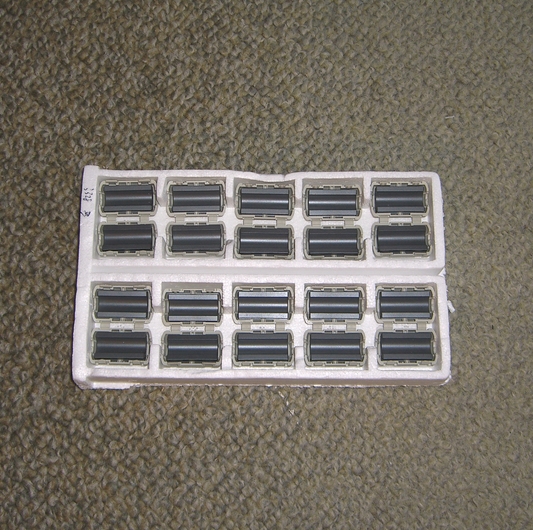
The administrator of the blog “French Cars, Music, and Everyday Things” showed me a method of fitting ferrite cores (ferrite clamps) for high-frequency noise absorption onto every household appliance other than the audio equipment itself, as a means of improving sound quality in a hi-fi system. As most people will know, ferrite cores are already widely used as noise filters on cables for OA equipment and similar applications — absorbing EMI, electromagnetic radiated noise, common-mode noise, and high-frequency noise travelling along power lines.
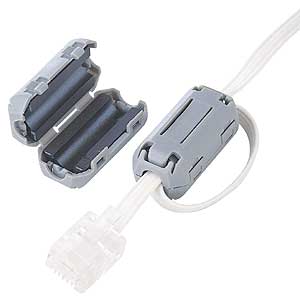
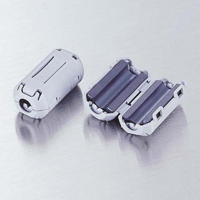
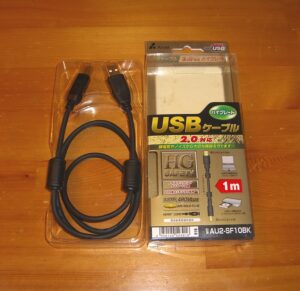
There are already plenty of products that incorporate ferrite cores moulded directly onto their cables — not just audio cables of various kinds, but also power cables, USB cables, LAN cables, display cables, HDMI cables, and more. What I am using this time, however, are general-purpose ferrite clamps — separate, standalone units that can be clamped freely onto cables of all kinds. Using these on the power cables of audio equipment and on surrounding household appliances has been a known practice for a long time, but on this occasion the aim was to go at it far more thoroughly — so I ran a large-scale test using a great many of them.


 ポチップ
ポチップ
The fundamental point when using ferrite cores is not to clamp them directly onto the power or signal lines of the audio equipment itself, but rather to apply them indirectly to other household appliances and computer-related devices sharing the same power line in parallel. By focusing particularly on the power and signal lines of devices that are energised continuously and emit large amounts of electromagnetic noise — computers, internet-related equipment, air conditioners with inverters or motors, refrigerators, various lighting fixtures, televisions, and the like — it becomes possible to keep the high-frequency noise level on the household mains in a low and favourable state.
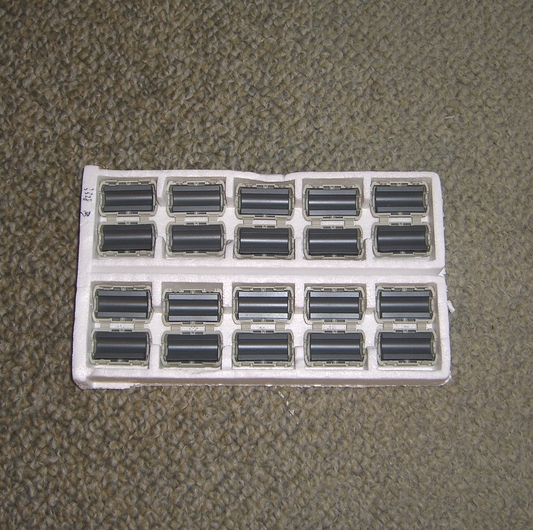
My home already had ferrite cores fitted in more than ten places, but a few of those locations were somewhat off the mark, and there were several spots where treatment was actually needed but had been left undone. So this time I ordered around thirty additional ferrite clamps and set about applying them thoroughly, without exception, to every electrical device in the house.

《Memo: points where ferrite cores were already in use》
【Large size】
・Panasonic self-cleaning robot air conditioner
・Power strip for study PC and related equipment
【Medium size】
・CREEK/EMF SEQUEL2 power cable
・Clavinova power cable
・Main system visual components power strip (audio-technica AT-NF34)
・Shared antenna VVF line
・Wireless LAN router
・VoIP adapter
・HP d325 desktop PC power cable
【Small size】
・Main telephone line entry point, study fluorescent lights ×2
(Not including OA/AV equipment with ferrite cores already moulded into their supplied cables)
A quick count came to thirteen. There are probably more hiding behind desks and racks where I cannot easily see. I was genuinely surprised to find I had already been using that many without really thinking about it. This time, in addition to these, I planned to add around twenty medium-sized ferrite cores, focusing mainly on appliances that are energised around the clock.
・Flets VDSL modem
・Telephone handset (main unit)
・Air purifiers ×3 units
・15m indoor LAN cable ×2
・Power strips for sub-notebook PC and PC audio equipment ×2
・Additional clamp on study PC equipment power strip
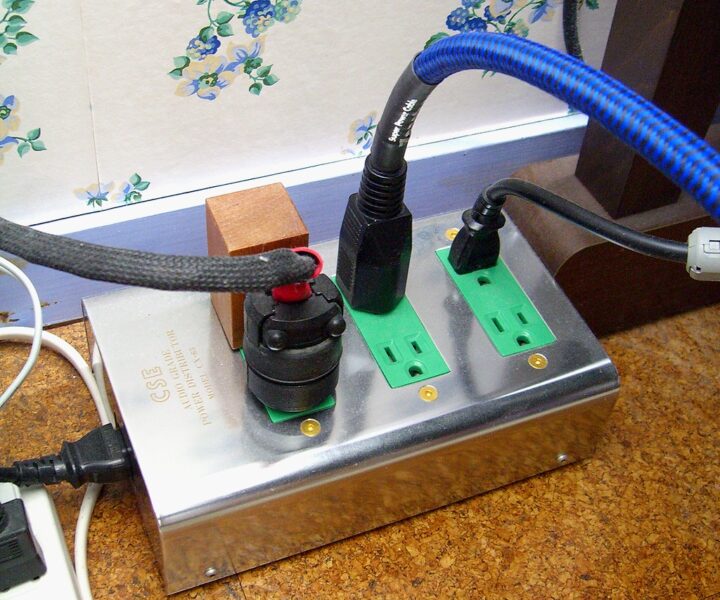
・Sub-system power conditioner CSE CX-63A
Kitchen light (globe-type fluorescent bulb)
・Electrolux IH portable induction hob EIH1628
・Refrigerator
・Rice cooker
・Electric shredder
・Cordless phone handset
・LAN cable between VDSL modem and wireless LAN router
Some of these — the cordless phone handset, the shredder, and a few others — seem unlikely to have any bearing on sound quality, but with so many ferrite cores to go around, please bear with me. I wrote earlier that the rule of thumb is not to use them directly on hi-fi equipment, but in two places — the power conditioner CSE CX-63A for Sub-system A, and the integrated amplifier (CREEK SEQUEL2) in Sub-system B — it seemed by ear as though a ferrite clamp might be acceptable, so I tried one provisionally at each.
The remaining twenty-five were applied for the purpose of blocking common-mode noise in parallel along the same indoor wiring. Three of those are on internet line equipment, which is not directly related. Where the power cord is thin enough to allow a turn through the core, I looped it twice (one full turn). Thin cords such as those from AC adaptors could be looped three or four times. Turning the cable through the core increases impedance and enhances the noise attenuation effect, though the frequency range it can handle apparently shifts downward as the number of turns increases. →Ferrite core explanation by Kitagawa Industries

※ If a thick power cord is looped and then forced into a ferrite clamp with a small inner diameter, there is a risk of damaging the cable’s insulation, which could cause an electrical leakage accident or equipment failure. Please take care.
At this point the total came to around thirty. There were still a few places — some of the lighting, for instance — that had not been treated, but I tried a provisional listening session anyway. The first thing I noticed was a reduction in high-frequency distortion and a certain deadness to the sound. Sounds that had previously diffused as reflected energy became more focused, and the density of the stereo image increased. One might say it was a correct, monitor-like sound — conscientious to a fault. The tonal character became darker, but at the same time the background quietened and the perceived S/N ratio improved. The overall tonal balance shifted towards the bass end. My system has always been a little light in the bass — a tendency that builds up the more I stack up accessories to my own taste — and I was genuinely surprised to hear a weighty, substantial low end emerge. In the treble, things were somewhat dead but fast and incisive. Along with that came a tendency for the attack of violin lines in orchestral music, and sibilance in vocals, to become somewhat harsh.
However, it was not all good news. The problem was that the musical quality — the sense of life and energy — was substantially lost. Musical expression is the first thing I ask of any piece of audio equipment, so this drawback was rather painful. On top of that, with a speaker like those from Vienna Acoustics — whose particular character lies in a distinctive cabinet resonance, a blend of out-of-phase components, and a softly spreading, airy soundstage — that character was largely stripped away, leaving something closer in tendency to an ordinary speaker. To put it another way, the result was rather like a PMC speaker with its quality severely degraded. Somehow it felt as though everything that had defined the identity of the equipment I had chosen over the years was being neatly refuted.
With the sense of ambience gone, the effect of the Rexat RS-SQUARE I had recently installed became rather ambiguous — whether it was there or not hardly seemed to matter. I did not test this on the occasion, but I suspect the beautiful sound of a valve amplifier — which is, of course, partly distortion — would also be considerably diminished. In short, with a system that has been balanced to sing, with distortion as part of that balance, removing the distortion simply makes it dull.
In truth, this sonic character was exactly the same as what happens when ferrite cores are applied directly to the power cables of the audio equipment itself. With a piece of equipment whose sound is noticeably distorted, clamping a ferrite core directly onto its power cable can, in a limited way, reduce that perceived distortion by ear. On the other hand, there are side effects — the sound becomes dull, ambience is lost — so the basic approach is to listen carefully and use the minimum number necessary. Use too many, and the side effects described above can at times outweigh the benefits.
This time I fitted ferrite clamps to many of the household appliances existing in parallel on the same indoor wiring and the same breaker circuit. On the upstream branch of the main hi-fi system sit a plasma television and air purifiers; on the downstream branch are two sub-systems, two PCs and various OA equipment, and yet another air purifier. The fluorescent lighting in two rooms also runs on the same sub-breaker circuit. Written out like this, it does rather sound like a rather hostile environment, rife with noise from digital equipment. I had therefore assumed that thorough noise blocking with ferrite cores would prove quite effective — but unfortunately, the result by ear was not to my taste. And it turns out that even without applying them directly to the audio equipment’s own power cables, simply fitting them in parallel to other energised appliances on the same indoor circuit produces the same audible change. I had not expected that at all, and it came as quite a surprise. The degree of influence will of course vary depending on exactly where the cores are fitted, so that aspect remains a case-by-case matter.
 ポチップ
ポチップ
The following day, unable to bear it any longer during a music session, I removed every ferrite clamp I had fitted. What was interesting was that as I took them off one by one, I could hear the tonal character gradually brightening and the sense of ambience returning with each one removed. That bright, ringing quality is presumably rooted in distortion at some level, but since it is the sound I prefer, there is not much I can do about it. The difference made by a single ferrite core is so subtle that one could never tell blind — yet with thirty of them it was, I suppose, simply going too far. In the end I removed all of the additional clamps beyond the original thirteen, but for some reason the sound has not returned to quite what it was before. It is as if roughly a third of the bias introduced by the ferrite cores is still lingering. Not an unpleasant amount by any means — just a faint residual effect. Perhaps the clamped cables became magnetised in some way.
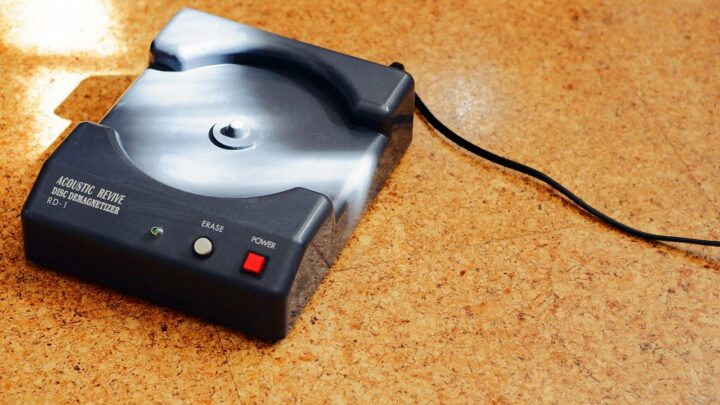
Perhaps running the cables through the Acoustic Revive RD-1 demagnetiser would fix it. Though of course, fixing it that way would simply add the RD-1’s own character to the mix instead. I have now found myself wanting to remove the original thirteen cores as well while I am at it — but leaving things alone and waiting seems the sensible approach. With time, the change will presumably fade to an inaudible level, or my ears will simply adapt and stop noticing.
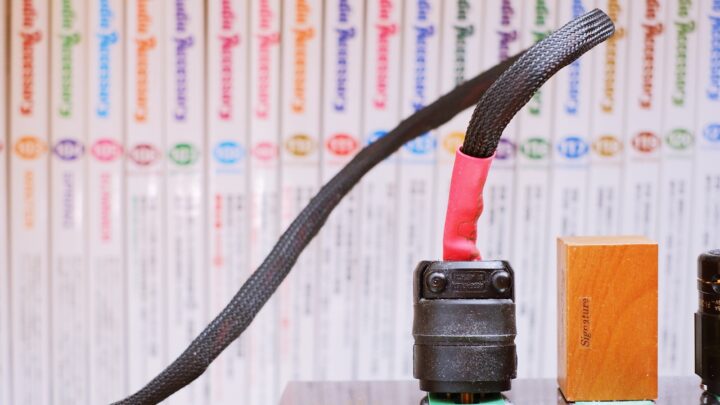
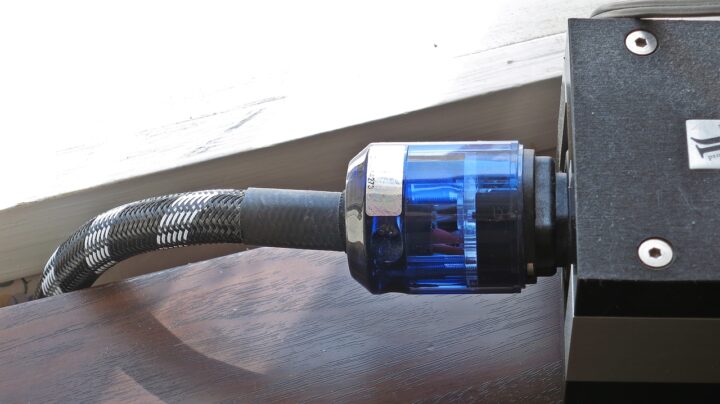
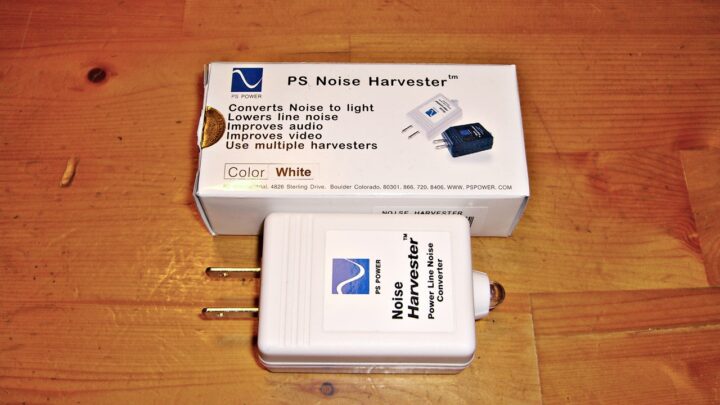
As a postscript: the sonic character produced by ferrite clamps is, interestingly, rather similar to that of PS AUDIO power cables from the United States — very nearly the same tendency, in fact. A review of the PS AUDIO XPD1.8 MK2 power cable used in my main system is here.
If you find ambience and brightness tiresome and prefer a dead, monitor-like, earnest sound, using a large number of ferrite clamps may well bring you to exactly the sound you are after. They could also suit those who prioritise weight in the bass over extension in the treble. Separately from all that, for equipment producing a harsh, distorted treble that is genuinely painful to listen to, they can be very effective indeed. Making something at least listenable by clamping a ferrite core directly onto its power cable — that has been my approach for a long time. Beyond that, using them as appropriate on LAN cables, the PC itself, modems, air conditioners, refrigerators, fluorescent lights, inverter-driven devices of various kinds, and so forth, is something I would recommend for peace of mind — used in moderation, to the extent that no side effects appear.

Incidentally, where I bought the ferrite cores in bulk this time was Yahoo! Auctions. Just between us, the price was about one-tenth of what you would pay for individually packaged retail units. If Suke-san had not pointed me towards Yahoo! Auctions, I would have gone ahead and bought them through the usual channels. (2017 addendum: in recent years, bulk ferrite cores have become available at reasonable prices on Amazon.co.jp and Rakuten Ichiba as well.)

Auto Translated by CS4.6
List of comments (11)
的外れなコメントなら申し訳ないんですけど、、、、^^;
私も、スピーカーの設定を変更すると、なんだか?
おかしな感じになります、、、、。
しかしながら、丸一日くらい音を出し続けることで、ようやく設定変更の効果が出始めてきます、、、、。
人間でも、普段使わない筋肉とか使うと筋肉痛を起こすように、徐々に慣れさせて行くと言うか、設定を変更したら、エージングもやり直さなければ?
行けない感じがします。
だからこそ、元の設定に戻しても、元の音に戻らないんじゃないでしょうか?
でくのさんこんばんは~♪
そうですねぇ。スピーカーの場合は特にキャビネットが自然素材で木材やでくのさんの場合は陶器で出来ていて、ユニットも紙などの素材が多く使われていますから、毎日の湿度や温度、気圧等々による寸法変動や経時変化が大きく出やすいんだと思います。ユニット取り付け時のネジの締め具合でも音質が大きく変わりますし。ピアノも弦楽器も木管楽器もちょっとした事でガラリと音が変わりますから、スピーカーも多くは手工芸的に制作されてますので同様なのではと思います。オールプラスチックやアルミ製のELACやBOSEのスピーカーでしたら温度以外の影響は小さいかもですが。といっても素材の質的変化に加えて、音自体の空気伝達が温度や気圧の影響をもろに受けますから考え出したらキリがない話です(汗)
インシュレーターなんかは1日待つのがセオリーみたいです。最初良くても一晩経つと駄目だったり、最初変なバランスの音だったのが暫くすると馴染んで良くなったりします。ケーブル類は馴染むまでもっと時間が掛かります。
ウチの場合フェライトだけでなく、オーディオ以外の電源ラインにインバータノイズまで除去できる広帯域EMIフィルタを10発使ってノイズの回り込みを防いでます。
そこまでしてても躍動感や柔らかさが無くなったことは無かったです。
EMIフィルタをオーディオのラインに噛ました場合は見事に音が死にますが。。。
一度オーディオ以外のブレーカを全て落として鳴らしてみてください。
結果が同じであれば歪みが多い音をベースにセッティングしているのかもしれません。
僕も上杉さんの回路をベースに6L6GCでPPアンプを作り使ってますが、6L6GCの音はけっこう硬いですよ。
2A3や300Bのような直熱3極管の美音系ではなく、クッキリハッキリ系の音が多いです。
それともう一つ気になっているのが屋内配線の状態です。
オーディオ用コンセントの上流でコンセントをジョイントとして使ってませんか?
この場合、ヒステリックな鳴り方をすることがあります。
すけさんこんばんは♪もう寝ますけど。
>広帯域EMIフィルタ
ちなみにどんな製品ですか?後学のために教えていただけると幸いです。
ブレーカー落としはたまにやってます。やると音が良くなるので。劣化した古いブレーカーの接点が削れるせいかな~とか思ってます。あと、うちはオーディオ系統と家電が一緒なんですよ。マンションなので同じ部屋のものは基本的に別々に出来ないんです。壁コンセントでのジョイントは知る限り一ヶ所もありません。屋内配線は壁の中か天井で分岐して各コンセントやスイッチへ分配しているみたいです。
>6L6GC
そういえばうちにある東京サウンドVALVE300もそれですね。
http://www.tokyosound.co.jp/sound/products/amp/300se.htm
輝きを伴うクッキリハッキリした直接音とたゆたう間接音です。私の音の基準はあくまでソリッドステートとデジタルアンプですので、石と比べてしまうとVALVE300の音は十分以上に美音系だと思っています。
お久しぶりです♪
フェライトコアは、いまのところ冷蔵庫のコードにしか取り付けていません(笑)
あ、昨日ヨドバシで「クーナル」というのを見つけてしまいました!
これはおもしろいですよ~。ブレーカーにシュッとしたらどうなるのかな~。気になります。。でも、危ないからやめておこうかな。
クーナルですか~懐かしい。まだ売ってたんですね。CDに吹き付けると優しい音になるとの触れ込みでしたが、試したことはないです。以前は円柱型のインシュレーター?みたいなのもありました。主成分は水でしょうからブレーカーに吹き付けるのは普通に考えても絶対に止めた方が良いと思います。漏電の危険もありますが、隙間に入ってしまったら錆びの原因になりますし。
こんばんは。
ずいぶん前から売ってたんてすね。初めて知りました。
へぇ~、さびの原因になるのですか~。んじゃ、やめておきますね。
何故、こういう質問(ブレーカに吹き付け)をしたのかといいますと、2、3日前あたりに、私のブログのほうで書き込みをして下さった方がいたんです。詳しくは私のブログのコメント欄を見てもらうとわかると思います~
おはようございます
レポート興味深く拝見させていただきました
フェライトコアの副作用はやはり共通しているようですね
ウチでもカサついて潤いがなくなる音の傾向になります
それにしても、並列使用でもフェライトコアの
影響が伝わるのには驚きました
導電状態ではフェライトコアは特有のクセが
発生するようなのですが、これを少なくする
アクセサリーがあります
ただ、使用したことがないので本当に効くかは
定かではありません(^^;)
特殊なリキッドを含ませた木にフェライトコアを
サンドしているノイズフィルターです
インフラノイズから発売されていました
けっこういい値段してましたwww
>>松本麗香さん
こんばんは~遅レス深謝ですm(__)m
低気圧のせいかちょっと体調不良です。
インフラノイズは木箱に入れるの好きですね~。 そのフェライトコアってかなり昔の製品ですよね。フェライトコアの副作用についてはフェライトコアの素材の響きが乗るような印象です。だからコア自体を別の素材でダンピングすれば多少なりとも音色が変化するんだろうなぁと推測(^^; 数多く使うと並列でもこれだけ影響が出るのにはびっくり。でもノイズ発生が疑わしい機器には最低限使う方が良いと思い、試行錯誤しながら減らしたり増やしたりしています。とはいえ1~2個の並列使用では聴感上の差が判別出来ず難儀してます・・・。
取り付け位置は器具側ですかコード両端ですか。
コメントありがとうごどいます。
フェライトコアが一体成型されている電源ケーブルの場合では機器側が多いようです。両側にフェライトコアの場合もあります。基本的には聴感でフェライトコアの有る無しを加減することをお薦めします。
https://www.audiostyle.net/archives/17464799.html
尚、管理人はこの記事を書いた当初(2009年)はフェライトコアを色々試して使っていましたが、現在ではオーディオ機器側の電源ケーブルに直接フェライトコアを咬ませることはありません。あくまでケーブルに元々一体成型されている場合と、PC関係やオーディオ以外の家電製品に於けるノイズ放出対策としてのみ使用しています。