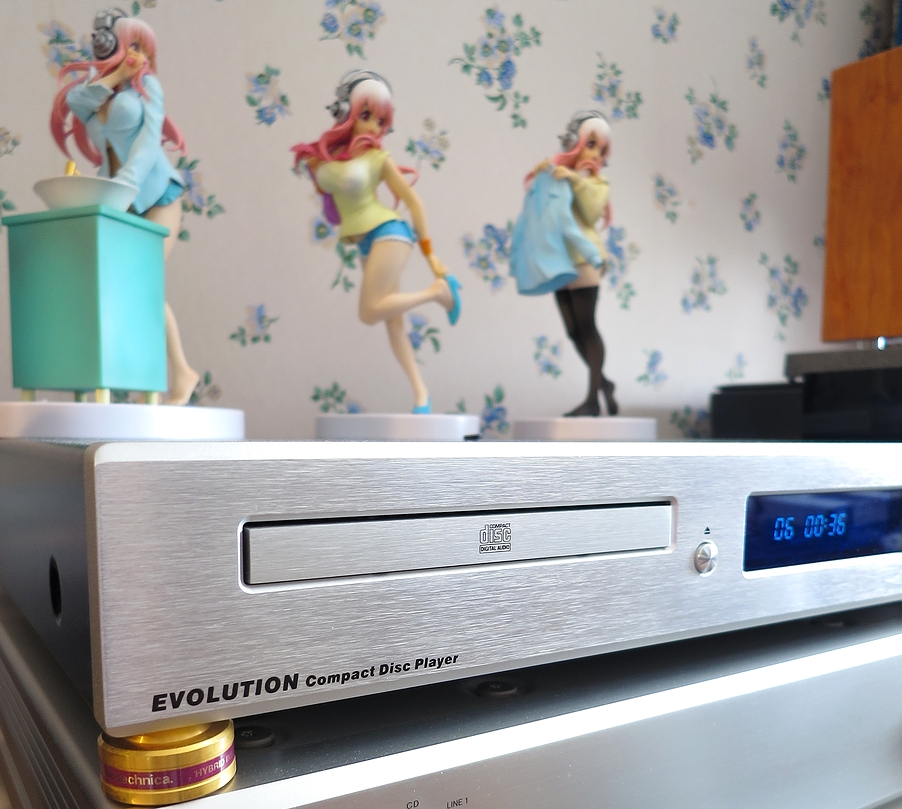
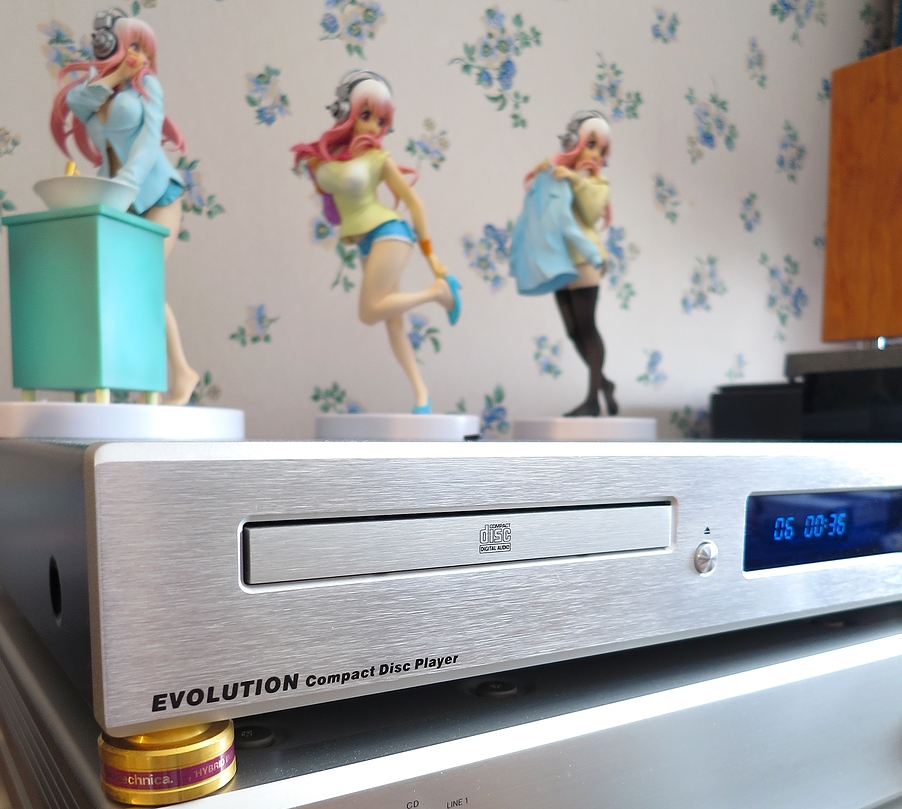
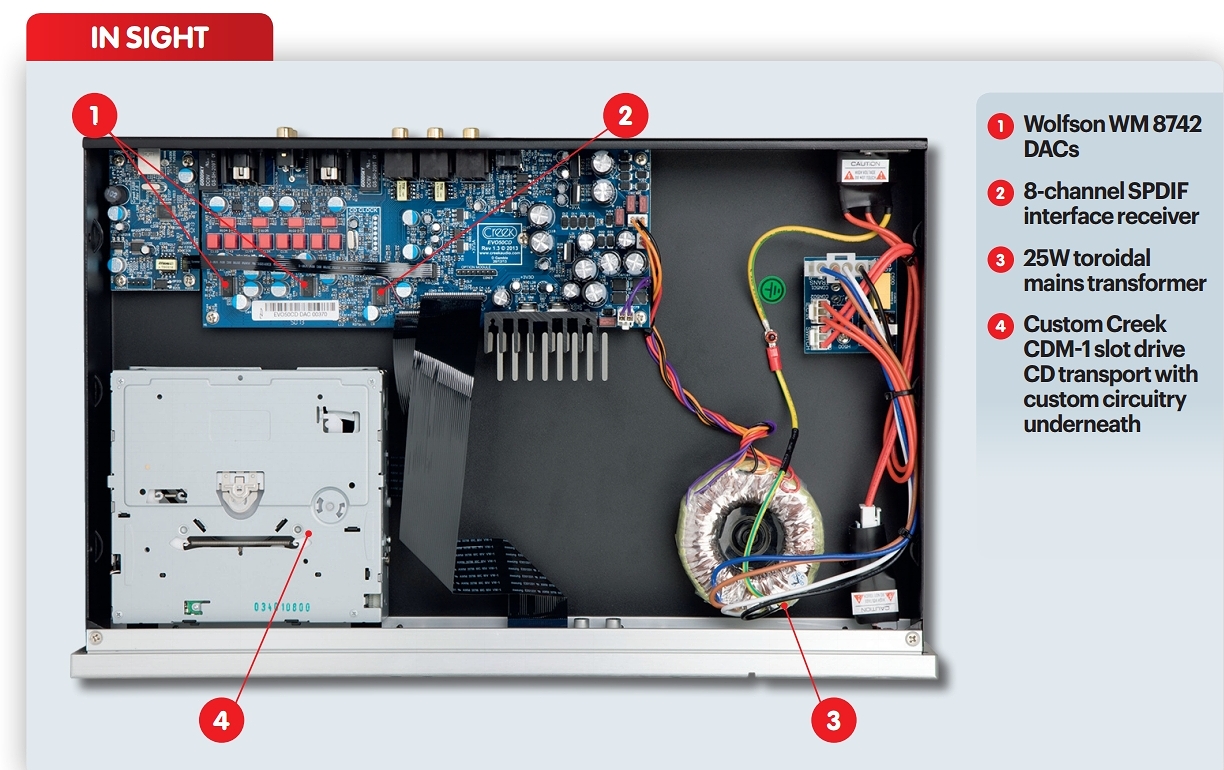
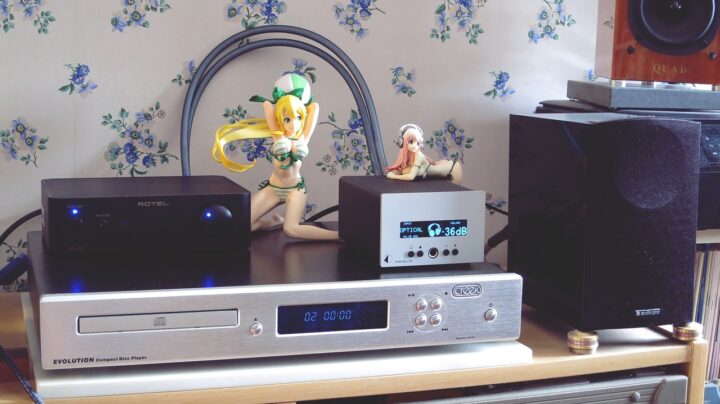
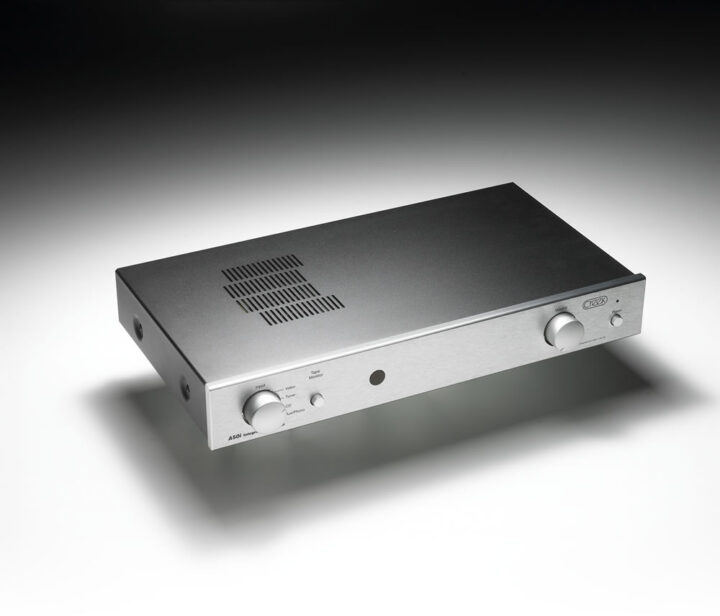
The CREEK Evolution-CD has finally stopped recognising CDs altogether — the sort of thing that might send one into a mild panic thinking the machine has broken down at last, but in fact this is a recurring annual event. The drive mechanism in my CREEK EVO-CD, which I acquired nine years ago, is the VAM1202 (CDM-12.x) designed by Philips of the Netherlands, and it uses a linear tracking system.
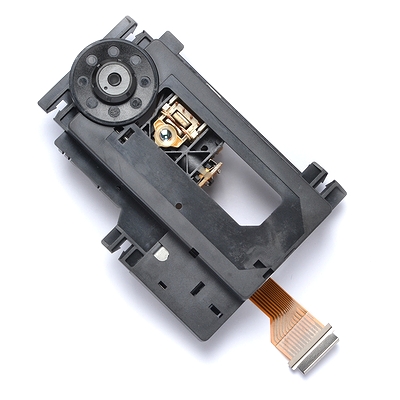
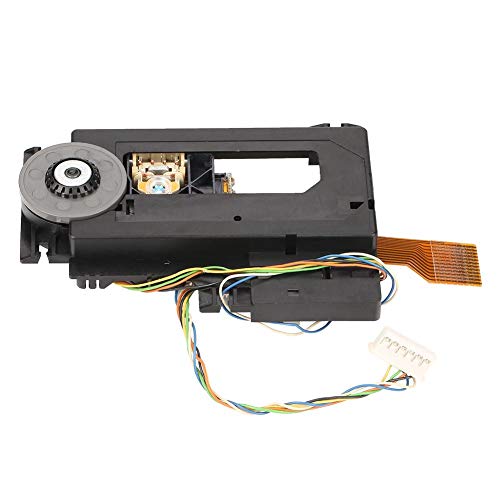
The VAM1202 (CDM-12.x) is a mass-produced linear tracking drive mechanism that was widely used until a few years ago in budget-range CD players from the former Philips/Marantz stable, as well as in various overseas CD players. That said, the CDM-12 series — unlike PC drives — offers reasonably decent sound quality, but frankly its durability leaves quite a lot to be desired. It is a sufficiently problematic design that one regularly comes across VAM1202/CDM-12-equipped machines listed as faulty junk with skipping issues, both on Yahoo! Auctions and at HARD OFF.
My own CREEK EVO-CD is no exception: from around the second or third year of ownership it began skipping occasionally on the outer tracks of discs past the 60-minute mark, and since I couldn’t be bothered arranging a paid repair I carried on using it regardless, nursing it along as best I could. Then from around the fifth year it started occasionally failing to recognise discs at all during loading, which became a bit of a headache…

 ポチップ
ポチップ
The cause appears to be insufficient read output from the pickup, and once the symptoms appeared I found I could fix it quite easily by opening the top cover and cleaning the pickup lens with a cotton bud and alcohol. The lens tends to get contaminated by the humidity of the rainy season or winter, and the problem crops up roughly once every one to two years — clean the lens, it goes away, then it comes back again. ※ Incidentally, the skipping on the outer tracks does not completely disappear after cleaning, but it is noticeably reduced.
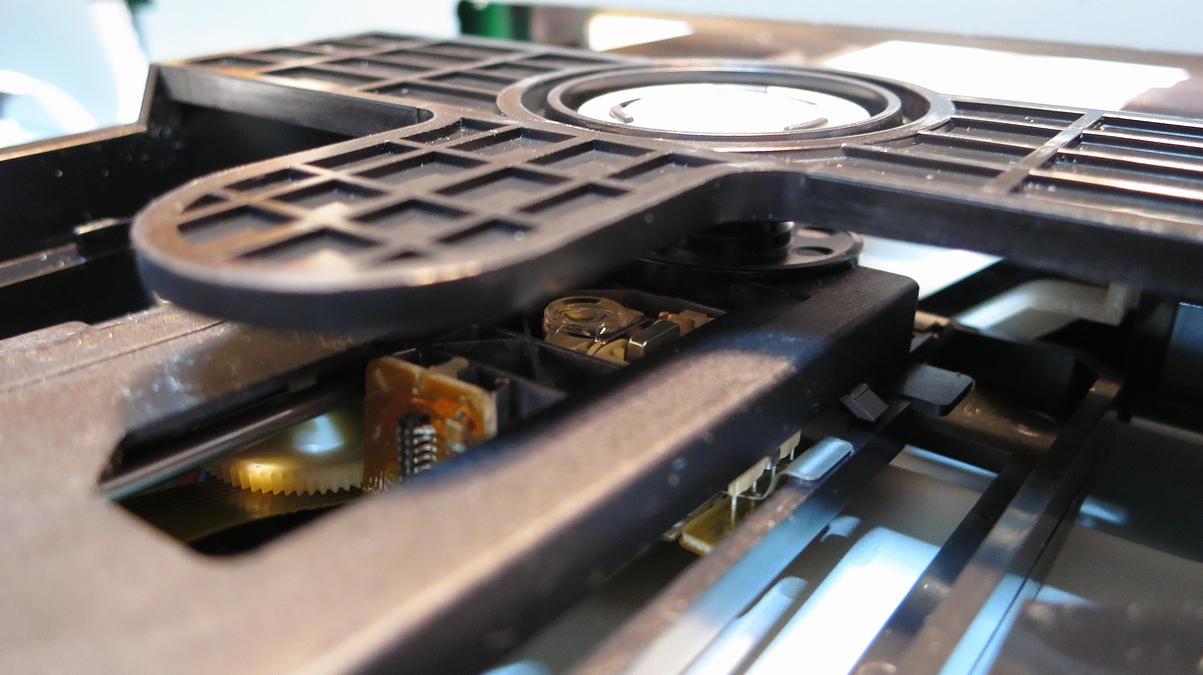
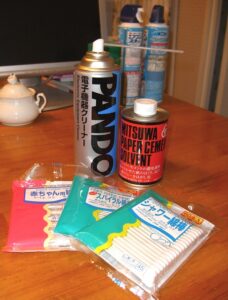
And so, in April 2017, I finally dragged myself to it and cleaned the pickup using non-chitosan baby cotton buds and IPA. Truth be told, I had actually left it sitting unplayable since February… The last time I checked my cleaning log it showed July 2015, so this was the first time in about a year and a half. A clean lens reduces the burden on the servo current and error correction compared to a cloudy one, which in turn benefits the sound quality — so leaving it unattended out of sheer laziness really is not a good idea.
 ポチップ
ポチップ
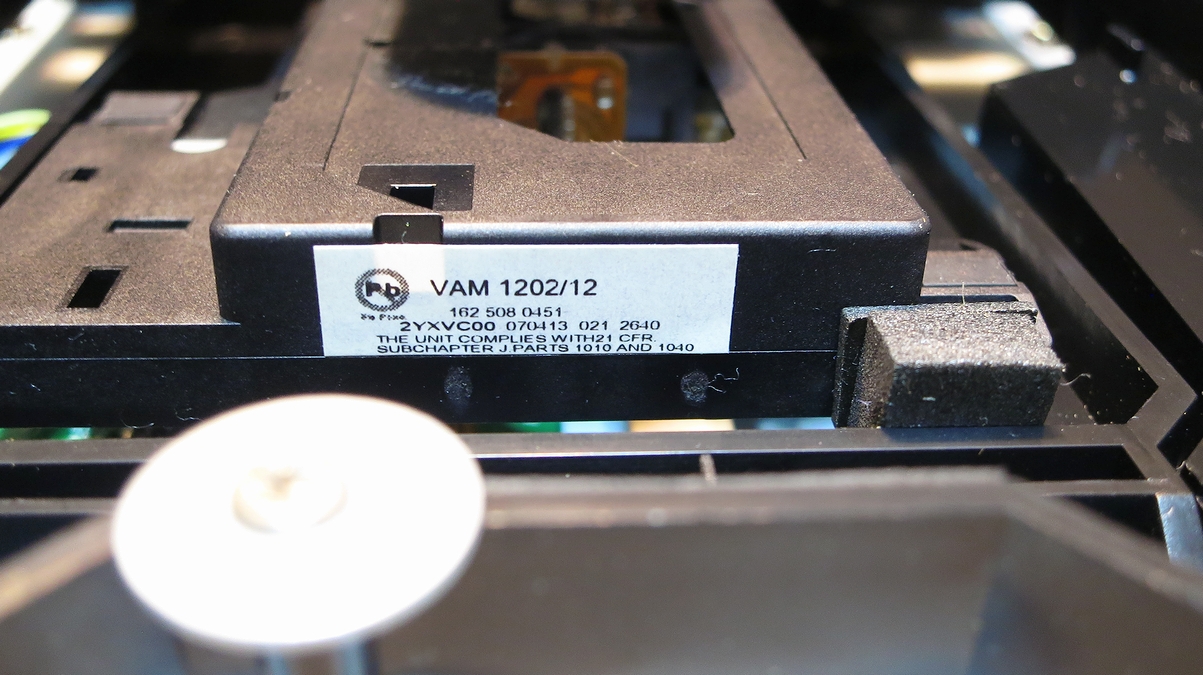
Philips VAM1202/12. There is no Philips branding on it, so the unit fitted in the EVO-CD was in all likelihood an OEM-compatible drive from the outset (this is a legitimately purchased new unit). While the lid was off I took the opportunity to hoover out every nook and cranny with the Electrolux vacuum cleaner. ※ Quite why dust accumulates inside when the chassis has no ventilation slots whatsoever is a mystery…
Incidentally, unlike CREEK’s mid-to-upper-range models which are made in Britain, the Evolution series of that era was Made in PRC — that is to say, made in China — and it rather looks as though the manufacturer was in fact SHANLING, the audio maker based in Shenzhen, China… ※ My apologies if I have this wrong.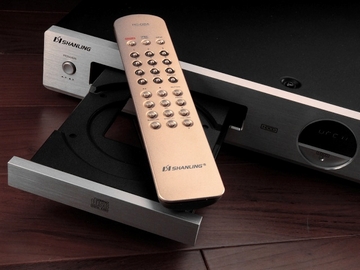 SHANLING produced a CD player called the SHANLING CD-S100, whose internal circuitry, detail finishing, remote control and so on are almost identical to the EVO-CD. And it is not just the CREEK EVO-CD and EVO-CD2 — open up the lids of players such as the MUSIC HALL CD25.2, ONIX CD-2, ONIX CD-5, ONIX XCD-88, ONIX XCD-99, USHER CD-1, and CARAT C57, and it becomes immediately apparent that all of these celebrated British, American, and French brand CD players are essentially SHANLING-based products. Likewise, relatively affordable SACD players from overseas brands are similarly based on SHANLING’s own SACD players.
That said, it is by no means a case of identical internals across the board — the board layout varies across several patterns depending on the position of the drive mechanism, and the specific components used, such as the power transformer and capacitors, differ from model to model. Each brand and model has received a considerable amount of individual modification — one might even call it tuning.
The CREEK EVO-CD and EVO-CD2 are fitted with a higher-grade R-core transformer rather than a cheap EI-core type, while some brands such as MUSIC HALL and CARAT go with a toroidal transformer. It would appear, then, that SHANLING acted as the manufacturing subcontractor, supplying the base chassis and fundamental design, with each unit then built to the specification of the respective retail brand.
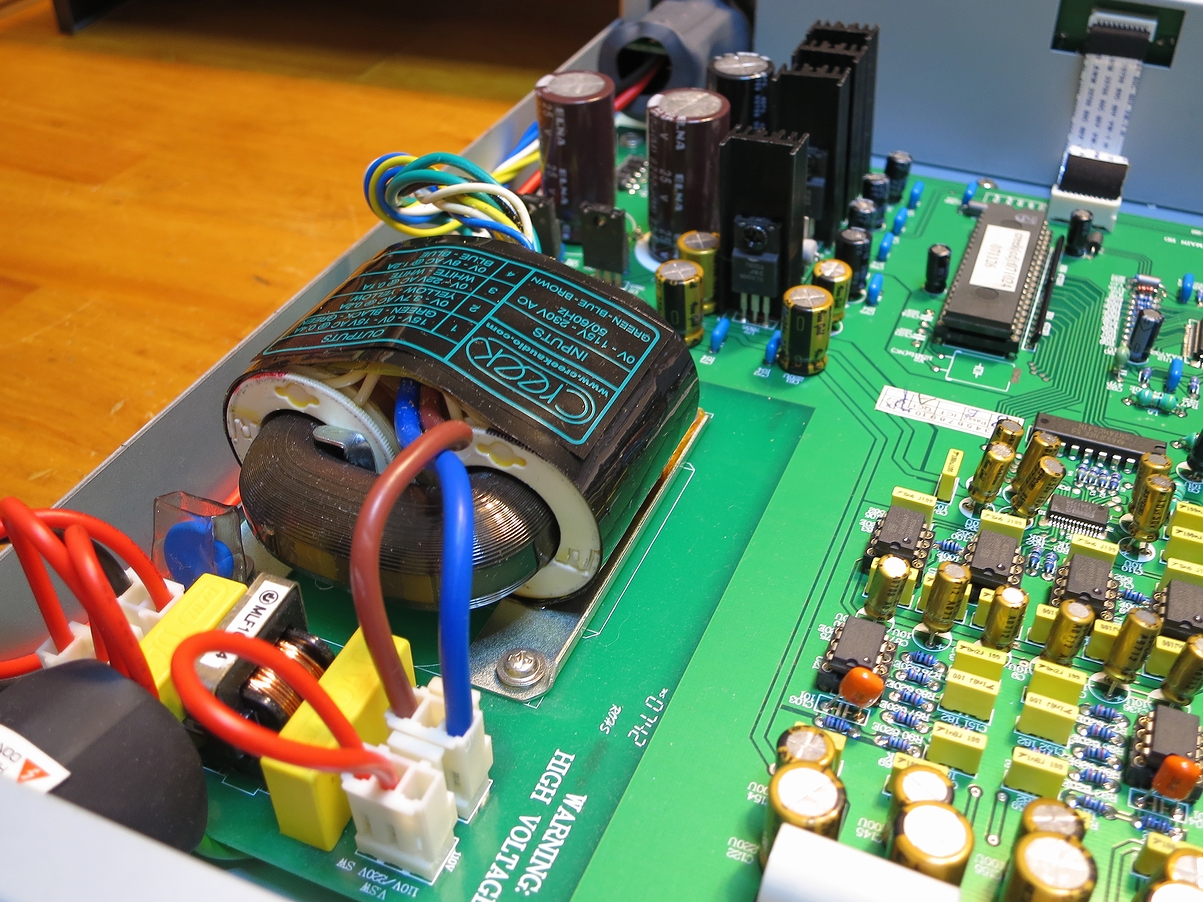
I had actually noticed all of this through overseas searches right from when I purchased the Evolution-CD back in 2008, and I spent quite some time debating whether to write it up as an exposé — but in the end I held my tongue, as I felt uncomfortable at the thought of harming the business of a small import distributor. ※ Since every model mentioned here is now discontinued, I thought it was probably fine to make it public at this point. What first tipped me off to the OEM arrangement was a series of puzzling details: why, when CREEK had used Crystal Semiconductor DAC chips across their CD players throughout the years (and more recently Wolfson), were the EVO-CD and EVO-CD2 alone fitted with a Burr-Brown PCM1738E? And why, when CREEK had always insisted on green LED indicators, were these two models the only ones with blue?
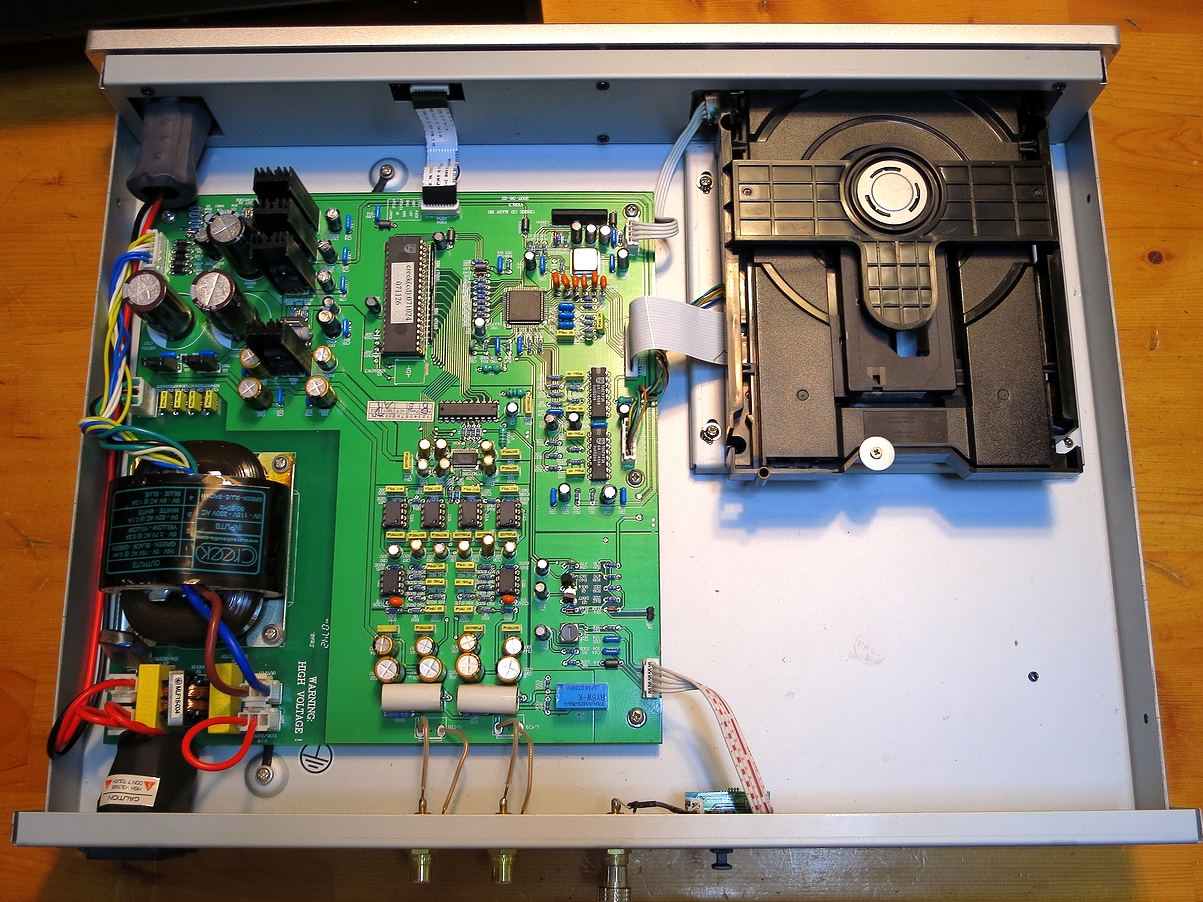
This is perhaps the inevitable sadness of an entry-level model: when you take a design that originated elsewhere and try to give it a CREEK-like character, there are limits to what you can achieve, and the sound quality does differ somewhat from that of the true CREEK players made in Britain — the CLASSIC CD Player and EMF Sequel2 that I own. The basic character is a contemporary sound with sheen, resolution, and well-defined outlines, to which a degree of CREEK-like colour and atmosphere — something reminiscent of Scotch whisky — has been added. Because the underlying transparency is higher than that of an original CREEK with its strong traditional British character, the result is a rather versatile-sounding player that is not overly fussy about source material.
Chinese manufacturers tend to have a rather poor reputation in Japan, but SHANLING is a different matter — open one up and the build quality is clearly excellent, and in terms of sound quality too it offers (at domestic Chinese prices, at least) a quite remarkable performance for the money. Having heard the OEM versions from CREEK, ONIX, and others, my personal feeling is that these are actually more balanced and higher-quality CD players than many Japanese-branded budget-range players, which so often take on an artificially lightweight character as a way of differentiating them from the upper models in the same range.
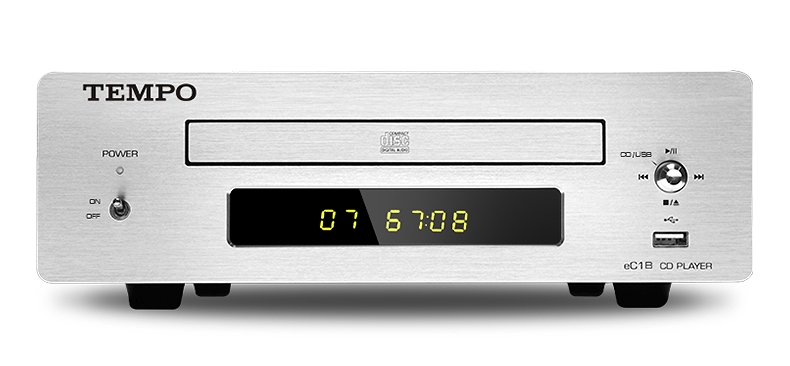
In China, below the SHANLING CD-S100 there is a half-size CD player called the TEMPO eC1B, and despite its modest price, opening it up reveals a Burr-Brown PCM1796 + NE5532P combination with a toroidal transformer — looking rather well-sorted indeed. The drive mechanism in the older SHANLING PCD3000A appears to have been the VAM1202/12, but at some point the current model seems to have quietly switched to an SF-HD8650 (EP-HD850). This is definitely a machine I would like to get hold of and try for myself…

 SHANLING Portable Audio ⇒ [Amazon.co.jp] [Bic Camera] [Yahoo! Shopping]
※ In recent years SHANLING has also expanded into the DAP and portable audio market.

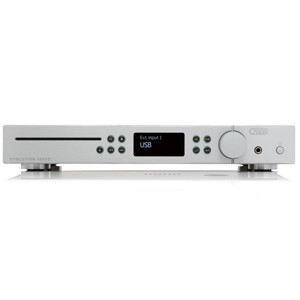
The current models, the CREEK EVOLUTION 50CD and 100CD, use a toroidal transformer, and the circuit design appears to be entirely CREEK’s own (in other words, not an OEM from SHANLING). The slot-loading mechanism now common in European CD players of recent years may divide opinion among purists, but in terms of sound quality the sweet, warm CREEK tradition appears to have been carried forward intact.
On top of all this, in recent years when the temperature drops in winter the VAM1202’s tray has started taking a long time to open and then refusing to close properly — apparently due to the grease drying out in the gear mechanism. It is not as though the motor or the tray mechanism itself is broken, so it could be fixed by disassembling and re-greasing, making it a minor fault in the grand scheme of things, but a quietly tedious one all the same…
For the past few years I have been keeping an eye on auctions with the intention of replacing the pickup myself as a DIY job, but new compatible pickup lens units have become noticeably scarce on Yahoo! Auctions lately, so I have been thinking I should probably source a set from overseas before long. Overseas auctions still have plenty of not just the lens units but complete tracking mechanisms with lens units available at reasonable prices, so I have been rather complacent about it — but I would like to attempt a DIY disassembly and repair before I suddenly find that parts have dried up entirely, and ideally get hold of a spare mechanism and pickup lens at the same time. There is not a great deal of DIY information out there, which makes the idea of opening it up a slightly daunting prospect…

Auto Translated by CS4.6
List of comments (8)
pastel_piano 様
前回のコメントではメンテ中にチャチャを入れてしまったようになってしまい、すみませんでしたm(__)m。
今回紹介されているSHANLING eC1B。現在所有しているAUDIOANALOGUE PRIMO CDPと同じハーフサイズということ
もあり、とても気になります。PRIMOが修理出来なくなったら、次はこれかな…と。
音を聴いてみないと何とも言えませんが、試聴が難しそうですね。特に北海道では皆無にちかそう。
SHANLINGのホームページでラインナップを眺めてましたが、AUDIOANALOGUEや一昔前のMARANTZを想わせる製品も
ありますが、張りぼてパロ中華感がなく、いい感じ!ではないでしょうか。
私が二十代の頃、この手の製品は某日本メーカーがOEMで一手に引き受けいたものです。まだCDP黎明期でしたが。
私はCDPは持ってなくて、もっぱらソニーの外付けCD-R/Wのお世話になってます(最終モデルです)。FireWire接続が可能なので、いまだにリッピングはコイツのお世話になってます。音声と映像転送を前提とした接続ですから。円盤はもっぱら音源のバックアップの位置づけで、再生はPCに完全移行。その代わり、リッピングには手間暇かけてます。間違えてもiTunesでリッピングはしませんw
CDP再生品質は、ピックアップ段階のアナログ的条件に大きく左右されると考えています。しかも品質よりも低レンテンシー優先ですから、欠落したデータの補完機能などにより、ビットパーフェクトは最初から期待できません。
だったら、データ読み取りエラーに対して、時間をかけてもリトライを繰り返して、少しでも精度の高いデータ取得を目指したい。これが、私がCDPを持たない主な理由です。
DSDFで抽出して、DSDコンバート専用アプリで24bit!/48kHz PCMに変換させてます。まぁ、バカですねw
とは言え、CDトランスポートには、とても興味あります!CHORDのなんて、生唾ものですね。価格が価格なんで、夢物語ですが。
昔使ってたマランツのCD-17Dという機種のリモコンがシャンパンゴールドのアルミで高級な雰囲気だった記憶があります。
音はあまり自分にはしっくりこなかったですが、リモコンは立派だなあと思っていました。
ところが、今回の記事拝見すると同じリモコンに中華メーカのロゴがついた写真が!! ソウイウコトダッタノカ…
なかなか衝撃的でしたが機器のルーツを知ることができた気がします。
とても興味深い内容で楽しく読ませていただきました。ありがとうございました。
>スガさん
いえいえ、メンテ中のコメは気にしてないです♪ あの後もGoogle Noto Sansなど何度かフォントの変更を試みていたのですが、各所からの評判が悪かったので断念しました(苦笑)。 SHANLING eC1Bは$200くらいですので、考えるまでもないかな~と。元がSHANLING PCD3000AというCREEK EVO-CDのコンパクト版でeC1BはDAC改良型ですし、 PRIMO CDPのような細やかさと味わいは無いと思いますが、よりクリアで滑らかな音がするのではないかと推測します。
>ジャイアンさん
リッピングはEACですね。面倒なのであんまりしませんが。個人的に手ごろな価格で今でも良い音がするトランスポートはCECの一択だと思ってます。この音の質感をPCやネットワークオーディオのデータから繰り出すのはまず無理ですので。デジタルの理屈からはかけ離れていますが、オーディオはご存じのように数学上の理屈のみでは説明できない、震動コントロールなどの影響のほうが聴感上はずっと大きいと感じています。OEMは、最近では国内メーカーもイヤホンやヘッドホンアンプの中韓への外注丸投げが目立つみたいです。
相違点は、DACはカバーがしてあるので不明ですが、当時のMARANTZのリリースではビットストリームTDA1541(DAC7)だったと思います。 筐体シャーシ、背面パネル、液晶パネルは青いですけど全て違うもの。発売時期が95-98年とSHANLINGよりも古い。MARANTZはPHILIPSを担当するくらいの独自の優秀な設計陣を抱えていて設計外注する必要性はほぼ皆無。
というような点から推測したのは、マランツのCDPがそもそものルーツで、当時中国で製造下請けをしていた生産工場が、その生産技術と回路を元に自社ブランド製品を作り、更に世界中のメーカーへのOEM/ODMを引き受けるようになった・・・みたいな? ※単に似ているだけだったり、無関係の他社が回路設計パクったりも充分あり得るので、ここまで完全に想像なので間違っている可能性は多々ありますけれども・・・(滝汗)
先日は早合点して勘違いな書き込みしてしまいすみません。。管理人さんに詳しく調べて頂いてご迷惑おかけしました
あくまで仮定ということですけど、もしマランツの技術を受け継いでいてOEMを引き受けているとしたら色々想像がふくらんで面白いですね
pastel_pianoさん、初めまして。
みっちと申します。
このブログが休止中の時に何度も訪問して、情報をいただいております。当時EMF AudioのSequel2を使っており、そのレビューを拝見したのがきっかけです。
みっちは窮屈なマンション暮らしのため、「箱庭オーディオ」が必須なのです。
ここはWeb上でも数少ない有力なソースですから、また始められたのは嬉しいです。
くれぐれも、お身体ご自愛ください。
みっちさんコメントありがとうございます~。
またちょっとプチ休止気味になりつつありますが、
早く再開出来るように頑張ります\(^^@)/
Sequel2はこちらでも元気に稼働しています♪