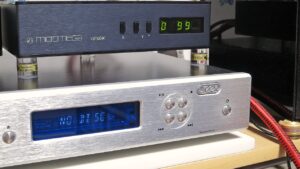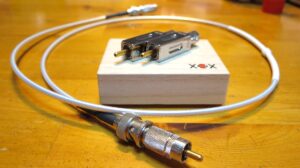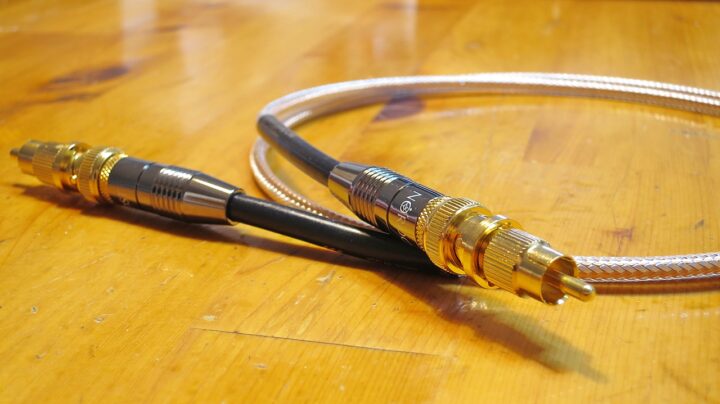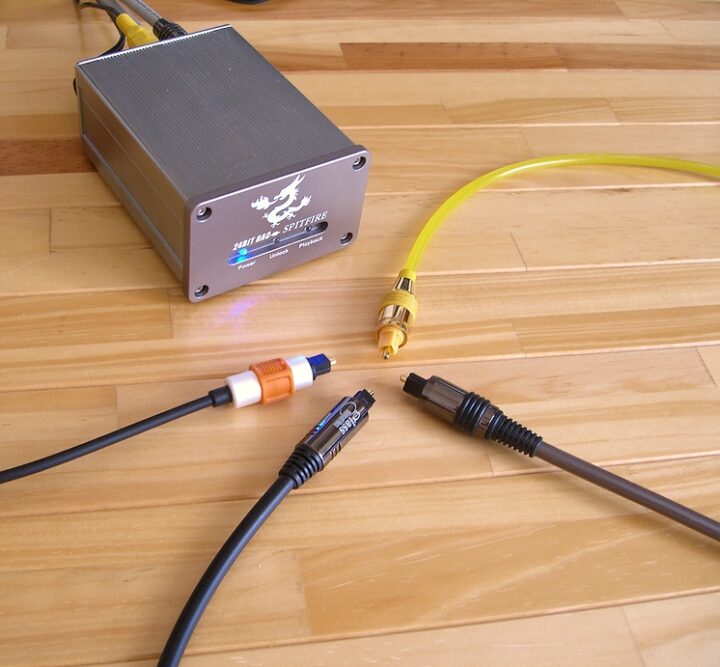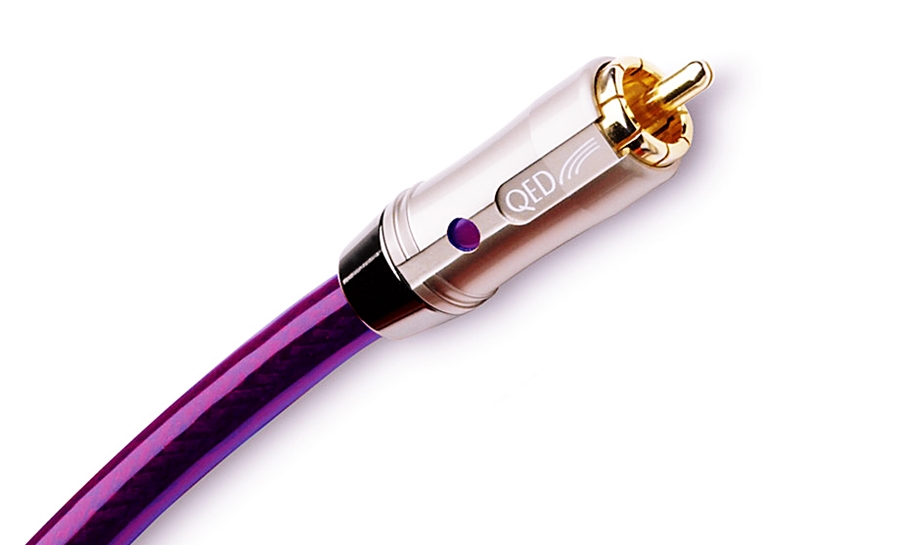
After adding the Pro-Ject Head Box DS (under construction) as a DAC to complement my ONKYO A-1VL/audiopro Image12 sub-system, I suddenly realised I didn’t have enough decent entry-level coaxial digital cables to go around. After considering various options, I decided to add the Reference Digital Coaxial Audio Cable from British brand QED as my new coaxial digital cable.
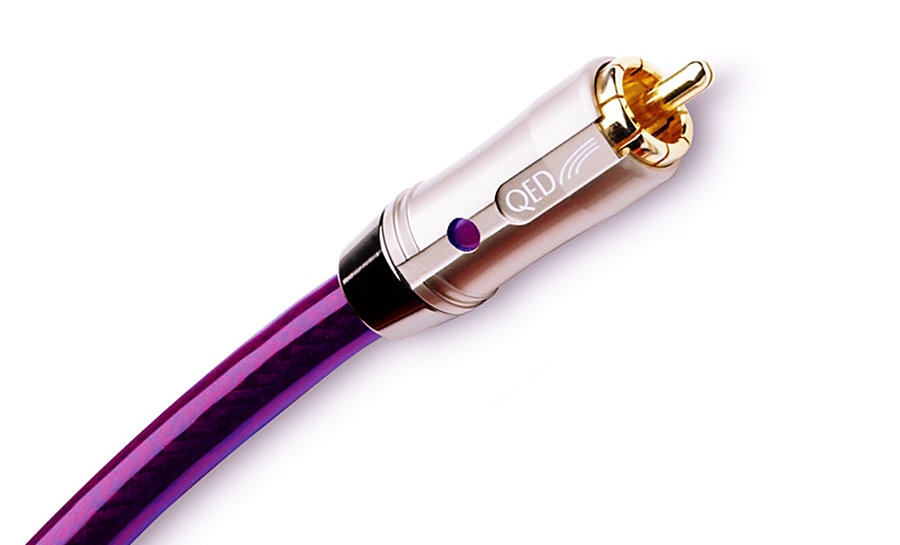
It’s been quite a while since I last bought a cable from British QED. The first thing I purchased from them was the QUDOS speaker cable, about twenty years ago. More recently, I used the QED Micro for the best part of a year with my car audio tweeter, the “FOCAL TIS1.5” ※ I’m now using a different cable there. As for why I chose this particular digital cable — as always, the budget Hi-Fi mindset was firmly in place, meaning as cheap as possible, somewhere in the range of a few thousand to just over ten thousand yen…
I ordered it direct from a shop in the UK.
But I also wanted something that met an acceptable standard sonically, ideally with that sense of atmosphere you get from a European product, and something that would last a good while — those were the conditions I was shopping under. What caught my eye during my search was the QED Reference Digital Coaxial Audio Cable, listed at 51% off in a clearance sale on futureshop.co.uk. Judging by the plug design, I believe it was a model released in the latter half of the 2000s, subsequently replaced by a new product called the REFERENCE Digital Audio 40, which adopts a collet-chuck pure copper plug system called QED Digiloc — my assumption being that old stock of the previous model ended up in a clearance sale.
There’s little evidence that this predecessor model received much attention in British audio magazines, and compared to the current 40 series — which has picked up various awards — it does feel rather overlooked. You can currently buy the lower model in the new 40 series, the QED Performance Digital Coaxial Audio Cable, for roughly the same price in the UK, and that one holds a five-star rating from WHAT Hi-Fi. However, it uses unplated OFC conductors. The situation was: an older, higher-spec model with silver-plated conductors and a thicker cable diameter, at the same price as the newer entry-level model — which led me to the hopeful assumption that a difference in grade must surely count for something, and I ended up going for the old model on that basis.
This is QED’s optical digital cable, not a coaxial one


 ポチップ
ポチップ
In my setup, the shortest run in the main system is 70 cm. For the CD player–DAC connections across the various compact sub-systems, 50 cm is sufficient in every case, so my policy is to keep cable lengths as short as possible and I’d ideally have chosen 50 cm — but with the thought that it might just come in useful for the main system as well, I went with 75 cm this time.
What arrived was a bare bulk item — no packaging whatsoever.
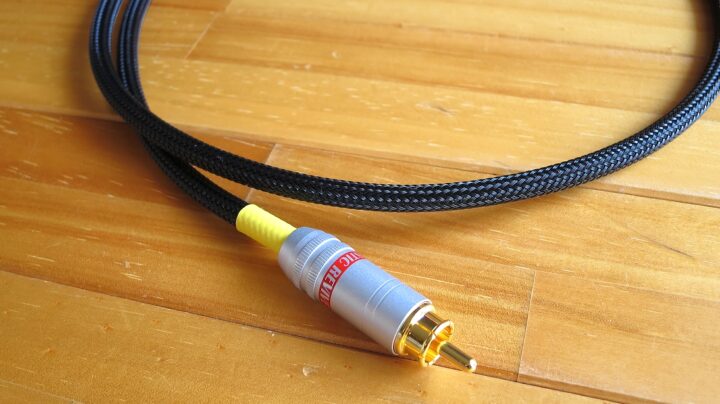
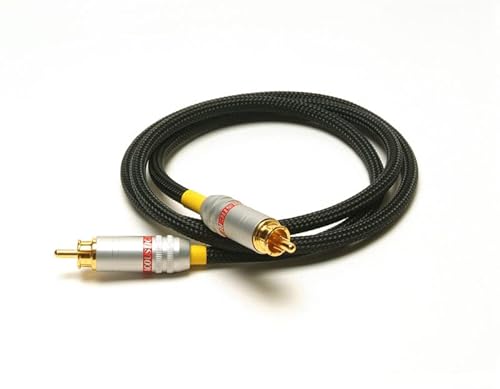
The product listing made no mention of it being a bulk item, so I was fully expecting it to arrive in a QED box — possibly slightly battered and squashed from transit — which made the reality a bit of a disappointment. Also, the shop’s photos and product description mentioned Digiloc, but this is the old-style RCA plug, so it’s definitely not Digiloc.
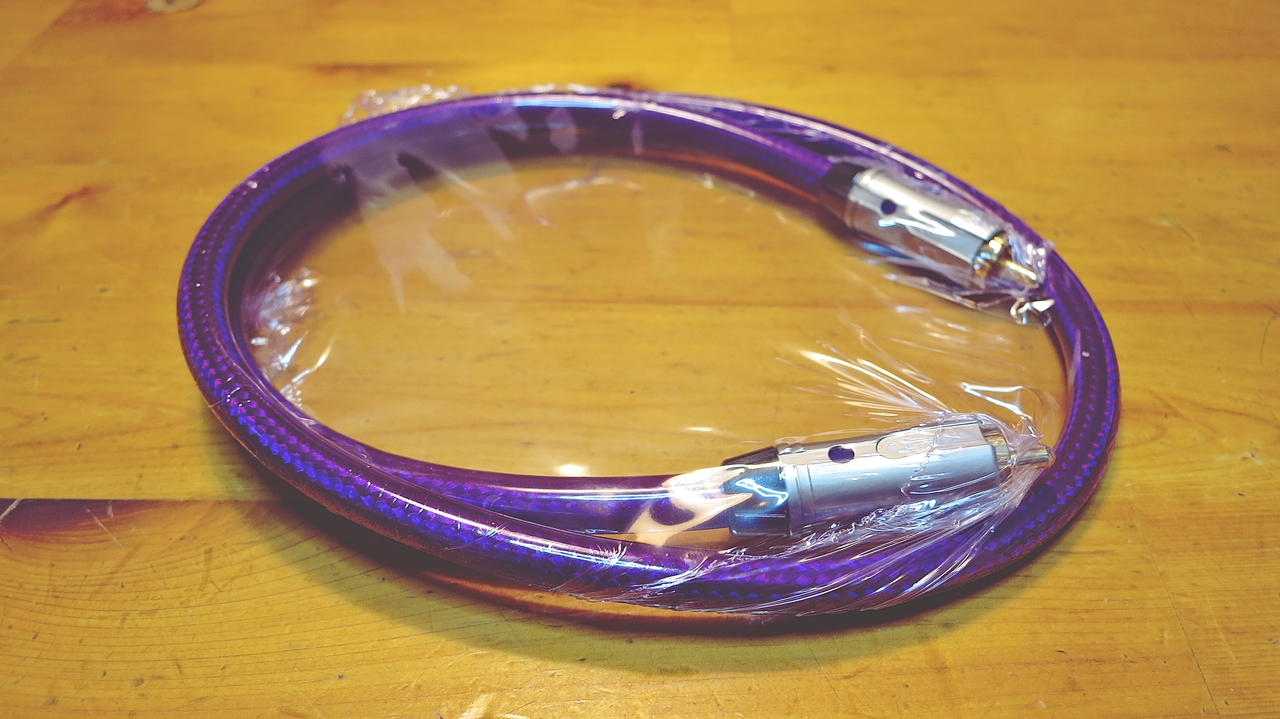
I hadn’t really thought about it before, but I wonder if futureshop.co.uk sends bulk items when you specifically order through the Custom Length page? Incidentally, when I measured the cable that arrived, it came to a full 82 cm. It’s a nice gesture, but also something of an unwanted kindness — that length was simply more than I needed, so a bit too generous really. The physical appearance of the cable is also rather shiny and modern-looking, not quite at home in a British interior. Leaving aside the boldness of the purple colour scheme, the overall material feel is almost Japanese in character — which is a little at odds with the quietly reassuring, traditionally European aesthetic I was after. Also… it has a distinct chemical smell. A stale rubber and resin sort of odour, the kind that makes you wonder whether it’s actually good for you, coming from something sealed in an enclosed space for a long time — and it transfers to your hands when you touch it. The study where I set it up initially became quite unpleasant, which was rather off-putting. I wiped it down thoroughly with ethanol and put up with it for about two weeks, after which the smell had more or less volatilised away. As for cable directionality — there’s no indication, and with no outer packaging the details are unclear. Trying it both ways, the reverse connection gave a noticeably cleaner sound, so I’ve deliberately gone with that. Incidentally, this generation of QED cable does not use the Digiloc collet-chuck system. The fit on the plugs is neither tight nor loose — just about right.
QED Reference Digital Coaxial Audio Cable — Sound Quality Review
Now for the listening test. The connection is Sub-system A — the intended setup of ONKYO A-1VL/audiopro Image12 — between the CREEK Evolution CD player and the Pro-Ject Head Box DS DAC (under construction). The optical digital input already has the Wireworld Supernova 7 (under construction) in place, so A/B switching comparisons are possible. Initially the sound was stiff and unyielding — really rather grim — but after running it for a full day things came around to something listenable. ※ Come to think of it, futureshop.co.uk offers a burn-in option using a Nordost system to avoid this painful initial period with new cables, though it doesn’t seem to be available for cables at the lower end of the price range.
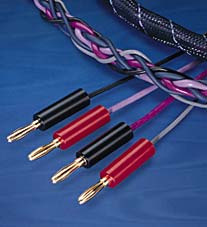
My initial impression was that it shares a similar character with IXOS, another British brand with a traditional European sound. The basic sonic character of the QED Reference Digital Coaxial Audio Cable is warm and easy on the ear, with a consistent, richly saturated tone that holds everything together. The image is on the full-bodied side. The sound is very close to what one might call the PHILIPS house sound. It has a particular affinity with strings — very realistic and richly coloured. Compared to the various QED speaker cables I have on hand, there is the same quality of being stranded-wire-like, with detail that blurs into a slightly hazy, granular texture, but the sound here is even more full-bodied, warm, and dense. On top of that, there is a degree of brightness and shimmer in the upper-midrange to high frequencies that is characteristic of silver-plated conductors, adding a layer of resolution and definition — though this settles down fairly quickly over time. The overall balance seems to be heading towards something moderately narrow in bandwidth and centred on the midrange. With such a pronounced European tonal character, I suspect the unplated QED Performance Coaxial — which earned five stars from WHAT Hi-Fi — might end up sounding too laid-back and lacking in sparkle. The same was true of the IXOS cables that were also manufactured in Taiwan back in the 1990s, but it is possible that the 5N multi-core OFC conductors used in this QED lean towards a particularly warm and unhurried character.
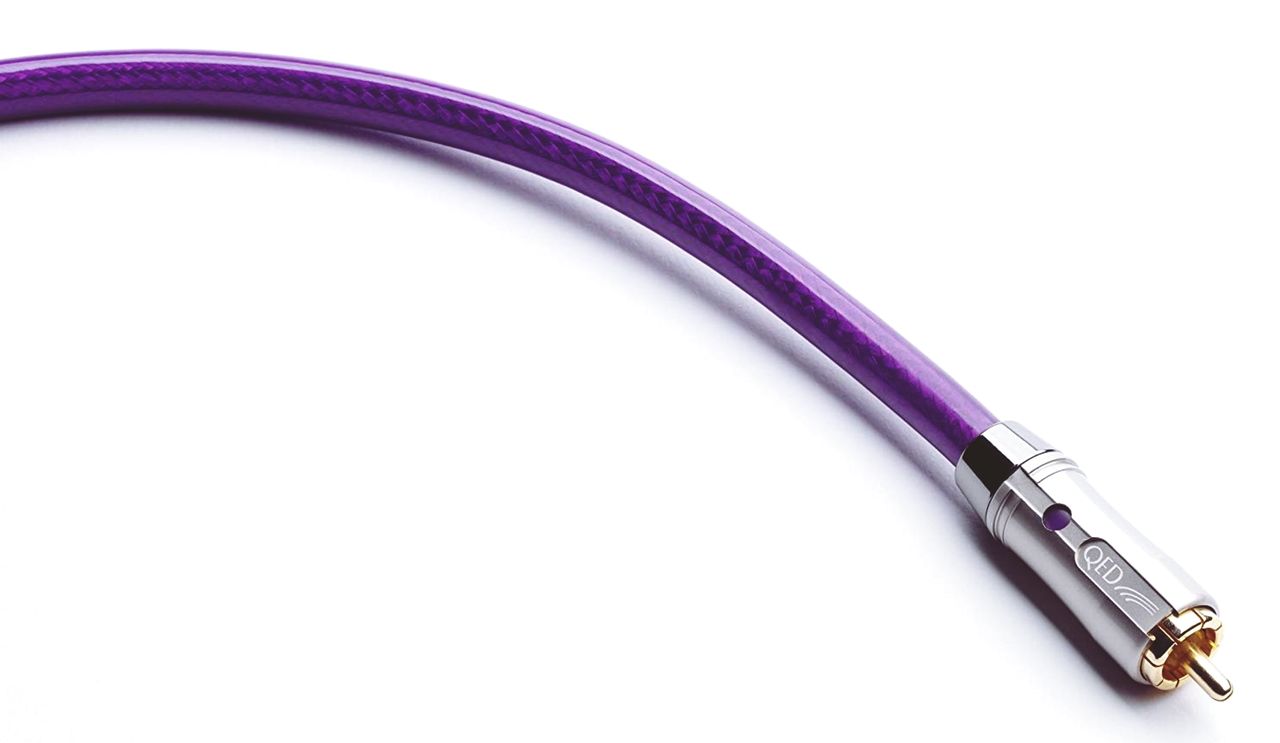
In terms of musical expression, WHAT Hi-Fi describes it as having punch and attack, and it does have a reasonable degree of dynamism — the overall musical character is positive and forward-facing. It doesn’t easily convey darker, more inward-looking expression, so I wouldn’t go as far as to call it highly musical, but it has a reasonably spirited, warm-blooded quality. And it delivers that distinctly European atmosphere which is simply hard to come by with Japanese-made products. In terms of colour, if I were to describe it, I’d say it’s in the reds — a deep wine red. The cable itself is purple, so there’s a synaesthetic consistency there, though the sonic redness goes even further, and somehow it doesn’t have quite the glossy sheen that the cable’s appearance might suggest. QED’s white speaker cables have a white sound to match, so perhaps there is someone with chromesthesia among the people who make them.
A few sonic concerns
Let me note the weaknesses as well. Coaxial digital cables often use a single solid-core conductor, much like VVF cable, but this one uses a silver-plated 5N OFC stranded multi-core construction. The sound of these stranded conductors has a noticeable tendency to smear — the soundstage is rather powdery, and it would be hard to claim that S/N ratio and transparency are strong points. There’s a laid-back quality to it, and I find myself wishing the sound would open up a little more. The silver plating does compensate somewhat with a surface-level sense of resolution in the midrange-to-treble region, but the focus is also on the larger side rather than tight. The bass is lively but doesn’t extend particularly deep. The musical character is reasonably dynamic, yet the sound somehow lacks depth — I think this is because the silver plating’s brightness pulls attention towards the upper midrange and treble, creating a slightly top-heavy balance.
Put unkindly, it has the sound of a 1990s cable — somewhat dated by today’s standards. If you expect the kind of three-dimensional imaging that a good modern cable delivers, the soundstage here feels narrow, with limited depth and width, and a fundamental shortage of transparency. In a compact sub-system this is less of an issue, but when connected to a main system with real space to breathe, the narrow balance means the stage simply doesn’t open up, and the old-fashioned quality becomes difficult to get past. Personally, I have a nostalgic fondness for this kind of traditional European sound, which suits older recordings well — but in terms of outright quality, it is clearly around two classes behind the Acoustic Revive DIGITAL-1.0R-TripleC-FM, and unfortunately it did not reach the level required for use in the main system. I suppose the conclusion is that there may well be a reason why WHAT Hi-Fi rather quietly passed over this model, while the current 40 series has received considerable acclaim. I bought the old 75 cm model at half price for £45 (ex-VAT £37.50), and given that the value at full price doesn’t seem particularly impressive, I’m probably glad I didn’t pay the full £86.20 (roughly ¥13,000) back in the day.
Putting the QED Reference Digital Coaxial Audio Cable back into the ONKYO/audiopro sub-system: whilst it has its appeal in terms of lively musical expression, it simply does not suit the modern sound I’m after, with its emphasis on transparency and resolution. Compared to the Wireworld Supernova 7 (under construction) on the TOS side, the coaxial’s inherent advantage does make the upper-midrange and treble region a little crisper, but the sound tends to bunch up in the centre. In terms of soundstage width, note separation, transparency of reflected sound, bass extension, and information retrieval, even in a compact boxroom-sized system the QED is clearly a step behind in quality terms. I see no point in running both TOS and coaxial simultaneously just for the sake of switching between different tonalities.
 ポチップ
ポチップ
Pairing with the CREEK CLASSIC CD and Musical Fidelity V90 DAC
I was beginning to feel I’d made a rather pointless purchase — but then I remembered: Sub-system C, built around CREEK/EPOS, uses the Musical Fidelity V90 DAC. The CD player ARCAM CD72T is connected to the integrated amplifier CREEK/EMF Sequel2, but come to think of it, the Musical Fidelity V90 DAC and the CREEK CLASSIC CD were not connected digitally at all.
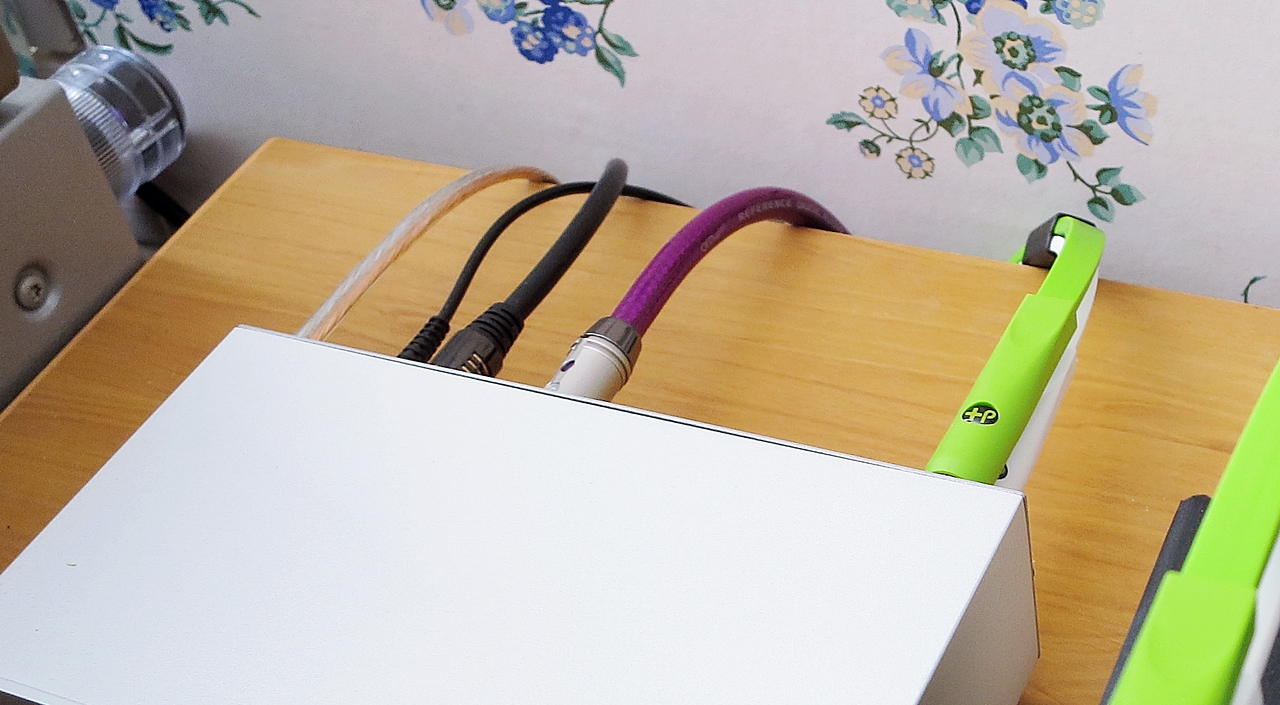
The CREEK CLASSIC CD uses a repurposed PC drive mechanism and is not particularly impressive as a transport, and it has no S/PDIF optical output — only coaxial digital — so I had been ignoring it (to avoid ground loops and noise loops). (※ The connection between it and the ARCAM CD72T uses the AUDIOTRAK GlassBlack2+ via TOS.)
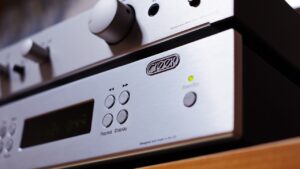
As a trial, I connected the QED Reference Digital Coaxial here — and the result was a rather unexpectedly positive surprise ♪ The CD player already has a warm, brick-red sort of coloration to its sound, so the warm-toned character of the QED deepens that further, but there’s a curious sense of added lustre and richness. In this combination, the transparency of the reverb tail is unexpectedly improved, and the silver-plated conductors contribute just a hint of definition and high-frequency shimmer — a welcome touch of spice. Sub-system C was never intended to be a wide-stage system to begin with, so the limited dynamic range and more concentrated presentation don’t become significant problems. As for the smearing quality — this is actually a system deliberately aimed at a retro sound where a certain looseness is part of the charm, so it doesn’t really count as a drawback here. The result is a third flavour to add to the two I already had: the bright, retro directness of the CREEK CLASSIC CD on its own, and the honest but slightly shadowed, deep sound of the ARCAM CD72T → Musical Fidelity V90 — all three sharing a rich European character, each in their own way. There’s a real sense of unexpected gain ♪ And such is the strange alchemy of Hi-Fi system matching: in this particular setup, the QED is clearly a better fit than the Acoustic Revive digital cable DIGITAL-1.0R-TripleC-FM mentioned earlier, delivering a larger, more spirited musical experience ♪
 ポチップ
ポチップ
~ Summary ~
So, the QED Reference Digital Coaxial Audio Cable has ended up in Sub-system C — not quite as planned, but there it is. Even where sonic compromises exist, this is all in the service of music listening, and if something has genuine musical character, there’s always a way to put it to use. The search for a digital cable for the Pro-Ject Head Box DS (under construction) in Sub-system A continues, but for now, this is where things stand.
 Search for British QED audio cables ⇒ 【Amazon.co.jp】【ESF Direct】【Rakuten】【Yahoo! Shopping】



Auto Translated by CS4.6