【audio-technica High-Quality Hi-Fi Insulators】
AT6099|AT6098|Discontinued
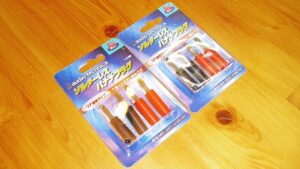
The AT6099 introduced here is an insulator designed exclusively for audio and visual equipment, made by audio-technica, an audio-related products manufacturer based in Machida, Tokyo. Highly versatile and very reasonably priced, it is probably the best-selling standard insulator in Japan. I have been using it in various parts of my own compact Hi-Fi system for many years, and it has appeared on this blog on numerous occasions as a magical insulator that brings musicality back to life.
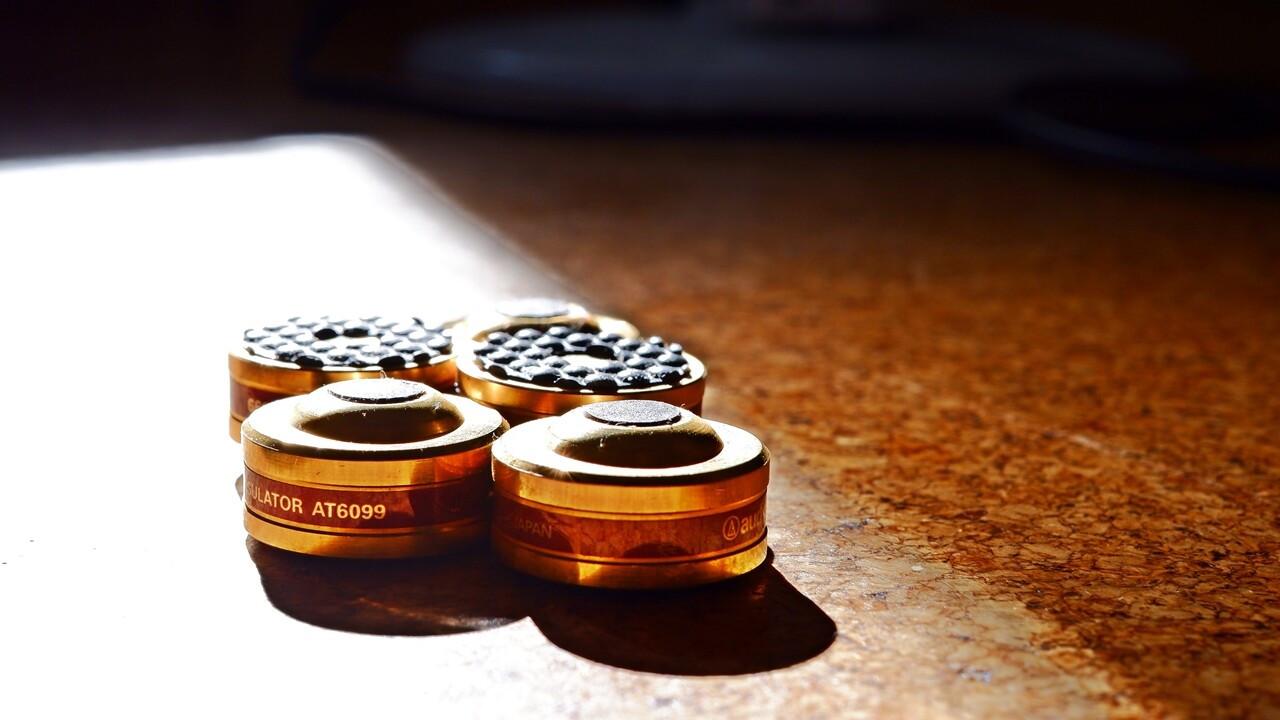
My encounter with the audio-technica AT6099 goes back to around the year 2000. At the time, a friend of mine who was new to Hi-Fi had put together a system for a six-tatami-mat studio flat, combining the British small bookshelf speaker KEF CRESTA 2 with a Marantz amplifier and CD player. The speaker stands were homemade from timber bought at a DIY store, with the AT6099 used in a three-point support arrangement between the stands and the KEF CRESTA 2. Privately looking down on these cheap audio-technica insulators, I arrived at my friend’s room — still a Hi-Fi beginner at the time — armed with several of my own more expensive and esoteric insulators, intending to run a comparison test… I was going to hold forth with all sorts of unsolicited advice while letting him appreciate the superiority of the pricier options…
But then. . . when we actually went through them one by one, the AT6099 turned out to be far more capable than I had expected. Six pieces for around 3,000 yen, up against several insulators each costing tens of thousands of yen a set. The audio-technica AT6099 should have been at a crushing disadvantage — yet when we swapped them around, the result was that the AT6099 suited the KEF Cresta best of all, a scales-falling-from-the-ears revelation if ever there was one. Having privately sneered at the audio-technica insulator you can find anywhere, dismissing it as a cheap product, I was left feeling thoroughly bewildered when confronted with the AT6099’s actual performance.
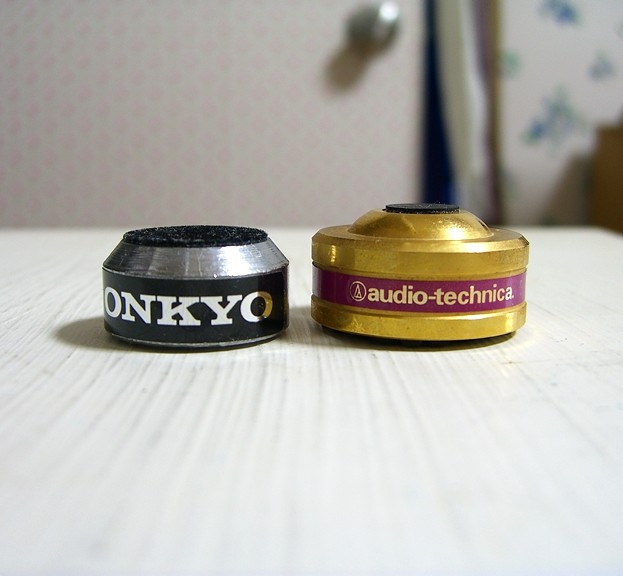
When recommending an inexpensive product from a domestic mass-market brand, one can almost hear the voices of high-end Hi-Fi enthusiasts muttering “isn’t that a bit of an exaggeration?” — but when you actually compare them side by side, the AT6099 delivers insulation performance that holds its own against high-end insulators costing well over ten thousand yen, which is genuinely surprising. It tends to be seen as a beginner-level insulator by price and brand, but do not underestimate it. For those who are curious but still hesitant about purchasing this sort of Hi-Fi accessory, I thought I would put its capabilities to the test and give you the nudge you need.
The construction of the audio-technica AT6099 and its reasonable price
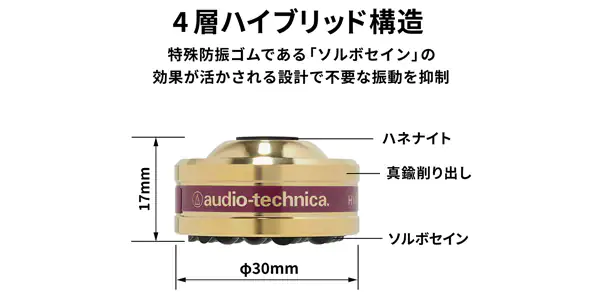
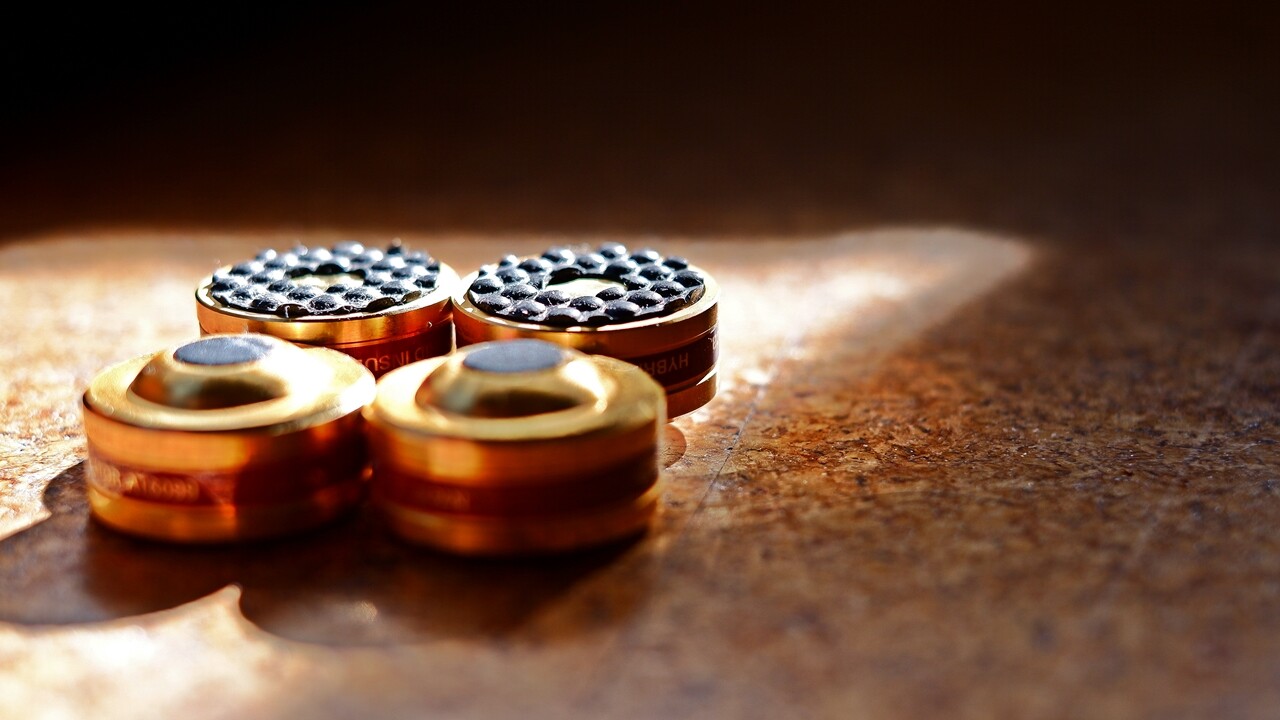
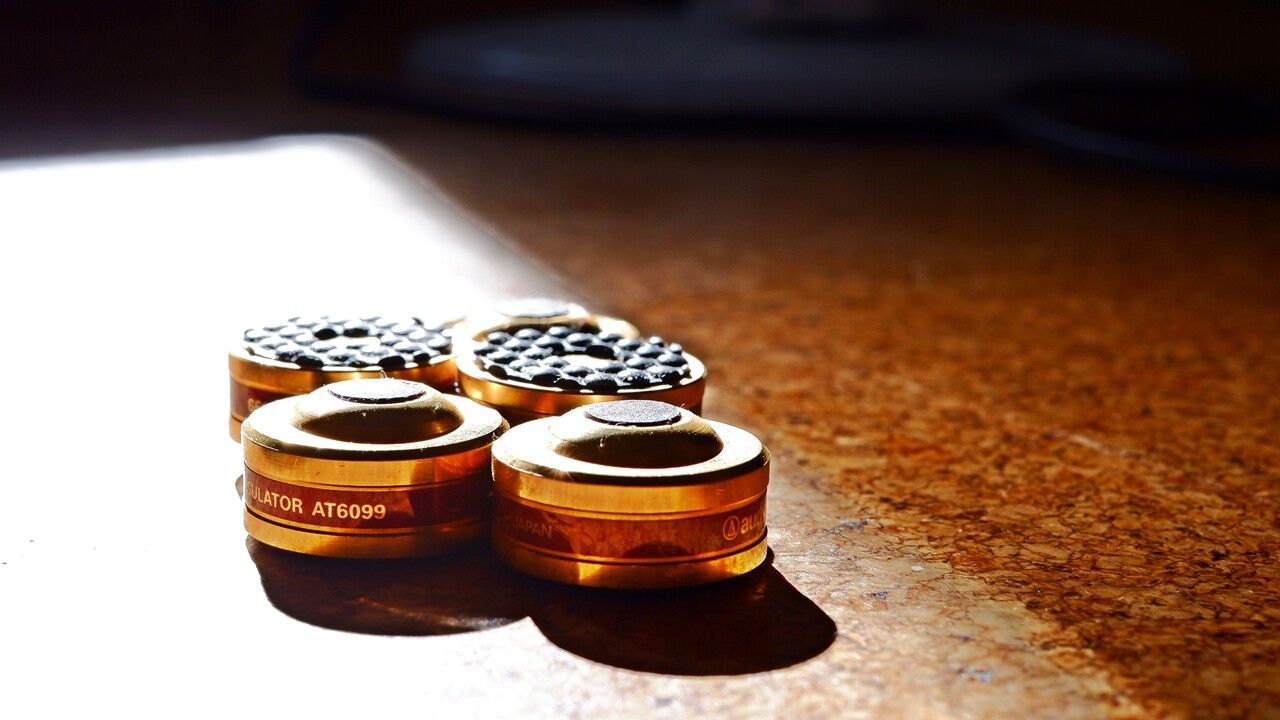
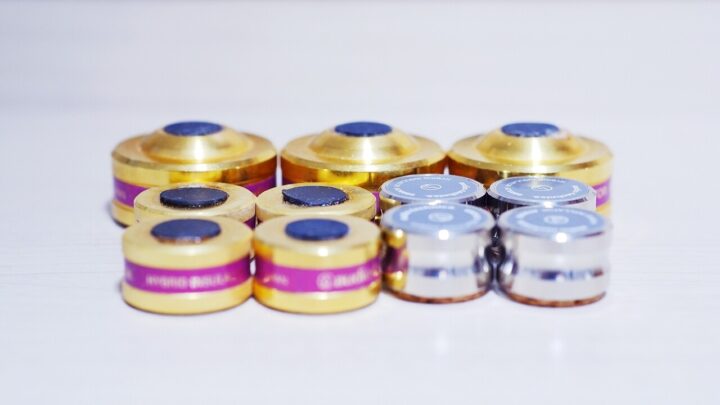
Let us start with the construction. From the bottom up: Sorbothane + Hanenite + brass + Hanenite, a four-layer construction. The core is a high-precision machined brass cylinder measuring 30 mm diameter × 17 mm height (※ when new; it compresses slightly over time), with each unit weighing 65 g. Those who have never picked one up will likely be surprised by its solid heft. The gold finish gives a rather premium impression, and in a market awash with dubiously priced specialist Hi-Fi insulators, this product — presumably benefiting from the economies of scale of an established domestic manufacturer — is priced with admirable restraint.

The AT6099 made its debut around the year 2000, and in the 22 years since, the actual selling price has not changed significantly — only the consumption tax has been added on top of the original recommended retail price. Ordinarily, insulators of this type tend to use a single material, and when a composite construction is involved, the price typically climbs well into five figures. From that perspective too, the AT6099’s pricing is highly user-friendly and represents exceptional value for money.


 ポチップ
ポチップ
An in-depth sound quality review of the AT6099
As for the sound — having tested the audio-technica AT6099 across several systems, the overall impression is that its distinguishing characteristics are a “smooth, well-grounded tonal richness with a sense of density” and an “ability to bring out dynamic expression“.
First of all, the use of machined brass (yellow brass) for the core delivers a firmly grounded, pyramid-balanced tonal character with a low centre of gravity. The result is that the perceived frequency balance of overseas slim and lightweight components — which can tend towards an inverted-triangle, top-heavy lightness — as well as domestic mid-price Hi-Fi products, is pulled back downwards, making it possible to achieve a well-balanced sound image of greater scale, underpinned by a stable bass register.
Insulators made from brass alone typically display a hardness and upper-midrange brightness inherent to the material, but here the Hanenite layers above and below keep the overall behaviour in check, lending a composed impression free of high-frequency distortion. On top of that, the thin Sorbothane at the base adds a degree of suppleness and vitality that Hanenite alone cannot provide. In other words, through the finely balanced four-layer combination achieved by audio-technica’s design team, the AT6099 acquires a smooth, moist quality alongside a lively, charming dynamism — a bright, animated expressiveness that sings freely and with real spirit.
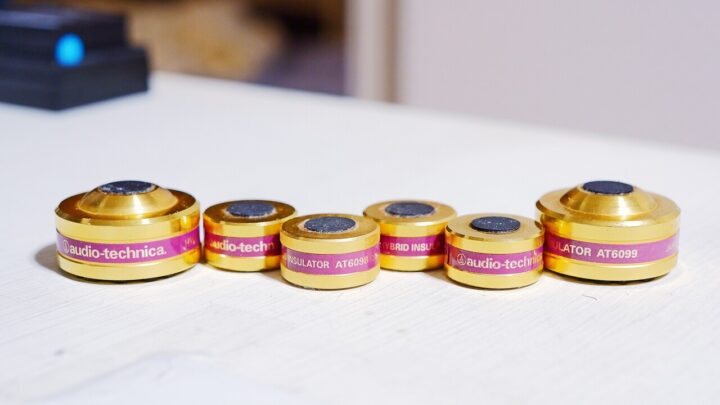
Incidentally, the manufacturer’s own product tagline for the AT6099 reads: “Achieves precise imaging, extended highs, and full-bodied bass.” The full-bodied bass part does indeed match one’s impressions. That said, taken on its own, this tagline could give the impression of a V-shaped sound. As for precise imaging and extended highs — the imaging is certainly solid, but this is not the type that delivers the solid, razor-sharp pinpoint placement you get from metal-type hard insulators or spikes. The positional relationships between instruments are clear, but the outlines carry a slightly full and sweet naturalness to the imaging. The overall impression is of a pleasant balance between a sound image that avoids unnecessary sharpness and a comfortable, well-integrated sense of decay.
To name a weakness candidly: because the Sorbothane element introduces a soft tone as a dominant flavour, transient attack is somewhat gentle, the upper frequencies are rounded off, and the overall character tends towards a slightly full-bodied warmth rather than something crisp and sharp. That quality works in its favour — vocals in particular are likeable, charming, vivid, and sensuous — but by the same token, the character is different in nature from the cool-touched, refined refinement of high-end sound.
The AT6099 and equipment compatibility
As a result, I do not think the AT6099 is particularly suited to high-end systems with rigidly engineered enclosures; and given its floating construction using soft materials, the rated load capacity of 5 kg per unit means it cannot be used beneath heavy equipment.
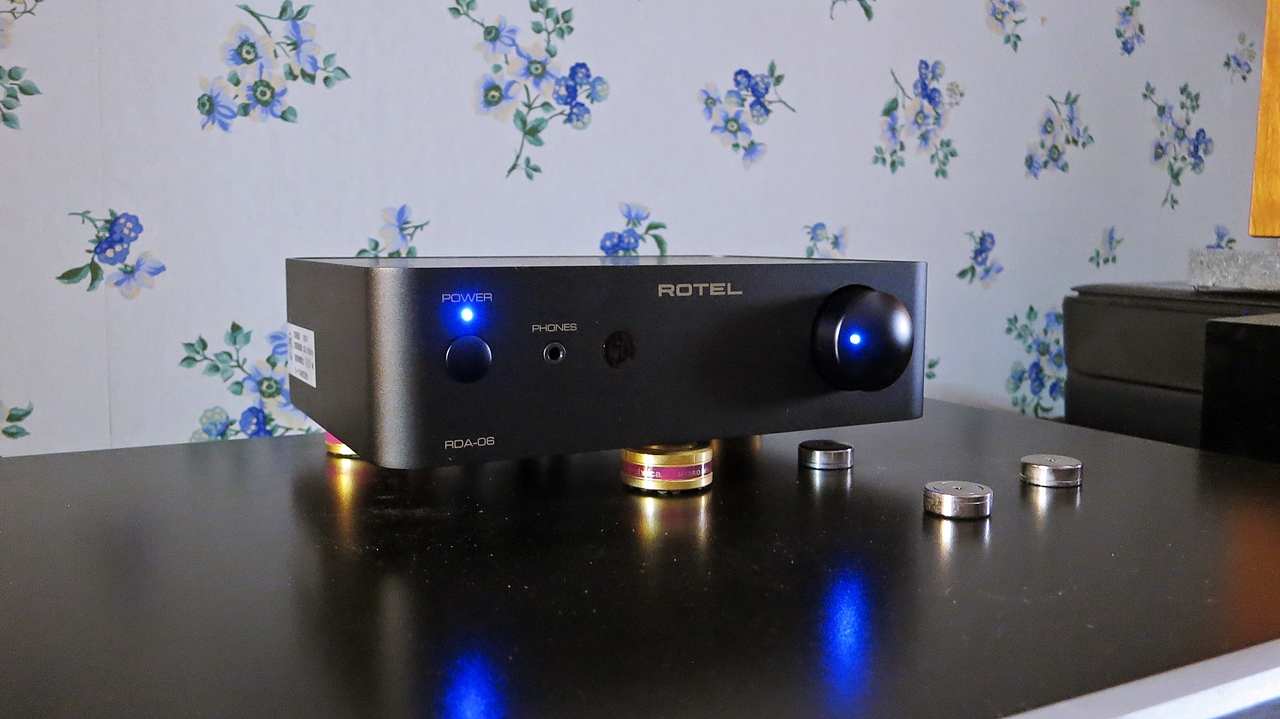
That said, the ease with which the AT6099 can bring a sense of musicality to a system is, I think, a merit that should take priority over pure sound quality when it comes to enjoying music through Hi-Fi equipment. Moreover, because the elastic layers above and below reduce the influence of the under-board’s character, it becomes a highly effective means of sound quality improvement under the typical installation conditions where one cannot be too particular about the material of one’s Hi-Fi rack.
There is also the matter of the brightness characteristic of brass, which makes occasional appearances as an accent in the upper midrange; however, in terms of the treble overall, the tendency is towards a pleasantly mild quality, making it a type that can help temper and tune out the harshness of systems prone to an unruly top end. The sense of body in the mid-to-low registers is also generous, which makes the projection of vocals, wind instruments and the like particularly attractive.
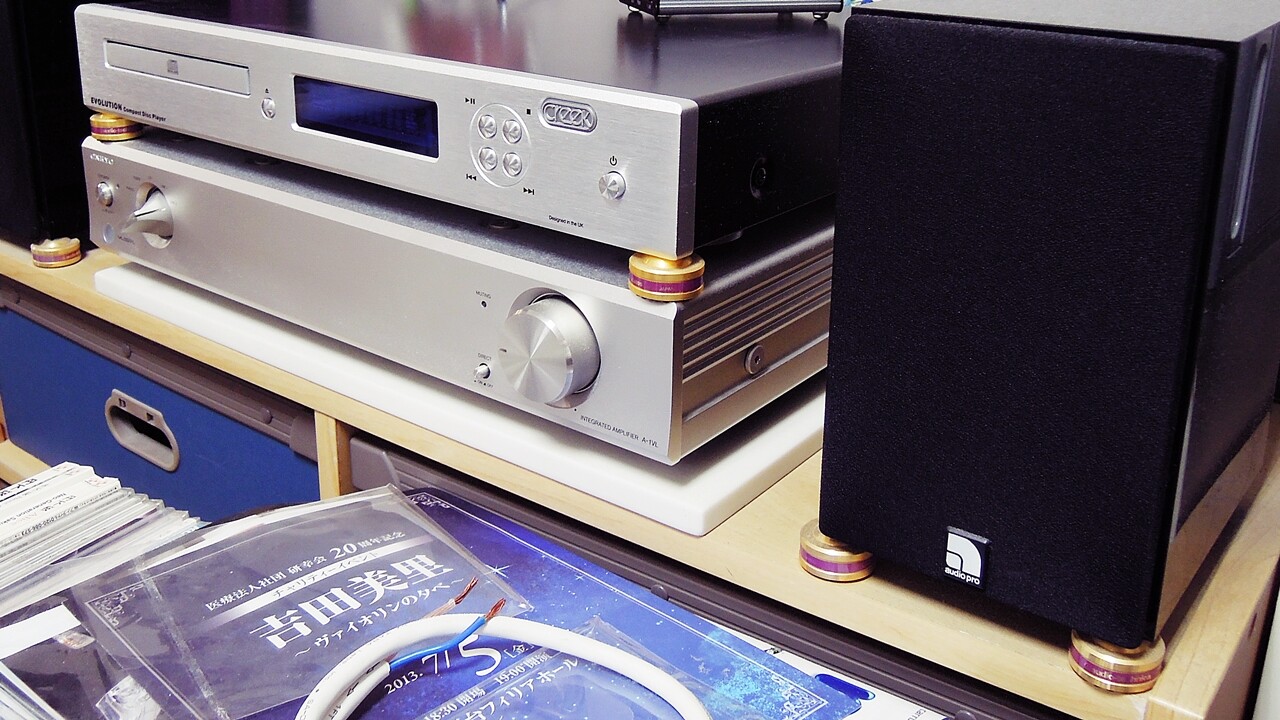
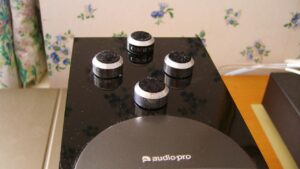
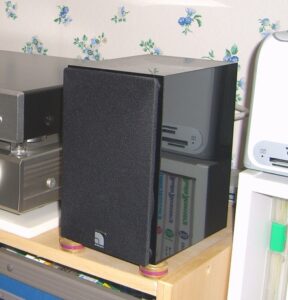
In my own system, in addition to the three-point support under the British integrated amplifier TAG McLaren 60i, I have been using the AT6099 for many years as feet for the small bookshelf speakers audiopro Image11/Image12. The intention behind that combination is to take the edge off the occasionally razor-sharp tweeter range of the audiopro Image11/Image12, while adding the dynamism and projection they can sometimes lack.
 Category: Sweden / audioproCategory: UK / TAG McLaren & Audiolab
The AT6099 actually improves with age
Now, the audio-technica AT6099 is a wonderfully versatile and easy-to-use insulator with excellent value for money — but because I was also using them under the TAG McLaren 60i in addition to the speakers, six units were no longer enough. So when I bought the audiopro Image11, I picked up some more — only to notice that the sound of these new ones was different from the AT6099 units I had been using up to that point. Thinking that couldn’t possibly be right, I swapped the AT6099 that had been under the integrated amplifier for five-plus years with the new ones and listened again — and the character really was different. Bluntly put, the new ones sounded soft. The midrange, by comparison, was thin. What on earth? Puzzled, I looked at the old and new audio-technica AT6099 side by side, and . . . . .
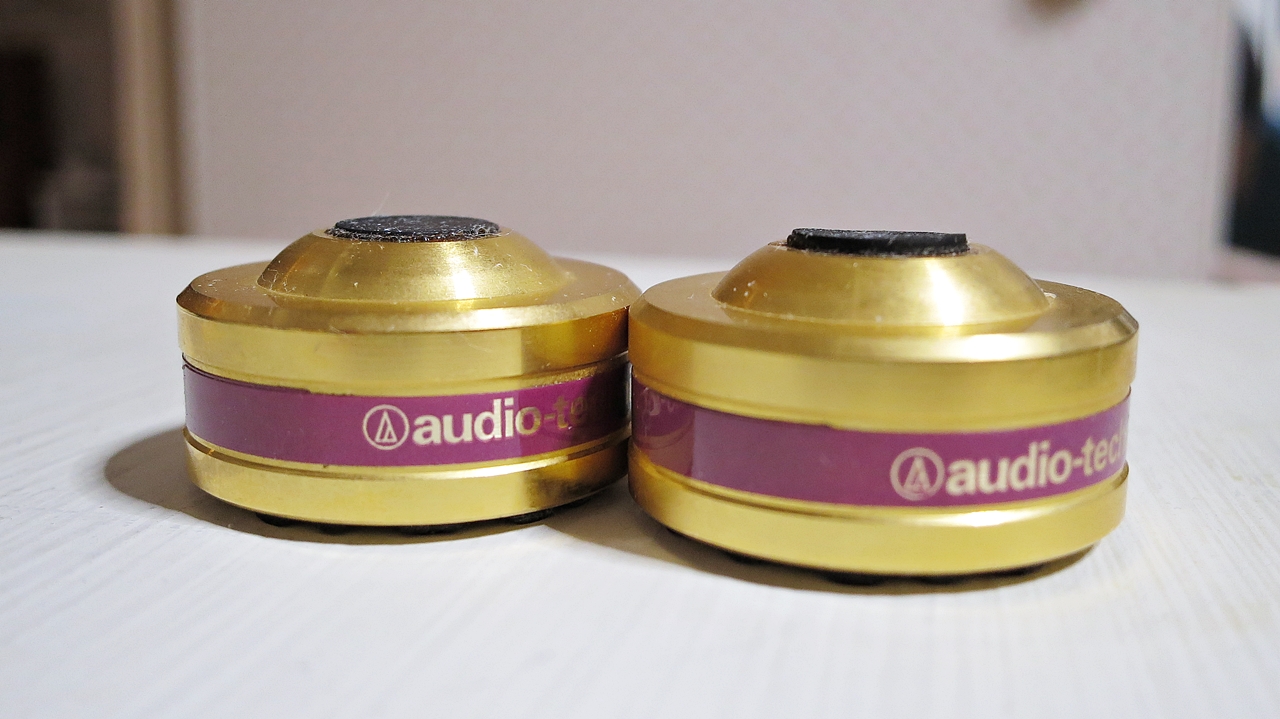
It seems that the AT6099 units purchased more than five years earlier had, under the weight of the amplifier and CD player, gradually compressed the Sorbothane on the base and the Hanenite on top, hardening over time with age. Sure enough, with the amplifier placed on the newly purchased units, the Sorbothane’s springiness means the chassis wobbles very slightly if you push it gently by hand — whereas with the five-year-old units, everything feels settled and firm, barely moving at all. And the result is that this partially compressed, hardened state sounds (in my system, at least) better than when new…
Of course, which suits better will vary depending on the equipment used, but at least for the audiopro Image11, the aged units make a better impression. As for the integrated amplifier, it does have a certain amount of weight (around 7–8 kg even so), so even with new units… well, there is a slight tendency towards being too soft, but it is within an acceptable range… perhaps. Come to think of it, I do now vaguely remember that the sound was this kind of sweet, soft-textured thing when they were first used.
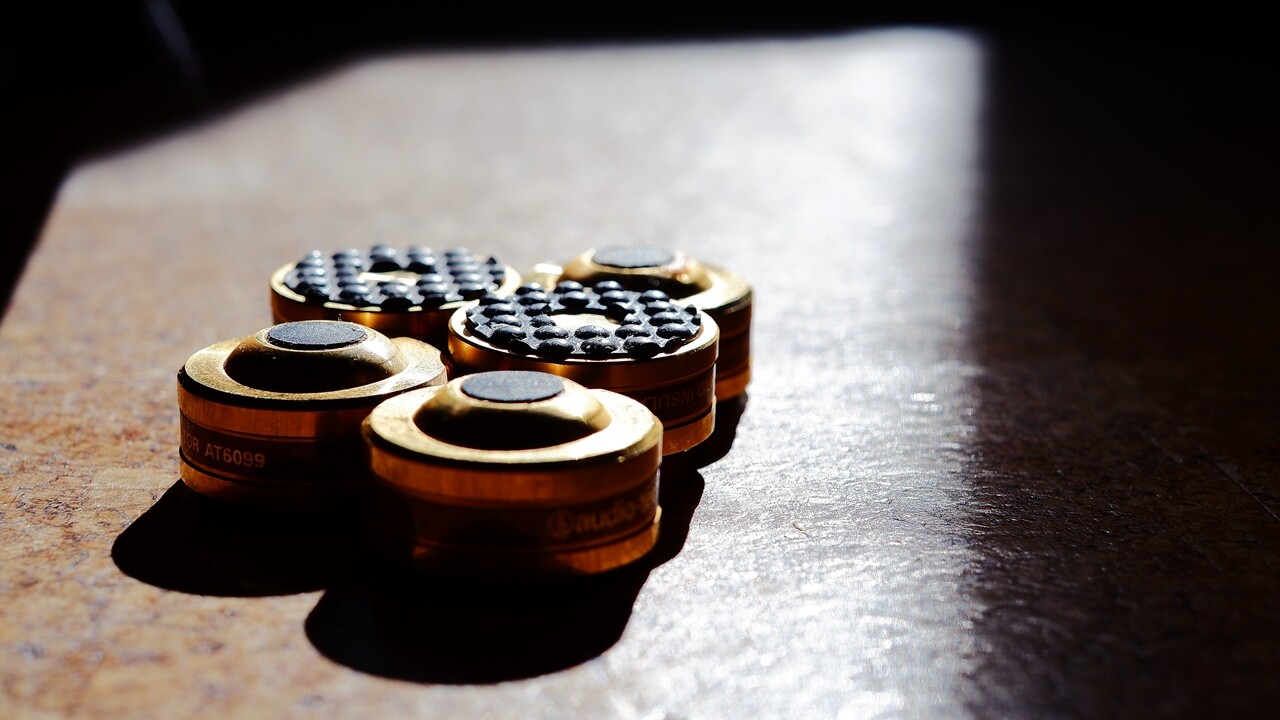
Compact speakers, being light and generating little heat from the enclosure, will probably take quite some time to age, so the older AT6099 units were reassigned to the speakers, while the newly purchased ones were put under the amplifier and DVD player to compress gradually at their own pace until properly run in. ※ Depending on conditions, it may take several months or more to harden under the weight and heat of the equipment. Addendum: After a further five years of use, the distinction between old and new units became indistinguishable. It appears that the age-related hardening from running-in does not progress beyond a certain point.
With that in mind, if you purchase the audio-technica AT6099 and find the sound too soft and sweet, it may be worth placing a suitably weighted piece of equipment on them — ideally something that transfers a moderate amount of heat to the insulators — and compressing them patiently until they settle. As the Sorbothane and Hanenite age and run in, the midrange density and sense of energy will improve while the dynamic expressiveness is maintained, and things should start sounding quite nice.
~ Summary ~
Despite a remarkably well-finished appearance that holds its own against far more expensive insulators, this product is priced at around 3,000 yen for a set of six. It is compatible with a wide range of equipment and delivers an approachable, likeable tonal character. The effectiveness of an insulator depends above all on its compatibility with the equipment in question, followed by the strength of the effect it can produce — and on both counts, the AT6099 delivers vibration-damping performance that is in no way inferior to pricier, more character-laden alternatives. For those who are new to serious Hi-Fi listening, or for those who do not wish to spend excessively on Hi-Fi accessories, the AT6099 is a product well worth considering as a first choice for sound quality tuning — one that reliably delivers results commensurate with its price.
ポチップ
Though it tends to be seen as a beginner-level product by price, it is in no small way a reminder that Hi-Fi equipment — and audio accessories in particular — are not always a matter of cost. As a performance benchmark and reference point for insulators, that is no exaggeration. The audio-technica AT6099 is a tuning insulator — easy to use, highly effective, and deserving of a broad recommendation to everyone from beginners to experienced enthusiasts — capable of metamorphosing a dry, thin-sounding or top-heavy component into something smooth and well-balanced with a stable centre of gravity, or of bringing lively vitality and dynamism to equipment that sounds too serious and dull.
 Category: Other Hi-Fi AccessoriesCategory: audio-technica
【audio-technica High-Quality Hi-Fi Insulators】
AT6099|AT6098|Discontinued

Auto Translated by CS4.6

List of comments (15)
pastel_piano様 毎回楽しく読ませて頂いています。
メインに昇格したQUAD 11Lですが、きつめの高域との格闘が続いています。
先日名古屋に行く用事があったので、Image11のブログで勧められていた
radio.wave.cutを聴きにゴトウ総合音響に寄って来ました。後藤さんには
1時間以上もお付き合い頂きました。率直にお話し頂いて判り易かったです。
お決まりのセットのradio.wave.cutとプラズマシートを名古屋土産に
持って帰りました。歪みが取れて透明さが増し、定位も良くなった感じです。
しかし、相変わらず高域のきつさは完全には良くなりません。ケーブルを
Canareの4S11Gのbi-wiringにしてみたのですが、今一つ柔らかくなりません。
袴付きの11Lですが、お勧めのインシュレーターで効果が期待できますでしょうか?
よろしくご指導の程、お願いいたします。
こんばんわ~。先日より検索キーワードログにufugi0331さんの名前や11L関係?が
大量にあったので何かと思ったのですが、あちらのスレにリンク貼られたんですねー(滝汗)
あれじゃ誰と誰が書き込みしてるかバレバレやん。。。(^^;
と言うことで、11Lについて思いつく限り書いてみました。
https://www.audiostyle.net/archives/50171496.html
お役に立てれば幸いです♪
気がついたら長文…なんやかやで5時間くらいかかっちゃった。
…今日はもうヘナヘナです_| ̄|○
!!!、、、滝汗 (++) 滝汗、、、!!!
ブログ&スレ初心者なもので、なんで検索キーワードログに掛かってしまうのですか?
ご指導、ご指南、お願いいたしますデス、、、(まだまだ滝汗;)
ブログの11Lの記事、お疲れさま & ありがとうございます m(__)m
お騒がせして、誠に申し訳ありません、デス。。(重ねて滝汗;;)
11Lについてになりますが、こちらへの書き込みをお許し下さい。
11Lは、QUADの経営的行き詰まりと中国電機産業の実情を把握していた
Chang兄弟の企画力の産物で、殆どの部品を中国生産することで比類ない
コストダウンが図られています。このため、この価格帯としては例外的な
ポテンシャルを有していると思います。
しかし、設計者が純粋な性格なのか、各ユニットの性能をぎりぎりまで引き
出しているような感じで、高域ユニット(実は低域もですが)の制御に多く
の方が苦労されている結果になっています。ご指摘と重なりますが、昔のSP
でも銘機は高域が暴れがちで、エージングで徐々に本来の音に馴らして行く
ことが多かったと思います。11Lがエージングで変わるかどうかはまだまだ
判らないところですが、当面はアンプやradio.wave.cutなどで対処するのが
上策と考えます。いろいろ対策をご教授頂き、ありがとうございました。
ufugi0331さんおはようございますー。
私もびっくりしたのですが、ここ数日キーワード”ufugi0331″で
検索訪問される方が十数件いらっしゃいます。私のHNならともかく、
ユーザーさんのHNでヒットしてくるケースは少ないですから…。
ご本人が検索されたにしては多いですし、想像するにヤフオクでの出品が原因ではないかと。
これが元で11Lとか周辺機器関係の出品落札履歴が残り、その型番で検索されて、
出品/落札者様双方が某所でお見合いなんて事もたまにありますので。
で、これとは直接は関係ないのですが、先日より某所からのアクセスが増えて、
覗いてみたら、11Lスレでufugi0331さんと特定可能な書き込みを沢山見かけましたので、
所有機器を晒すとキーワード検索を辿って勘のいい人には連想ゲームで
誰だか気がつかれるかも知れませんよーって事です…。
エージングで変わるか?については、どうなんでしょう。
キンキンすると言う方はいつまで経っても変わらないとの書き込みが多いですし、
最初から何ともないという方は全く問題無いみたいですし。。。
私は製造個体差か、機器との相性のどちらかだと思います。
どのスピーカーでも大なり小なりそうだと思うのですが、
特に相性面では多くの人が思うより遥かにシビアなんじゃないかと。
音像がピシッと揃ってフラットに歪み感や詰まり感無く音場がすっと広がるのは、
アンプのドライブ力とスピーカー入力の相性がピタッとはまったときのみの悦楽です。
製造個体差については、ユニット取り付けのいいかげんさだけならどうにかなるでしょうが、
マッチングのズレとかネットワークの個体差が大きいとなると難しいところです。
後は箱のロットや仕上げでかなり雰囲気が変わってしまうのは仕方ないですし。
これはウィンアコでもディナでも実はかなり酷かったですので…。
アドバイス、ありがとうございました。
スレにご紹介を載せたりして、ご迷惑をお掛けしてないでしょうか?
また、散りばめたつもりでもキーワード検索で特定されてしまうのですね。
気をつけませんと、、、汗、汗、汗
11Lはやはり廉価版なところがあって、限界はありそうです。
が、使いこなしの醍醐味は感じていますので、頑張って詰めて行きたいと思います。
エージングは余り期待していません。(radio….ちと、高いんですよね ^-)
追伸)
お書きになられた11Lのブログへ、
どなたか例のレスからリンクを張られたみたいです。
アクセスが更に増えるかと思います。
何やら騒ぎに巻き込んでしまった様で恐縮です。
全然気にしてませんのでお気になさらないでくださいまし~(^^;)。
アクセスログはリアルタイムで表示されているので存じてます。
私が11Lユーザーさんに何かしらお役に立てるかはわかりませんが、
良スレですし、私にとっても勉強になりますので暫くまたーり見守りたいと思います。
(一応、原則としてあちらへの書き込みはしませんので、その点のみご了承下さいませ)
それより、後藤総合音響さんに行かれてROTELはご試聴されましたでしょうか?
Auviが合うのでしたら、クリアで嫌みのないローテルも、
11Lに意外と合うんじゃないかしらと妄想してみたり。。。
試聴したアンプは見たこと無いデジタルアンプでした。
恐らくROTELでは無かったと思います。
ちなみに、SPはB&Wの705と705ゴトウ音響スペシャル、801D、
CDPはMarantz SA-17S1(だったかなあ?)とCECのベルトドライブ、
ケーブルは太い銅線一本で出来た見たこと無いものでした。
20畳くらいの部屋で、STAXみたいなパネルなんかも置いてありました。
11LとROTELを組み合わせて聴いたことは無いのですが、
現代風のワイドレンジ・ハイスピードの爽やかな音を基調に、
ほのかに英国の香りが漂う、みたいな感じになるんでしょうか?
英国レトロ調からは離れて行ってしまいますね。(^_-)
ロイヤルミルクティー、、、上手く言いましたね。(^_-)
確かに「伊右衛門」ではござりませヌ。。。^^);;
ケーブルなんでしょうねぇ>TMDかしら。
ROTELを試聴されませんでしたか。。。ちょっと残念(^^;)
まーでもヨドバシでも置いてあるところがあるみたいです。
ROTELの音は、仄かに英国…というよりも
音の出方(音場感)は現代風のハイスピード国産機とはまるで違っていて、
あくまで英国系のヨーロピアンサウンドそのものなのですが、
欧州文化的な虚飾や暖色感、濃密さが排除されて、
モニター的でスッキリした感じに振ってあります。
見た目同様、実利重視で飾り気のない音ですね。
そこがオーディオとして物足りなくもあり、
それでいて一番大切な音楽的な表現力は十分にあるので、
変な趣向を持たない人には受け入れられるであろう、
地味だけれど飽きの来ないシンプルで玄人好みのサウンドです。
上の書き込みを読んで激しく思い当たる点があり、良く良く調べてみたら、
ゴトウ総合音響で試聴した機器は、ほとんどROTEL製品でした。。。(汗、、)
SP :B&W 805(normal、及び、ゴトウ音響チューン)—– 上記の705は間違え
B&W 801
AMP:ROTEL RA1070 (ゴトウ音響チューンだったかどうかは不明)
(B&W 801の時は、セパレートアンプだったと思います)
CDP:ROTEL RCD1072(多分、、)
(B&W 801の時は、CECのベルトドライブ)
SP Cable:スーパーPCOCC(アズキャスト:古河電気製PCOCC銅単線 1.5mm径)
ROTELのチューンまで手掛けてるとは全く知りませんでした。(大汗、、 ^^);;;;;
自分の頭の中では「これぞリファレンス」みたいな音でした。
下位機種のRA-02、RA-03、RCD-02等はどんな感じなのでしょう?
追伸)
度々で済みません。ケーブルの詳細は次をご覧下さい。
SP Cable:pcocc旧タイプ http://homepage3.nifty.com/audio-goto/pcocc1.htm
B&W 805S、805Sチューン仕様では、以下の機種も使いました。
CDP:Marantz SA12WC
AMP:ロマネスク プリ&パワー アンプ http://homepage3.nifty.com/audio-goto/romanesukuamp.htm
こんばんわ♪
PCOCCケーブル、単線で良さそうですねー。
でもお高いのでこの価格帯になるとライバルが沢山ある…。
機会があれば名古屋に出向いて試聴して音質を判断したいところです。
PADとの比較はどうなんでしょう?元々PADのケーブルは、
解像度や情報料云々より独特の染み込むような浮遊感と、
なんとも甘く温もりのあるタッチが持ち味ですから。
RA-02やRCD-02はコンパクトなサブシステム向きかしら。
色付け少ない無色系ですが音が薄い気がします。
上位のRA980BXでも私は薄いと思いました。スッキリとした音場型で、
スピーカーによってはドライブ力不足気味でしょう。ホントに100Wか?という印象。
音質的にはマイナス方向へのニュアンスたっぷりの繊細な鳴り方で私好み♪
B&Wのモニターアンプらしい低域の厚いドライブ力や、
アナログテイストのストレートな密度感を求めるなら
あくまでセパレートです。但し高域の純度感は下位機に譲ります。
チューン仕様の音質は知りません。貸し出しされてるみたいですねー。
あははは。いや、あちらのスレを観て補足。
実際に組み合わせたわけではないのでアレですが、
コストバリューでは断然CECのAMP3300が良いと思います。
相性抜きに音質ではROTELセパレート>3300>RA-02かも。
でも、ROTELのセパレートは(将来B&Wへのステップアップを別にすれば)
11Lのみに合わせるにはパワーありすぎてやり過ぎかも知れません。
ちなみにAMP3300はウィーンアコーステックT-2との相性が非常に良かったりします。
普及クラスのプリメインでは、TAG McLaren60i(60iRV)以外で合うのはこれくらいしか知りません。
T-2のみに限って言えばうちのA-1VLよりも良い音で鳴らします。。。_| ̄|○
ちなみに上位のAMP5300では何故か駄目だったり。この辺価格やグレードでは語れない難しさがあります。
バレバレですよね。。。ROTEL機の試聴はなかなか出来ないので、
何度か聴いているAMP3300との比較に振ってみたのですが、、、
音質でもAMP3300>RA-02ですか、、、
出来れば方々で推薦されているRA-03の情報が欲しかったのですが、
まだ日本では手に入らないのでしょうか?