【SACD Player ONKYO C-S5VL — Detailed Review】
Announcement|Purchase|Part 1|Part 2|Part 3|Part 4|Part 5|Part 6|Part 7


 ポチップ
ポチップ
Choosing an RCA Interconnect Cable
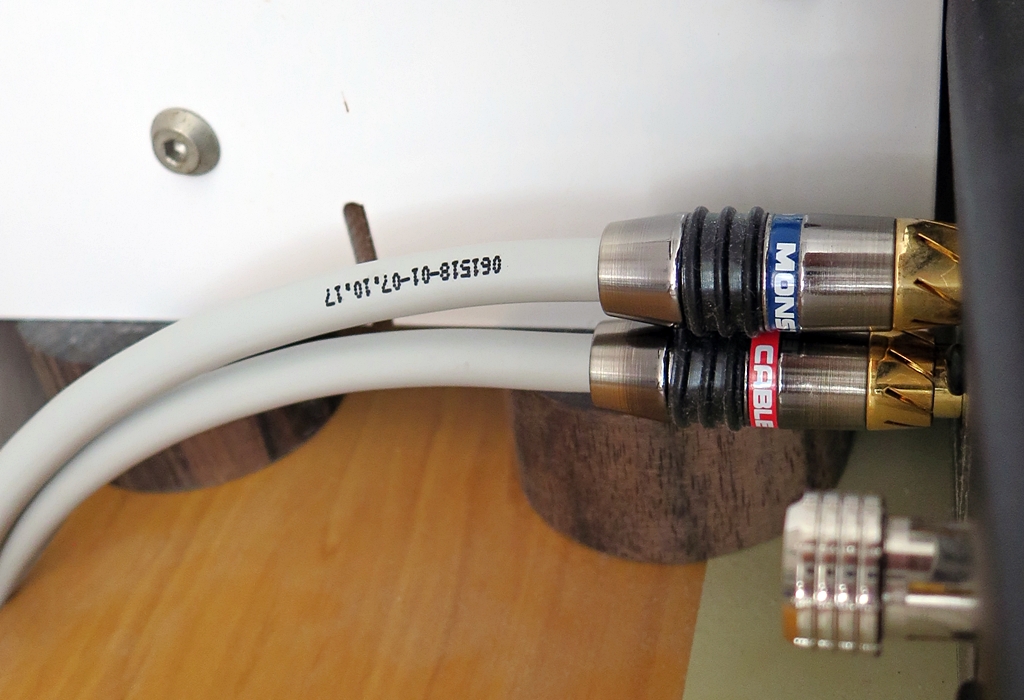
If you purchase through the ONKYO DIRECT online store, you currently receive a complimentary Monster Cable MC400I from the US (available from September 2011, while stocks last). Since it’s free I was expecting the cheapest possible thing, so this was a pleasant surprise. This cable does a good job of compensating for the C-S5VL’s weak point in the lower frequencies, and in terms of sound quality it adds an analogue-like warmth whilst toning down the brightness and steering things towards a calmer, more neutral character. Rather than pushing the C-S5VL’s strengths further, it’s a cable that neutralises the shortcomings one might expect from a budget player.
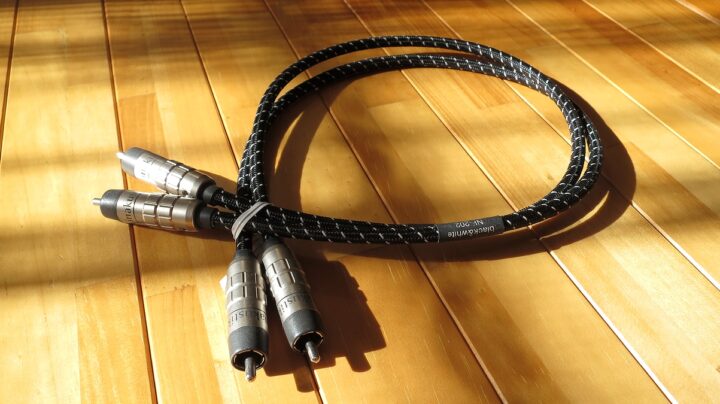
Ideally, even those who purchased the C-S5VL from somewhere other than the direct store would do well to use an RCA cable of at least MC400I quality in order to draw out its full performance. Personally, I’ve been experimenting in the direction of pushing the C-S5VL’s strengths even further — trying things like MIT Terminator 4, NORDOST, and Red Rose Music. That said, when buying the C-S5VL or A-5VL, given that purchasing through ONKYO DIRECT currently comes with an audio cable worth 8,600 yen plus double points adding up to around 12,000 points between reviews and purchases, the case for buying elsewhere is rather thin. ※ The Inakustik NF-202R RCA cable proved to be a particularly good match with the C-S5VL.
Power Cable
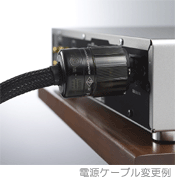 The included cable is an ordinary cabtyre cable, but it is the same one that comes with the higher-end integrated amplifier A-1VL — that is to say, a thick type capable of handling high current as well. As with the A-1VL, carelessly swapping the power cable can actually make things worse, so if you do want to do something about it, I get the feeling that a thick type usable even with power amplifiers — something like Oyaide’s TUNAMI-GPX or TUNAMI-GPX-R — would be the way to go, adding weight in the low frequencies while keeping resolution intact. That said, the TUNAMI name from Oyaide — I do think they ought to change it now, given how inappropriate it feels. At any rate, power cables with thinner conductors originally suited to CDP use, such as the Kharma KPL Reference/1a that I happen to like, seemed to be a poor match for the C-S5VL — the bass fell short and the sound became excessively limp.

Headphone Output Sound Quality
It is a perfectly ordinary headphone output. To put it plainly, it is at the level of the headphone socket you typically find built into a CD player. Compared to the RCA output, the sound is rather formal, one might say — clear in a digital sort of way, plain and straightforward. However, there is a slight lack of reflected sound components, and the bass is on the weak side. Up against the headphone output of the TAG McLaren 60i connected in parallel, it loses in about three seconds flat. In other words, it falls somewhat short of the refined sound you would expect from a dedicated headphone amplifier in the Hi-Fi world. So please do not judge the C-S5VL’s true capabilities based solely on listening through the headphone output in a shop.
 ポチップ
ポチップ
Also, the gain seems insufficient, and with very low-sensitivity high-end headphones from overseas, there is a real chance that even with the volume at maximum you will not get adequate loudness for classical music and the like. So I have resigned myself to treating the headphone output on the ONKYO C-S5VL as a convenience feature for casual monitoring purposes, nothing more. Writing it up this way might make you wonder just how dreadful it is — but when I tried a parallel comparison against an iPhone 4 using the same uncompressed source, by that standard the C-S5VL wins by a comfortable margin. What I mean is that, by the standards of a Hi-Fi enthusiast who regularly uses high-end headphones or an outboard headphone amplifier, it would probably not rise to the level of something you would want to use day to day.
Hi-Fi Insulators and Audio Boards
I would like to say the AS-258 — but it feels a little uncertain. If the attack transients are bothering you in combination with other equipment, the AS-258 is a viable option, though the slight retreat in vitality is personally a minus. The C-S5VL is not the type that pushes energy forward to begin with; it wins you over with a slender, refreshing kind of nuance, so over-damping it tends to make the sound dull and uninteresting. ※ After trying various things, the best match in the end turned out to be the Inakustik RF-ABSORBER combined with black gel pads.
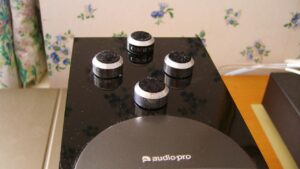
What I had in mind was a board of marble or granite. Placing the C-S5VL on granite seems like it might emphasise the flowing elegance of its sound and make things even better — something along those lines. Beyond that, placing the amplifier on top for added damping. When stacking, I generally think it is better to have the C-S5VL on the bottom.

Vibration Damping for the Top Panel
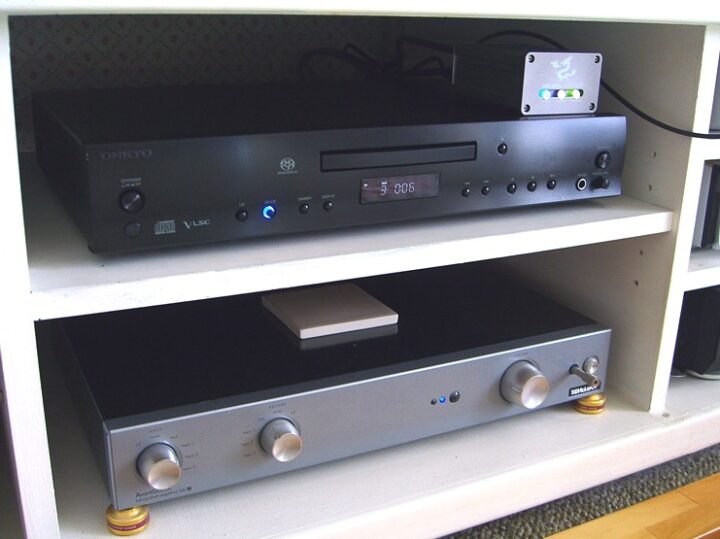
And, as mentioned earlier, the C-S5VL’s top panel is rather thin (note: the bottom panel is solid), so if at all possible, it might be worth opening the lid and applying vibration-damping sheet, electromagnetic-absorbing sheet, or similar materials to the underside of the top panel and the inner sides. With this much resonance in the casing, it will inevitably affect the sound quality of anything placed on top as well. ※ For what it is worth, in my own case I have a 2 kg bag of silica sand — the kind sold for aquarium use at home centres — placed on top of the lid as a weight.
 ポチップ
ポチップ
 ポチップ
ポチップ
One small tip for when you remove the top cover of the C-S5VL itself: the screws may look alike but there is actually more than one diameter involved, so be careful not to lose track of which is which. Lay the screws out so you can put each one back in the hole it came from. And when reassembling, do not tighten the screws all the way. Once you feel them stop, back them off just a tiny bit. Over-tightening will give you a strange sound with overly emphasised transient edges and an unnaturally hard character.
DIGITAL OUT ON/OFF Switch
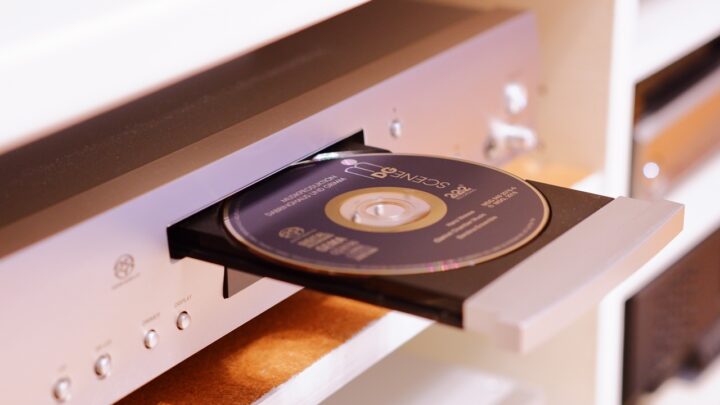
Regarding the DIGITAL OUT switch on the right-hand side: keeping it off suppresses digital noise and therefore improves sound quality — or so one would like to say, though for CD listening the difference is not all that striking. With SACD, however, it is quite another matter. The reason is that on the C-S5VL, when the SACD layer is selected, turning the DIGITAL OUT switch on means the DSD data from the SACD is not sent directly to the C-S5VL’s onboard DAC, the Wolfson WM8742; instead it is first D/D-converted into 16-bit/44.1 kHz PCM — equivalent to CD — before being passed to the DAC — which is, frankly, a rather pointless design choice.
So the punchline is: if you have been listening to SACD with the digital output switch left on without thinking about it, what you are hearing is not the actual SACD (DSD) quality. And this is all talking about the analogue output of the C-S5VL itself, mind you. I have to admit that I too have occasionally been playing SACDs thinking I was listening properly, only to find the DIGITAL OUT was switched on.
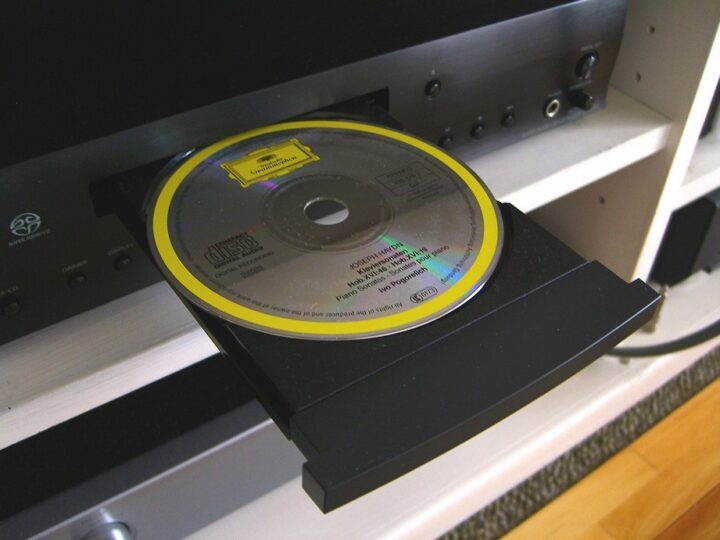
The thing is, the sound of the CD layer’s PCM played directly from an SACD Hybrid disc and the sound of the SACD layer’s DSD converted to PCM are actually slightly different. The bit rate should be the same — 16-bit/44.1 kHz — but the data generated is almost certainly quite different. And then the curious thing is that the analogue sound after DSD→PCM→D/A conversion turns out to bear a surprisingly close resemblance in character to direct DSD→D/A conversion. When you compare them, the CD layer’s straight PCM→D/A conversion generally sounds better to my ears, but because the DSD→PCM sound tendency is so similar to direct DSD, you can get confused if you are not paying careful attention — which is rather embarrassing. As long as you are properly paying attention to the amount of high-frequency information, the difference is there — but still. Do this in front of other people and you might end up looking a bit foolish.
※ Next time: the C-S5VL’s digital filter switching function.
【SACD Player ONKYO C-S5VL Detailed Review】
Announcement|Purchase|Part 1|Part 2|Part 3|Part 4|Part 5|Part 6|Part 7

Auto Translated by CS4.6
List of comments (3)
DIGITAL OUT ON/OFFスイッチというのは、ちょっと盲点ですね。素晴らしいです。PCの前で思わず拍手でした。
天板の制振は、必須です。現行機種ではやっていませんが、以前のシステム(アンプ、CDPともに)重たい花瓶のせが大正解でした。とはいえ置き所が大問題。けしてセンターなんかではないんですよね。かなりのカット&トライで最適な場所を見つけましたから。
では、では。
Sugerさんこんばんは~♪
>DIGITAL OUT ON/OFF
C-S5VLのユーザーさんには、けっこうSACDを再生しながら気付かずにONにしてしまっている人がいるんじゃないかしら~と。この辺りやデジタルフィルタ回りについては説明書での解説が中途半端ですので。正直私もオンキヨーに直接問い合わせるまでは意味不明気味でした。
>花瓶
ガラスですか?陶器でしょうか?陶器のタイル?でしたら今もレクストのRS-SQUAREをメインとサブシステム両方で使っています。
https://www.audiostyle.net/archives/51532926.html
載せる場所はシステムの丁度真ん中(センター定位の真下)の機器の天板少し手前側に載っけています。。。
DIGITAL OUT ON/OFFスイッチは、知らずにONになっていました。大変参考になりました。