【ONKYO DAC-1000 D/A Converter Review】
Part 1|Part 2 |Part 3|Part 4|Transport (First Half)|Transport (Second Half)
In the first half of September I wrote at some length about the Onkyo C-S5VL SACD player I had newly acquired, and now, as I mentioned in the comments section, the second half brings the long-awaited arrival of the ONKYO DAC-1000.
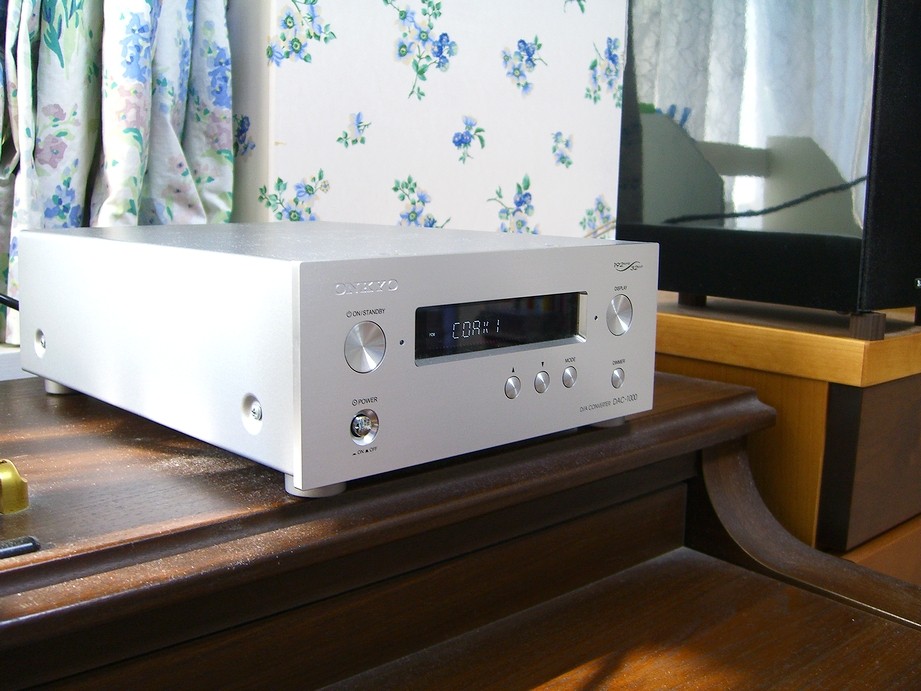
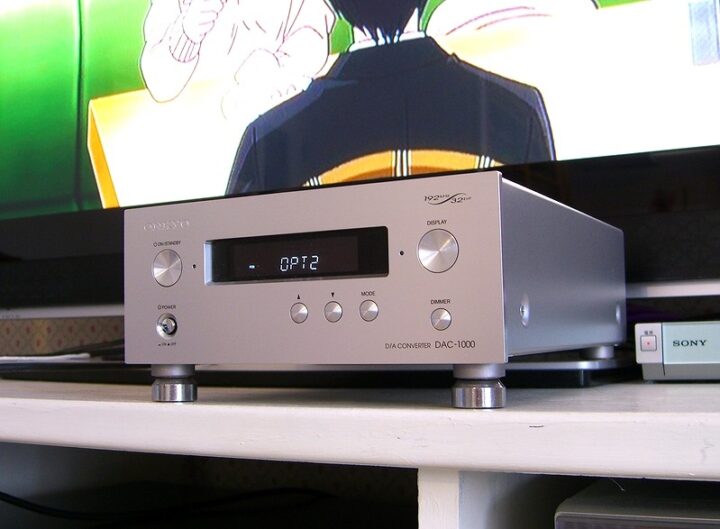
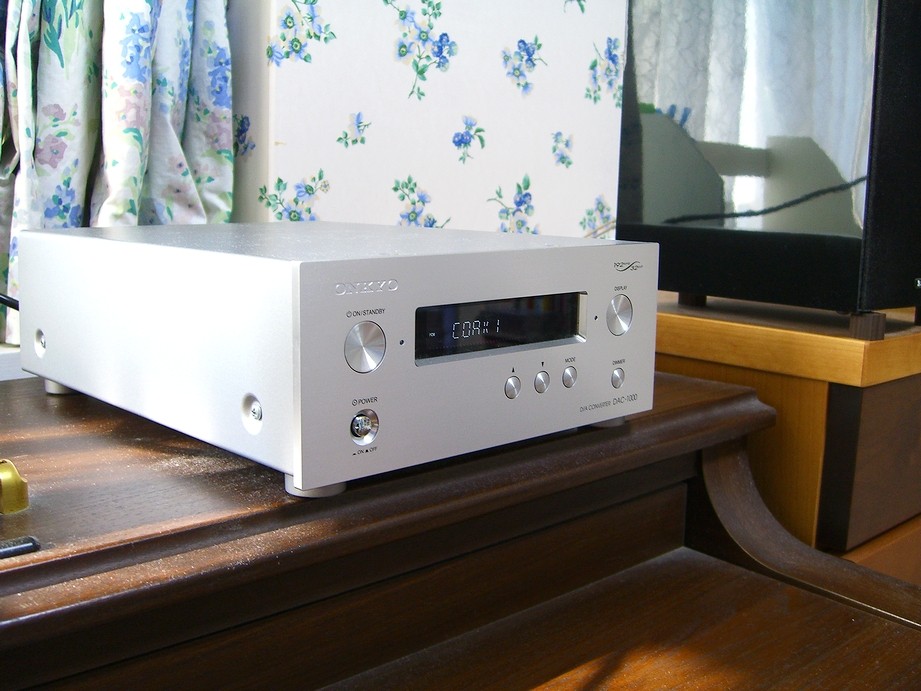
I have been collecting various inexpensive but capable DACs that might serve as a bridge between PC audio and traditional Hi-Fi, but this ONKYO DAC-1000 is a rather more serious proposition. When I spotted it in a shop I did think, oh, it’s a half-width component — surprisingly large — but when it actually arrived at home it had quite a commanding presence, on a completely different scale from the other DACs I had accumulated. The first thing I found myself puzzling over was: where on earth do I put this? Normally one would think about that sort of thing beforehand, I suppose, but — well, let’s just say I didn’t dwell on it too deeply.


 ポチップ
ポチップ
Incidentally, as usual I bought it from ONKYO DIRECT. There are cheaper listings on Rakuten and Yahoo! Shopping, so I always end up in two minds about it, but at the time of purchase the direct store was offering around 10,000 points combined with a review bonus, plus a Monster Cable USB cable DL USB AS-3F and a coupon for 20 high-resolution download tracks from e-onkyo music (worth roughly ¥4,000–7,000 if bought normally) thrown in as extras — which led me to conclude that, all things included, buying direct was actually cheaper. ← The download audio quality in particular can be remarkably good depending on the album, and while I’d hesitate to pay for hi-res downloads outright because of the cost, getting them as a freebie like this is rather welcome.
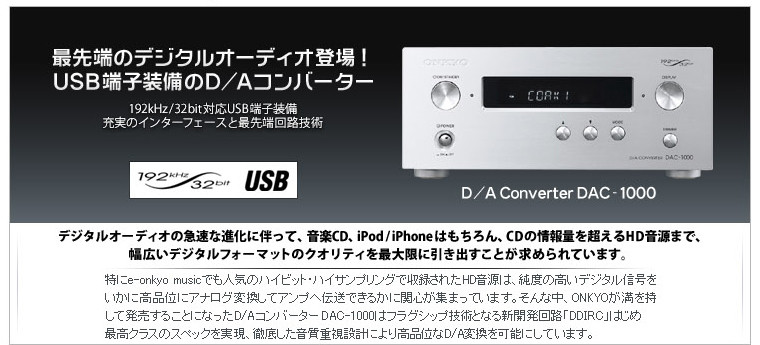
The ONKYO DAC-1000 weighs 3.7 kg — slightly lighter than the SACD player C-S5VL — but despite being roughly half the size, the internals are so densely packed that the DAC-1000 actually feels considerably heavier. And as you can see, the height is a fairly substantial 93.3 mm. I did wonder why it was so tall, and it turns out the circuit boards inside are arranged in a two-storey structure, with the digital and analogue sections on separate floors. Anyway — true to form, rather than listening to it first, I’ve gone straight ahead and opened the lid to show you what’s inside.
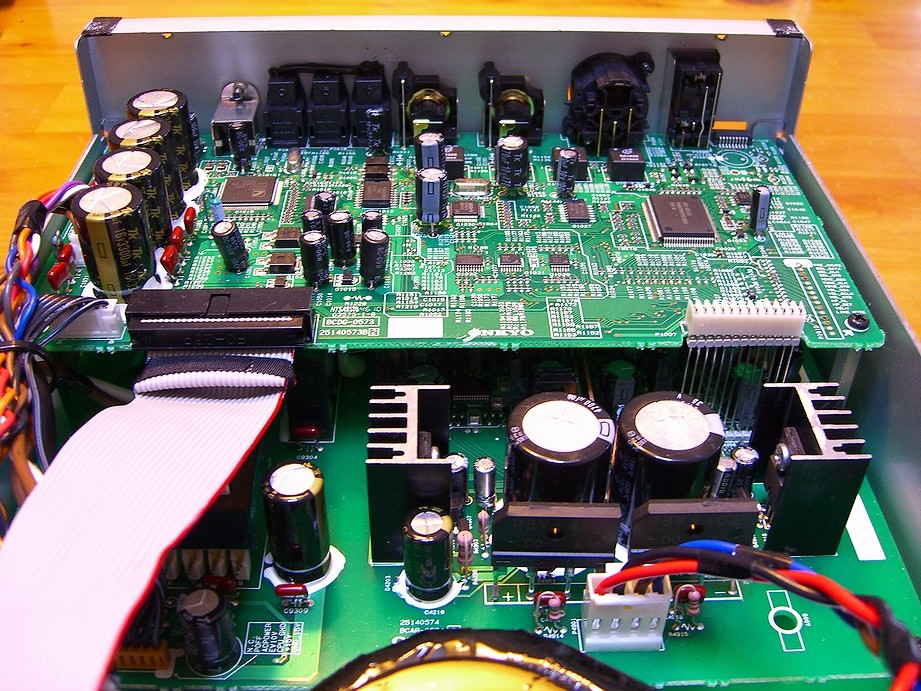
From a purist Hi-Fi standpoint one might have thought it perfectly fine to build this in a full-width chassis with a single-storey board, but I imagine they deliberately went half-width with an eye on PC audio integration and space efficiency. Later note: the real reason was that the board was designed to be fitted wholesale into the DAC-equipped preamplifier, the ONKYO P-3000R.
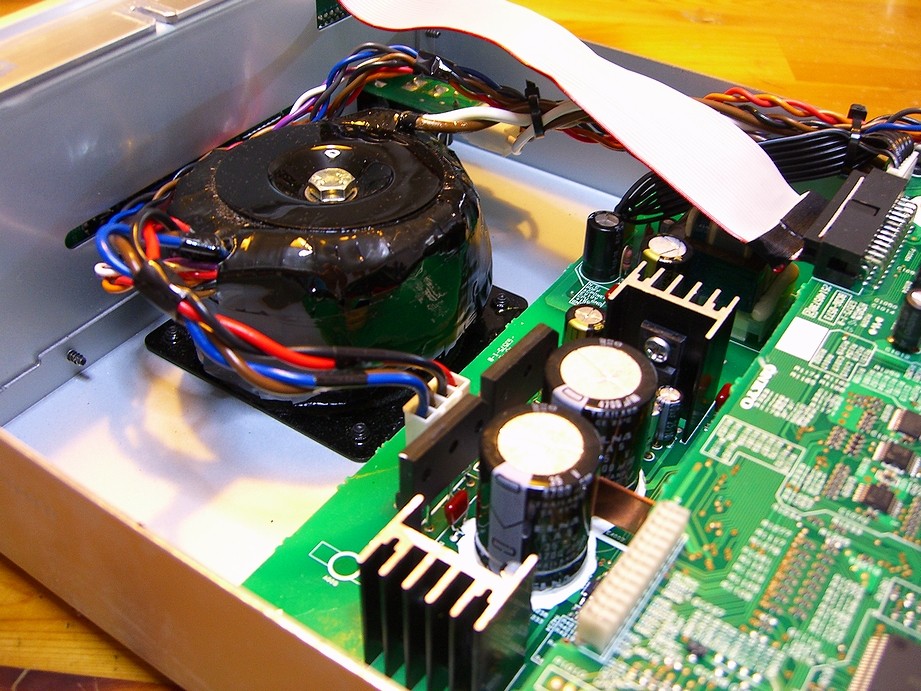
There’s a toroidal transformer sitting in there, roughly the size of a large rice ball. I do wish the C-S5VL had been given a power supply like this as well…
 Among budget D/A converters in this class, I can only think of the DAC-1000 and the American PS Audio Digital Link III (DL3) as having toroidal power supplies — and even then the DL3 costs more than twice as much. True to PS Audio’s power-supply-obsessed character, the DL3 carries an even larger transformer that occupies roughly half the chassis, while the circuit board side of things is actually simpler than the DAC-1000’s.
The toroidal transformer in the DAC-1000 generates quite a lot of heat, and the chassis gets noticeably warm during use. It’s probably best not to stack anything on top of it. One might think a ventilation slot on the top panel would be appropriate given how warm it runs, but in compensation the lid is made from 1.6 mm thick steel rather than the flimsy sheet metal used on the C-S5VL. Heat dissipation does need attention, so I would not recommend sticking Real Schild damping material or similar — as mentioned in my C-S5VL entry — to the underside of the top panel.
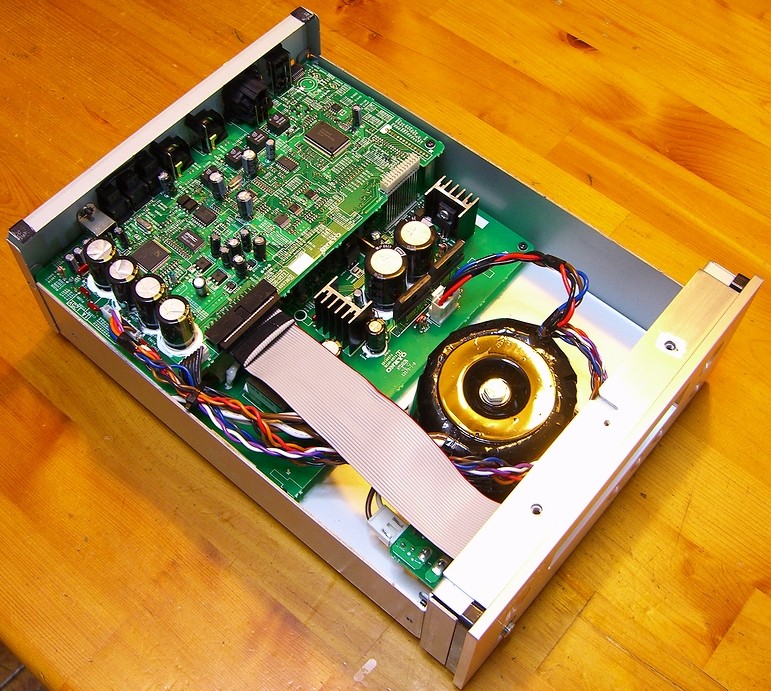
Here’s the view from directly above. The build quality exceeds the price — or rather, putting it conservatively, the price seems frankly too low. I don’t think there is another D/A converter at this class level that combines such a thoroughly executed analogue and digital circuit in one box. It’s not as though sheer parts count necessarily translates into better sound in Hi-Fi equipment, but so many of the sub-¥100,000 DACs flooding the market — especially those designed around USB connectivity for PC audio — are products where the internals are even more impoverished than the price would suggest. That’s precisely why a DAC like this one — solidly and honestly constructed, with genuine substance invested in it, capable of serving high-end Hi-Fi purposes and even professional use — is such a genuinely rare thing.

The rear panel. As I found with the A-1VL integrated amplifier, high-quality gold-plated machined brass connectors and other terminals not normally seen at this price point are used throughout. The provision of AES/EBU digital input and balanced analogue output makes it clear that this unit was designed with mid-range-and-above amplifiers in mind, as well as professional use. ※ I will come to the sound quality later, but it has a monitor-like character and a level of quality that would hold up perfectly well in a professional recording environment.
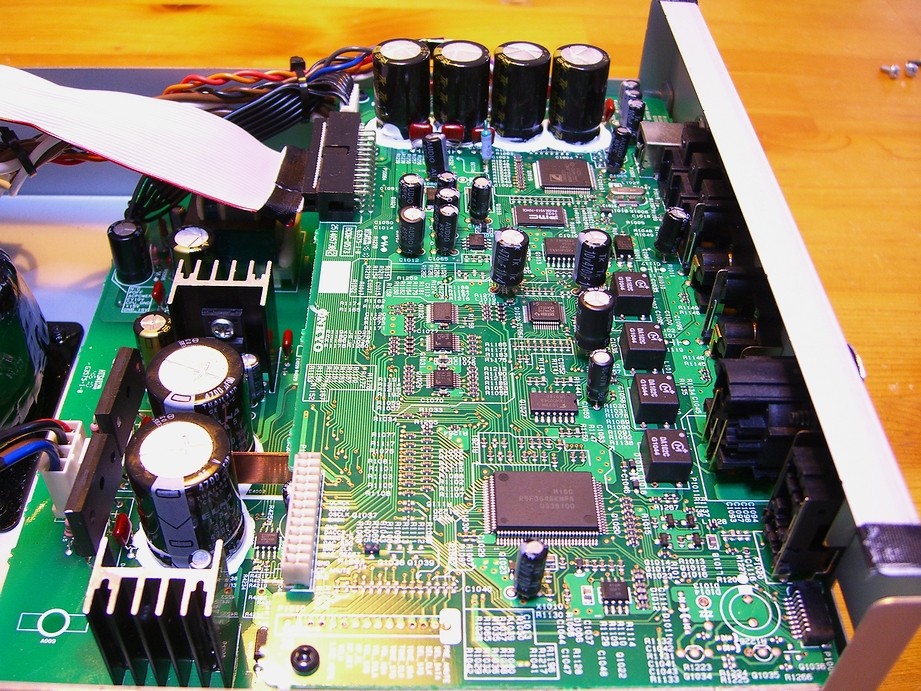
The analogue circuit board. Various PMC and NEC chips are mounted on it. The four components lined up in front of the output terminals are Murata DA102Cs. I’d love to show you the power supply and digital circuit board as well — they’re packed with components — but unfortunately that board sits underneath and photographing it is impossible. Peering in from the side, though, I can just about make out two Burr-Brown PCM1795 DAC chips — one for each channel — supporting 32-bit/192 kHz. The PCM1795 is also used in the North Star Design D/A converters USB DAC32 and ESSENSIO, and is a very current DAC chip.
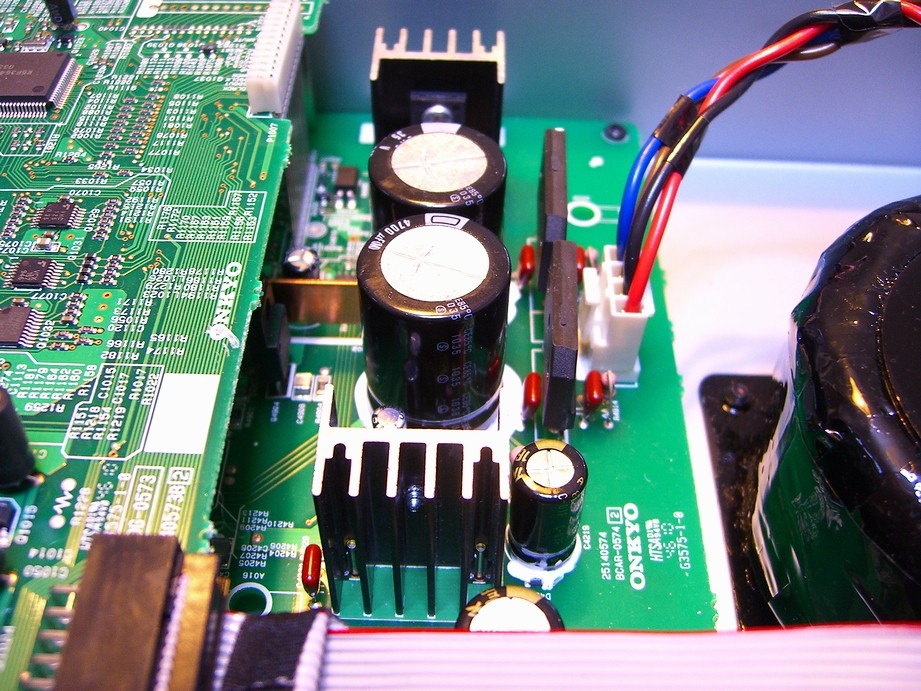
The power supply section on the lower digital board. This really doesn’t look like the innards of a DAC or CD player with a list price of ¥60,000–70,000. Someone who didn’t know better could easily mistake it for a ¥200,000–300,000 product. Incidentally, the DAC-1000 is manufactured in Malaysia, the same as the C-S5VL — Onkyo had an assembly plant there if I recall correctly. As you can see, the board assembly is of a very decent standard. I can’t find anything further to take issue with, so next time I’ll write up the sound quality report — armchair audiophile poetry and all.
【ONKYO DAC-1000 D/A Converter Review】
Part 1|Part 2 |Part 3|Part 4|Transport (First Half)|Transport (Second Half)

Auto Translated by CS4.6