Having searched for “bi-wiring connection” and “bi-wire”, I found that quite a few people are unfamiliar with the term, and there seems to be no shortage of misunderstandings on the subject — so on this page I’d like to briefly explain what bi-wiring actually means, along with its advantages and disadvantages. One common source of confusion is between “bi-wiring” a speaker and “bi-amping” using multiple amplifiers, but these two things mean something entirely different from one another.
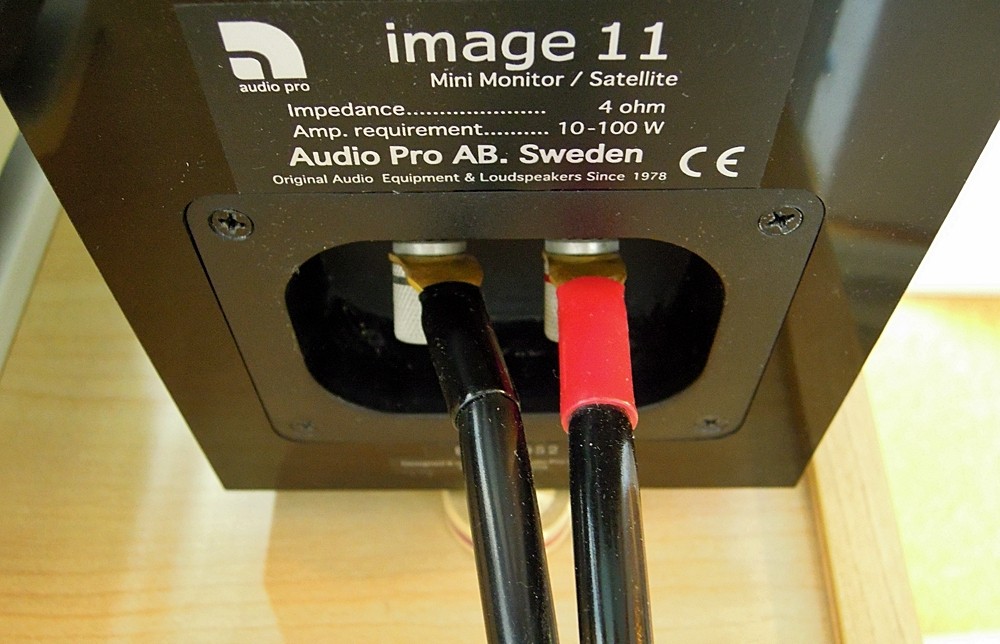
What is bi-wire / bi-wiring?
With an ordinary speaker that does not support bi-wiring, each cabinet has two terminals (+ and −), and a single pair of cables (two conductors, + and −) is used per speaker — giving two pairs in total, or four conductors, across a stereo pair.
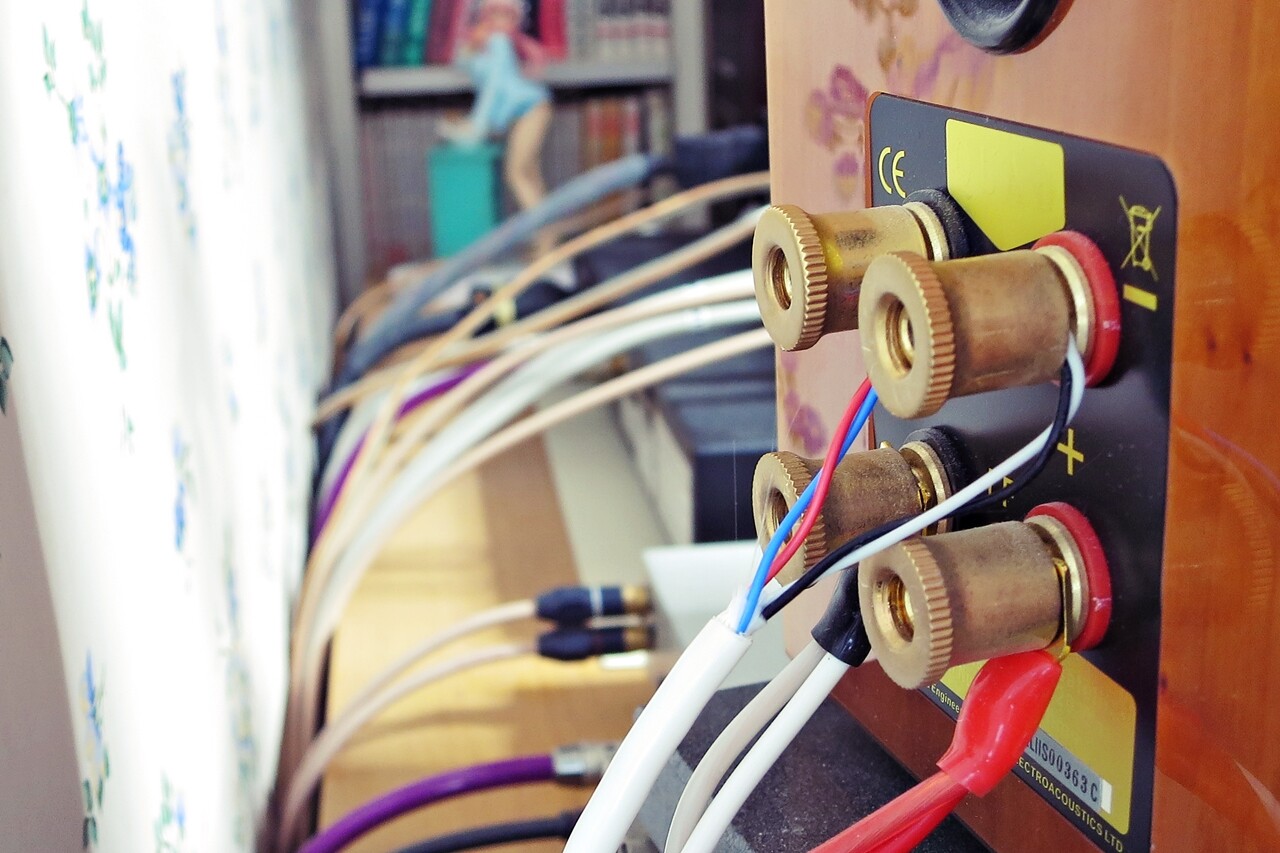
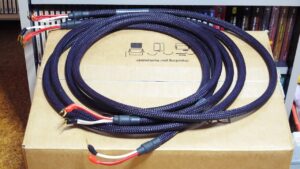
With a bi-wiring connection, by contrast, a compatible speaker (one that has four terminals per cabinet) is connected to the amplifier using two pairs of speaker cables. Across both channels that comes to four pairs — eight conductors in total.
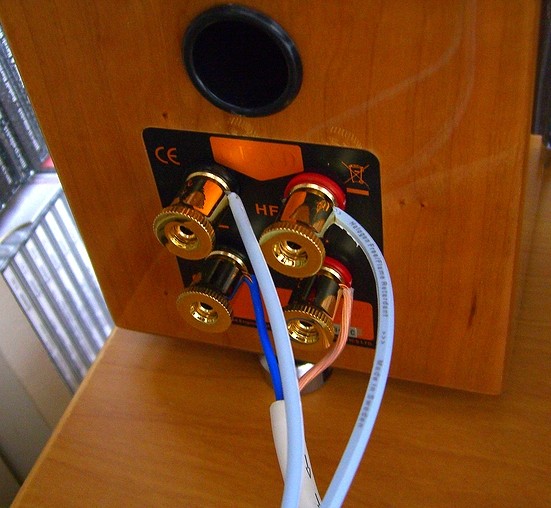
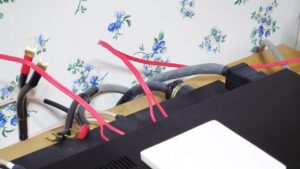
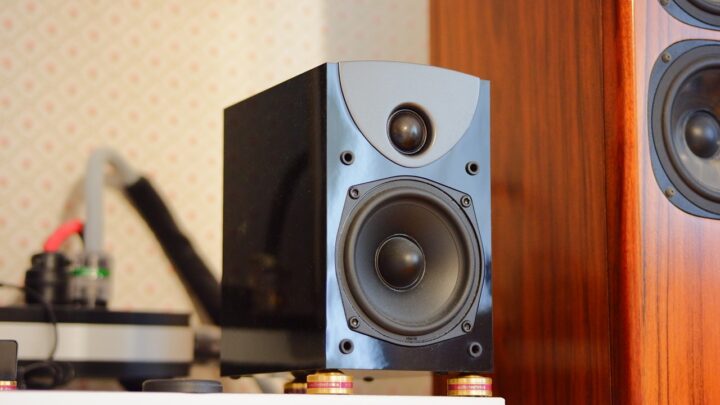
Incidentally, the reason the speaker cables in the photo above are inserted horizontally is that the speaker terminals on the QUAD L-ite2 pictured happen to be a rather unusual side-entry type. On the vast majority of speakers, the cable insertion holes face vertically, so it is normal practice to insert the speaker cables from either below or above. ※ This is a separate matter from bi-wiring, but in the photo the speaker cables are connected in the opposite direction to that specified, on both the upper and lower terminals. After comparing both orientations, I found that the reversed connection gave better perceived resolution and a wider sense of range, so I have deliberately connected them this way. Electrically, either direction is perfectly fine.
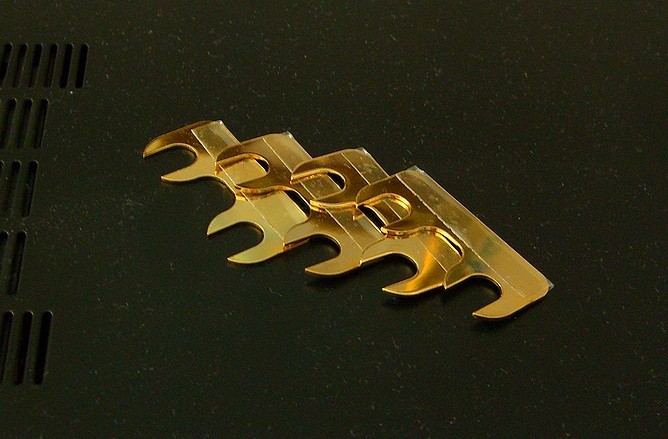
When using bi-wiring to connect two pairs of speaker cables per channel, remove the short bar (jumper plate, jumper wire) that comes supplied with the speaker. ※ With the jumper wire still attached, you will gain absolutely none of the theoretical benefit. A jumper is, by nature, a part intended for making a simple connection between the woofer terminals and the tweeter terminals when using a single-wire connection with a bi-wire-capable speaker, so that sound can still be produced. The included jumper plate is, from a sound quality standpoint, almost entirely a disadvantage, but it is supplied as a consideration so that users who only have one pair of speaker cables can still use the speaker.
The merits and demerits of bi-wire and bi-wiring connections
The technical merit of bi-wiring is that it can, to some degree, prevent the tweeter’s signal from being muddied by the back-EMF current from the woofer side. Apparently this was originally a Toshiba patent. Also, speakers equipped with bi-wiring terminals are, as a rule, designed from the outset with their crossover networks tuned on the assumption of a bi-wiring connection. Connecting them with a single wire plus a short plate or jumper wire is, in theory, bound to degrade the sound quality, and one could say the speaker will never be able to perform to its full potential.
With a bi-wiring connection, by assigning different gauges or brands of speaker cable — each suited to the relevant unit — to the tweeter side handling the high frequencies and the woofer side handling the mid-to-low frequencies respectively, it becomes possible to give the speaker’s tonal character a wider range of possibilities compared to single wiring. Generally speaking, using a thinner speaker cable on the high-frequency side and a thicker cable on the low-frequency side allows you to obtain a wider-range sound better suited to the characteristics of each unit. That said, the basic principle is to prepare cables of exactly the same length for all four runs — top, bottom, left, and right. Bearing that in mind, it can also be an interesting exercise to try different gauges, different brands, and so on. ※ In this case, a poor combination of cables can result in an audible discontinuity in tonal character between the individual units.
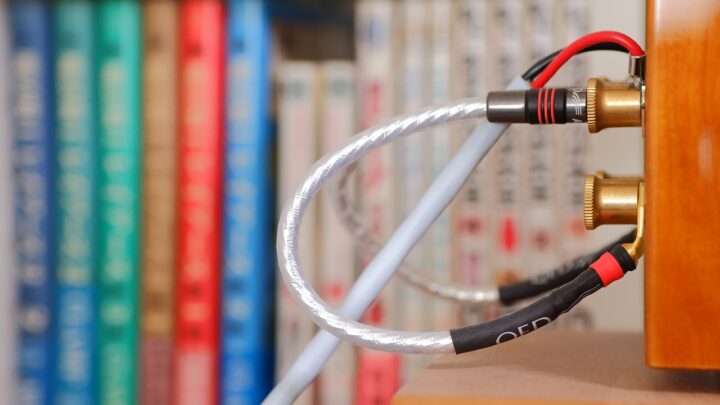
On the other hand, bi-wiring connections do have their drawbacks. Most straightforwardly, you need twice as much speaker cable as with single wiring, which means added cost — and depending on the price of the speaker cable, that cost can be quite considerable. And then there is the fact that the merits of bi-wiring are, after all, a matter of theory, and in practice it does not always translate into an audible improvement. In practical terms it is very much a case-by-case situation depending on the environment. It is in fact not uncommon for a high-quality speaker cable used in a single-wiring configuration to sound far better than two pairs of poor-quality (or ill-matched) cables used in a bi-wiring configuration. Please bear in mind that depending on the compatibility, grade, and combination of speaker cables, jumper cables, and so on, the merits and demerits can end up being reversed.
※This is an example where the combination of single-wiring and a high-quality jumper cable — rather than bi-wiring — produced better results.
Bi-wiring and bi-amping are not the same thing
Bi-amping is often confused with bi-wiring, but the two are quite different. With bi-amping, the amplifier for a single channel is split between the tweeter side and the woofer side, with two separate amplifier units — one above, one below — driving each driver independently. With a 3-way speaker, three power amplifiers are used, which is called tri-amping. This is also entirely different from using a mono amplifier for each of the left and right channels. Bi-amp driving necessarily involves bi-wiring connections, but bi-wiring itself has nothing to do with bi-amping — all you need is a single stereo integrated amplifier or stereo power amplifier.


 ポチップ
ポチップ
Bi-amping was a common approach with older large multi-driver speakers, and setting aside car audio, I have the sense that fewer people attempt it in modern, streamlined Hi-Fi systems. But thinking about it more carefully, adding an externally powered subwoofer with a built-in amplifier is, in the broader sense, a form of bi-amping. I am a small speaker enthusiast myself, but lately I have been thinking that adding a powered subwoofer — whose price has come down thanks to the spread of home theatre multi-channel systems and PC audio — could actually be quite interesting from a compact desktop Hi-Fi perspective.
Bi-wiring compatible or not? — On the amplifier’s binding post terminals
· Rear panel of the ONKYO digital amplifier A-5VL (bi-wiring compatible)

· Rear panel of the ONKYO digital amplifier A-7VL (not bi-wiring compatible)

《My own ONKYO A-1VL is also not bi-wiring compatible. With current ONKYO integrated and power amplifiers, the terminal specification is split between 8-terminal models (larger or lower-priced units) and 4-terminal models (higher-end units).》
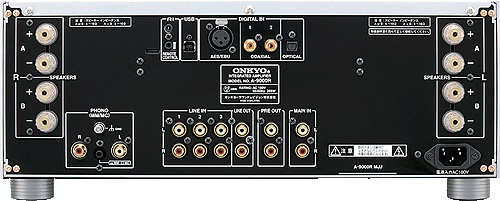
《In high-grade amplifiers with a symmetrical layout, the L/R speaker terminals are sometimes positioned at opposite ends of the rear panel like this. The ONKYO A-9000R shown above features an 8-terminal configuration with bi-wiring support.》
Bi-wiring is possible even with amplifiers that do not officially support it
As mentioned above, commercially available audio amplifiers come in two varieties: 8-terminal models supporting bi-wiring, and 4-terminal models that do not. In practice, however, whether the amplifier’s speaker terminals consist of one set or two is not really central to what bi-wiring actually is. Having two sets of terminals (eight in total) on the amplifier side simply makes bi-wiring more convenient — even with a 4-terminal amplifier that has no official bi-wiring support, it is perfectly possible to obtain the theoretical benefits of bi-wiring by wiring things up as shown below.
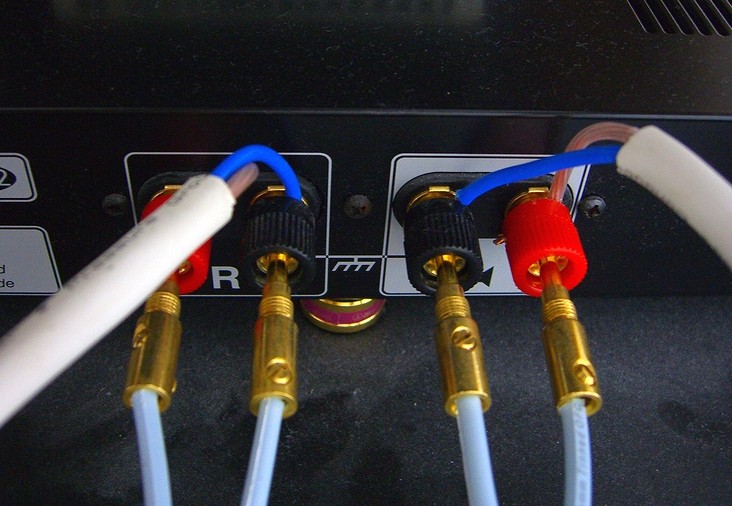
When the amplifier’s terminals are small, or when thick speaker cables are involved, it is quite common to find that two cables simply cannot be crammed into a single terminal hole. In such cases, a little ingenuity is called for — for instance, connecting one of the two cables via a banana plug and the other as a bare wire or, preferably, a Y-lug, so that both can physically fit into the speaker terminals.
With bi-wiring-capable amplifiers that offer A/B switching across eight speaker terminals, there are cases where the sound quality differs to some extent between the A side and the B side (due to differences in internal circuit routing, switching contact quality, and so forth). In such cases, deliberately connecting to whichever side sounds better — rather than using both — can actually yield better results, and exploring the optimum connection point in this way is one of the genuine pleasures of the pure audio pursuit. With older heavyweight best-buy amplifiers in particular — the kind where catalogue specifications and features took priority, component tolerances were low, and internal contacts and circuit routing were needlessly convoluted — I would suggest not placing too much faith in channel-to-channel consistency.

【PR】Compare prices on high-quality Y-lug connectors
>>Rakuten
>>Amazon.co.jp
>> Yahoo! Shopping
>>SOUND HOUSE

Auto Translated by CS4.6

List of comments (4)
こんにちは。
たしかに バイワイアリングって 思ったほど 理解されてないでよね。
ただ 前のスピーカーがバイワイアリング対応でしたので、行っていたのですが、ためしにシングル接続したら、そっちのほうが良かったので、結局今のJBL S4700もそのままです。
たぶん アンプ側に結構な能力や精度が必要なのかな?って思います。2つのパワーアンプの位相がずれる?
写真のひとつのターミナルに2本接続のほうが 無難かな? って思います。
わかりやすい解説、ありがとうございます
私も散々、バイワイヤリング、バイアンプと試してきました。
現在はメインでならしているオールド・スピーカー YAMAHA NS-200Mがモニター系で、低域に不満を残すために、瞬発力の高い別のオールド・アンプとお手製ウーファー用のバックロードホーンで、アタック感を少し色づけする程度に鳴らしています。
頂き物のサブウーファーも使ってまして、これまたほんの少し、極低域の響きを乗せるためだけに、ボリュームを絞って使ってます。
何にしてもメイン・スピーカーの音を殺すことなく、自分好みの音で聴けるようにすることを主眼に、バイアンプ構成で鳴らしています。
バイワイヤーにしてもバイアンプにしても、やり方次第で、方法も音も無限。色んな構成で遊んでいますw
>ジャイアンさん
はじめまして~d(^_-)
試行錯誤していたらどんどん複雑化してしまいましたか。?私も上質な響きをさらっと控えめに足すために、小さなウーファーが欲しいと思っていたり。YAMAHA YST-SW010も候補ですが、見た感じ音が篭もらないか心配だったり。ブログされているんですね。細かいDIYが素晴らしいです。。。まださらっと斜め読みで申し訳ないのですが、もしお差し支え無ければうちのうちのトップのリンクに参加していただけると嬉しいです♪
>Yong Joonさん
追記です。Yong Joonさんのブログも是非登録したいので先日色々やってみたのですが、どうもPhile-webコミュニティってRSSでのリンク登録が出来ない仕様なんですよね。コミュニティ内部の全ブログまるごとで登録は出来るのですが、それをやると・・・以下自粛(^^; という事でどうしたものかと思ってます・・・。
わぁ、朝からいきなりレスが2つもついてびっくり・・・(@_@;)
お二人さま、おはようございます。
>Yong Joonさん
ネットワークオーディオ推進会の方、上手く絡めてなくて申し訳ないです。頭の中では色々と絡めるテーマを考えてたりするのですが、基本、体力的にレスポンスが周回遅れになりがちなもので・・・。
初心者さん向けと云うことで、まずは理論上の原則論として、バイワイヤリング推奨を書きました。もちろん、基本を踏まえた上で、更に個別の環境で試行錯誤された上で、結果的にシングルワイヤリングに行き着くというのも十分にありです。現に私は今QUAD L-ite2を付属ショートプレートとシングルワイヤーで敢えて聴いています。(エントリ投稿は、いつも内容と数日~下手すると月単位のタイムラグがあるので、投稿内容と現状がぜんぜんリアルタイムではなかったりします。)
アンプに関しては、ウーファーとツィーターを離れて並列接続にしても、インピーダンスの影響は軽微だと思うのですが、それでもバイワイヤリング接続では確実にエネルギー感が削がれます。元々オーバードライブ気味の組み合わせではこれが吉となりますが、逆にアンダーパワーの組み合わせでは、一気に生命力が削がれてしまう事もあります。あと、バイワイヤリング対応でアンプ側にターミナルが2系統あっても、内部のパワーアンプの回路はあくまで1系統としての動作が普通ですので、端子回りの引き回し等々の接点が増えているだけで、大したメリットはないのではと思います。